The Role of Analytics in SEO Explainers: 2026 Guide


TL;DR:
- SEO analytics helps improve website performance by analyzing data to understand search rankings and user behavior. Relying on real user data instead of AI-generated or synthetic traffic prevents misinterpreting search performance. Connecting multiple tools like GSC and GA4 and following a strategic framework enhances decision-making and drives organic growth.
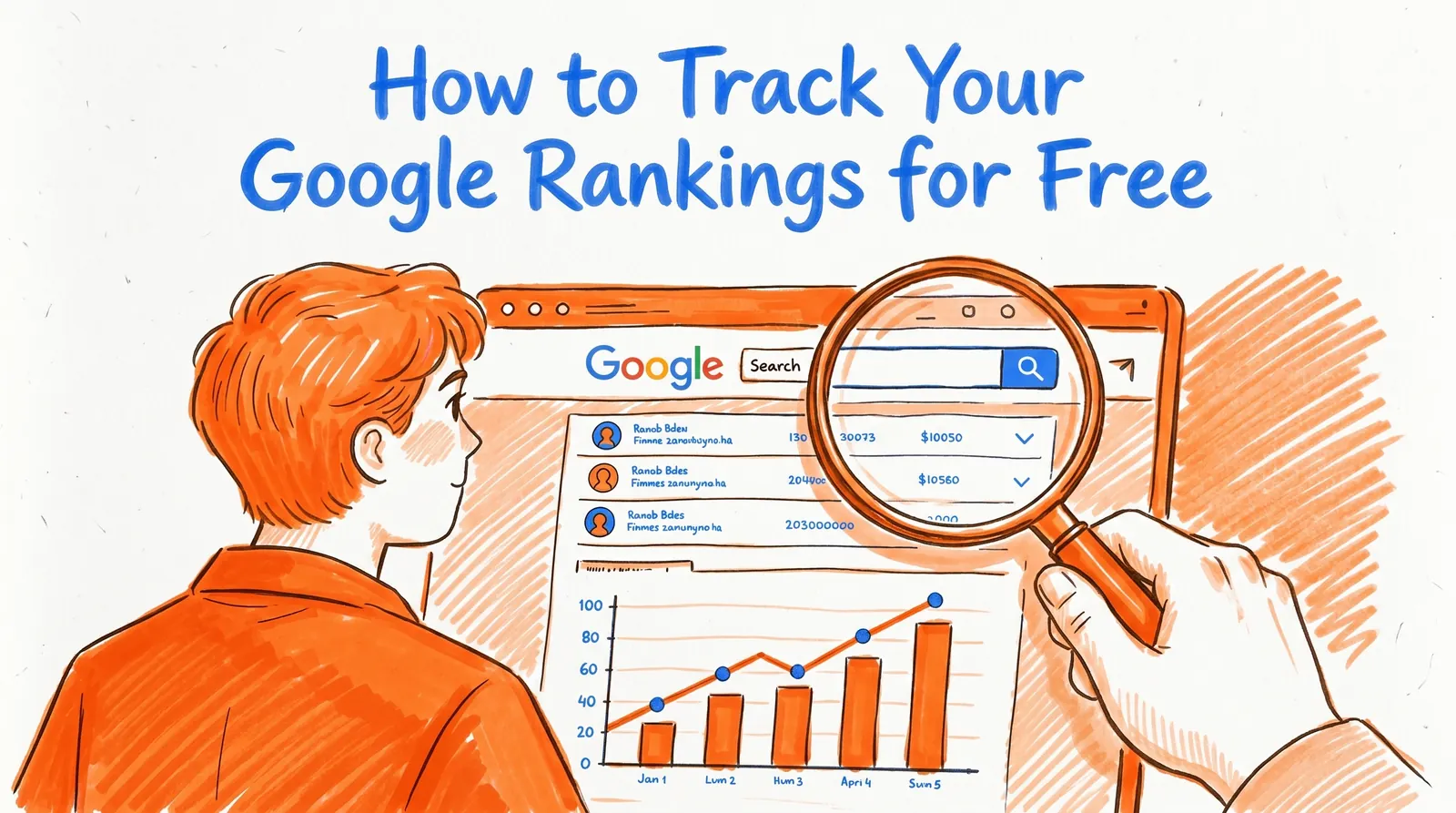
SEO analytics is the process of collecting and analyzing data to understand and improve your website's search engine performance. The role of analytics in SEO explainers goes beyond tracking numbers. It gives you the context to know why rankings shift, which content drives conversions, and where to focus your next move. Organizations using data-driven decision-making consistently outperform those relying on intuition across every measurable SEO category. That gap is widening in 2026, as AI-generated search results and synthetic bot traffic make clean data harder to find and easier to misread.
What is the role of analytics in SEO explainers?
SEO analytics is the structured practice of measuring organic search performance through metrics, tools, and attribution models. The industry term is "SEO performance analysis," but practitioners use "SEO analytics" to describe the full workflow from data collection through strategic decision-making. Both terms appear throughout this guide because both reflect how the field actually talks about the work.
The core metrics every SEO professional tracks fall into four categories. Organic traffic measures how many real users arrive from unpaid search results. Click-through rate (CTR) shows what percentage of searchers who see your page actually click it. Bounce rate reveals whether visitors find what they came for. Keyword rankings track your position for target queries over time.
Each metric tells a partial story. A page ranking in position 3 with a 2% CTR signals a title or meta description problem, not a content problem. A page with strong traffic but a high bounce rate points to a mismatch between search intent and page content. Analytics connects these signals so you can act on the right problem.
Pro Tip: Never evaluate a single metric in isolation. Pair keyword rankings with CTR data from Google Search Console (GSC) to separate visibility problems from relevance problems.
Integrating GA4 and Google Search Console gives you the most complete picture of search queries driving traffic and user behavior after the click. GA4 tracks on-site engagement. GSC tracks pre-click search performance. Together, they cover the full user journey from query to conversion.What are the most common pitfalls in SEO analytics interpretation?
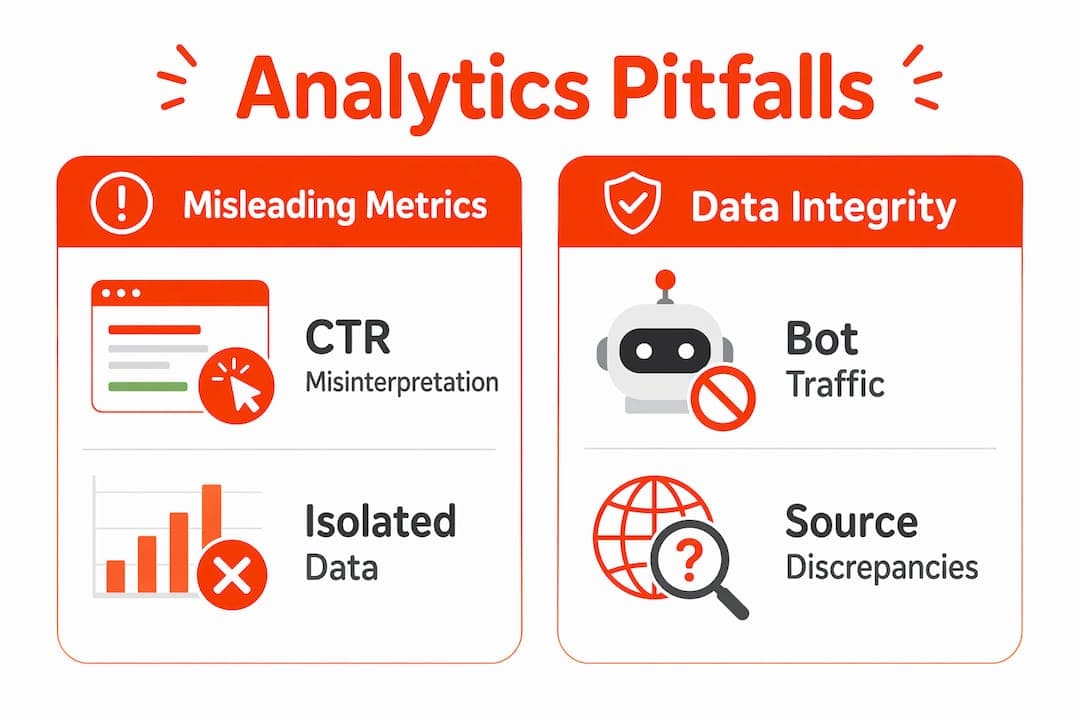
The biggest mistake in SEO analytics is treating raw data as strategy. Reactive analytics without a clear strategy causes teams to chase normal fluctuations instead of real problems. A 5% drop in organic traffic over two weeks is often seasonal noise. Treating it as a crisis wastes resources and produces bad fixes.
Metric conflicts between tools create a second layer of confusion. GSC and GA4 measure traffic differently because they use different tracking methodologies and handle privacy constraints differently. Discrepant data sources must be validated before you draw conclusions. A conflict resolution protocol, where you identify which tool is the source of truth for each metric type, prevents false conclusions from driving real decisions.
"Tracking metrics alone is insufficient. Understanding when metrics lie and benchmarking against industry standards is critical for accurate SEO analysis." — SEO Analytics Guide: Diagnostics & Metrics for 2026
AI visibility trackers introduce a third and growing problem. Many of these tools refresh their own cache to check your rankings, generating synthetic bot traffic in the process. AI visibility trackers misrepresent real user interest by 35–40% by polluting your analytics with phantom impressions. That corrupted data then triggers strategy pivots that have no basis in actual user behavior.
The risks compound quickly:
- False positives from synthetic traffic make underperforming pages look strong
- False negatives from tool-generated impressions suppress real ranking signals
- Budget misallocation follows when teams act on corrupted AI visibility data
- Missed opportunities occur when real long-tail keyword gains get buried under noise
The solution is to focus on user-driven search behavior metrics rather than AI visibility scores generated by third-party trackers. Real clicks, real sessions, and real conversions are the only data points that reflect actual search demand.
How does analytics drive better SEO strategy and performance?
Analytics drives better SEO when it connects data to decisions, not just reports. The process starts with identifying high-value keyword opportunities, including long-tail queries that carry strong purchase intent but low competition. Combining GA4 and GSC datasets uncovers queries where you already rank on page two, meaning a targeted content update could produce fast ranking gains without building new pages from scratch.
Here is a practical four-step framework for turning analytics into SEO action:
- Audit your top landing pages using GA4 engagement metrics. Pages with high traffic but low engagement time signal content that fails to satisfy search intent.
- Cross-reference GSC impressions with CTR to find pages ranking in positions 4–10 with strong impression volume. These are your fastest optimization targets.
- Segment traffic by device and geography to identify audience-specific performance gaps that aggregate data hides.
- Map conversions back to organic entry points to understand which content types generate revenue, not just visits.
User behavior data after the click is where most SEO teams leave value on the table. Scroll depth, time on page, and internal link clicks tell you whether your content structure matches how users actually read. A page where 70% of users exit before reaching the call to action needs structural work, not more backlinks.
Pro Tip: Build a monthly SEO report that connects ranking changes to revenue outcomes. High-performing SEO teams build reporting systems that tie data to recommendations, making it easier to get budget and stakeholder buy-in for technical fixes.

How do you integrate analytics tools for accurate SEO measurement?
Accurate SEO measurement requires connecting your data sources and validating them against each other. GA4 and GSC are the foundation. GA4 handles on-site behavior, session data, and conversion tracking. GSC handles impressions, clicks, average position, and query-level performance. Neither tool alone gives you the full picture.
| Data source | Primary strength | Key limitation |
|---|---|---|
| Google Search Console | Query-level impressions and CTR | Samples data; excludes branded queries by default |
| GA4 | On-site behavior and conversions | Does not show pre-click search data |
| Combined GSC + GA4 | Full funnel from query to conversion | Requires manual integration or third-party connector |
Validation is the step most teams skip. When GSC shows 10,000 impressions for a keyword and GA4 shows 200 sessions from organic search, the gap is not a bug. It reflects the difference between impressions and actual clicks, plus GA4's session-based counting. Understanding that gap prevents false alarms.
Emerging best practices for 2026 SEO analytics include:
- Avoiding AI visibility tracker scores as primary performance indicators
- Setting statistical significance thresholds before acting on ranking fluctuations
- Using a conflict resolution matrix to decide which tool wins when data sources disagree
- Auditing your analytics setup quarterly to catch tracking gaps caused by site changes or consent updates
The importance of monitoring SEO performance consistently is not about watching dashboards. It is about catching the signal before it becomes a crisis. A crawl error that blocks five key pages shows up in GSC within 48 hours. Without regular monitoring, you might not notice it for weeks.
Attribution is the final frontier of SEO analytics accuracy. The most effective model in 2026 is a hybrid attribution approach that distributes credit as 30% to first interaction, 30% to mid-journey engagement, and 40% to final conversion impact. This model reflects how SEO actually works across a multi-touch customer journey, rather than giving all credit to the last click before purchase.
Key Takeaways
Analytics transforms SEO from guesswork into a repeatable system where every decision connects to measurable performance data.
| Point | Details |
|---|---|
| Define your metrics first | Track organic traffic, CTR, bounce rate, and keyword rankings as your core performance set. |
| Validate data across tools | Resolve conflicts between GSC and GA4 before drawing conclusions or changing strategy. |
| Avoid synthetic traffic traps | AI visibility trackers can corrupt analytics with bot traffic; rely on real user behavior data instead. |
| Use hybrid attribution | The 30/30/40 model distributes SEO credit across the full customer journey for accurate business impact measurement. |
| Connect data to decisions | Analytics only improves SEO when it drives specific, prioritized actions rather than passive reporting. |
Why most SEO teams are measuring the wrong things
The uncomfortable truth I have seen repeatedly is this: most SEO teams are technically competent but analytically undisciplined. They set up GA4, connect GSC, and then spend hours in dashboards without a clear question to answer. Analytical interpretation quality now matters as much as technical execution. That shift changes what good SEO work actually looks like.
The teams I respect most do not start with data. They start with a hypothesis. "We think this category page is losing rankings because the content no longer matches search intent." Then they pull the data to confirm or disprove it. That sequence, hypothesis first, data second, produces better decisions than the reverse.
The AI visibility tracking problem is worse than most people realize. I have watched teams pivot their entire content strategy based on AI impression data that turned out to be synthetic bot traffic. The misinterpretation of AI tracker data leads directly to budget misallocation. Real user behavior in GSC and GA4 is boring by comparison, but it is the only data that reflects actual demand.
My strongest recommendation is to adopt the hybrid attribution model before your next quarterly review. Last-click attribution makes SEO look weak because it ignores every touchpoint before the final conversion. The 30/30/40 model gives SEO credit for awareness and consideration, not just the closing moment. That framing changes how leadership values organic search investment.
— MEET
Babylovegrowth turns your analytics insights into organic growth
SEO analytics tells you what is broken and what is working. Acting on those insights at scale is where most teams hit a wall.
Babylovegrowth connects your analytics findings to execution. The AI-powered keyword discovery platform identifies high-value opportunities your current content misses, including long-tail queries with strong conversion intent. The AI SEO audit tool surfaces technical issues that suppress rankings before they show up as traffic drops in your dashboard. For teams building authority through links, the backlink building software automates acquisition at scale without manual outreach overhead. Babylovegrowth is built for SEO professionals who already understand their data and need the tools to act on it faster.
FAQ
What is SEO analytics?
SEO analytics is the practice of collecting and interpreting data from organic search channels to measure performance and guide strategy. Core metrics include organic traffic, keyword rankings, CTR, and conversion attribution.
Why do GA4 and Google Search Console show different traffic numbers?
GA4 and GSC use different tracking methodologies and count sessions differently, which produces data gaps. Validating both sources against each other and understanding what each tool measures prevents false conclusions.
What is the 30/30/40 SEO attribution model?
The 30/30/40 hybrid model assigns 30% of conversion credit to first interaction, 30% to mid-journey engagement, and 40% to final conversion impact. It gives SEO accurate credit across the full customer journey rather than only at the last click.
How do AI visibility trackers corrupt SEO analytics?
Many AI visibility trackers generate synthetic bot traffic by refreshing their own cache to check rankings. This pollutes your analytics with phantom impressions and can misrepresent real user interest by 35–40%.
How often should SEO teams review their analytics data?
SEO teams should review core metrics weekly for anomalies and conduct a full strategic analysis monthly. Quarterly audits of the analytics setup itself catch tracking gaps caused by site changes or consent policy updates.