Why Monitor SEO Performance: Maximizing Organic Growth


Tracking website rankings and organic traffic often feels like chasing moving targets. For digital marketing managers at mid-sized ecommerce brands, ignoring SEO performance monitoring means operating without clear direction. By building a measurement system and harnessing AI-powered tools, you can pinpoint what drives visibility and lead generation. This approach provides practical insights and precise data so you can optimize strategies and stay ahead of competitors.
Table of Contents
- What Monitoring SEO Performance Means
- Key Metrics For Measuring SEO Progress
- AI Tools Transforming SEO Performance Tracking
- Real-World Benefits For Ecommerce Brands
- Risks Of Neglecting SEO Performance Data
Key Takeaways
| Point | Details |
|---|---|
| Monitoring SEO Performance is Essential | Regular tracking of SEO metrics is crucial for understanding how well your site is performing and where adjustments are needed. It helps convert guesswork into data-driven decisions. |
| Focus on Key Metrics | Concentrate on organic traffic volume, click-through rates, and conversion metrics to directly measure the effectiveness of your SEO efforts on revenue. |
| Leverage AI Tools | Adopt AI-powered tools to automate tracking and gain actionable insights faster, enabling proactive optimizations before issues escalate. |
| Consequences of Ignoring SEO Data | Neglecting SEO performance monitoring can lead to lost rankings, wasted marketing budgets, and competitive disadvantage, risking long-term revenue growth. |
What Monitoring SEO Performance Means
Monitoring SEO performance is the practice of systematically tracking how your website ranks in search engine results and measuring the organic traffic flowing to your site. This involves tracking visibility and ranking across specific keywords and search terms, then analyzing the data to understand what's working and what needs adjustment. For mid-sized ecommerce brands, this means moving beyond guesswork and building a measurement system that shows exactly which SEO efforts generate revenue.
At its core, monitoring SEO performance requires you to observe several interconnected metrics. You need to track where your pages appear in search engine results pages (SERPs), monitor how search engines crawl and index your content, and measure the quality and quantity of organic traffic arriving at your site. This goes beyond simply checking if you rank for your target keywords. It means understanding the entire funnel: how many people find you through organic search, which pages they land on, what actions they take, and ultimately, whether they convert into customers. Real monitoring also involves analyzing how well your website follows search engine rules to ensure your content has the best chance of appearing prominently in results.
For ecommerce managers, think of SEO performance monitoring as your diagnostic dashboard. Your website generates traffic constantly, but without proper monitoring, you're flying blind. You can't tell if recent content changes helped or hurt your rankings. You can't identify which competitor tactics are working. You can't spot technical issues that are preventing search engines from indexing your pages correctly. Effective monitoring transforms SEO from a set-and-forget marketing channel into a data-driven investment you can optimize in real time. You'll see which product category pages need more internal links, which content pillars are underperforming, and which customer segments are most valuable in organic search.
Pro tip: Set up daily performance reports that track your top 20 revenue-generating keywords and their ranking positions, then establish thresholds that alert you when any keyword drops three or more positions, so you catch ranking losses before they significantly impact revenue.
Key Metrics for Measuring SEO Progress
Not all numbers tell the same story. You could have tons of traffic but earn zero revenue. You could rank first for a keyword nobody searches for. This is why tracking the right metrics matters more than tracking everything. The most effective SEO managers focus on a core set of indicators that actually connect to business outcomes rather than vanity metrics that look good in dashboards.
Start with organic traffic volume, which shows how many visitors arrive at your site through search engines each month. But dig deeper than the total number. You need to understand which traffic converts, which pages drive the most visits, and whether traffic is growing or shrinking month over month. Pair this with click-through rates from search results, which reveal whether your titles and meta descriptions actually persuade people to click. A high ranking means nothing if searchers skip your result for a competitor's snippet. You should also monitor domain authority and backlinks because these signals influence how search engines perceive your site's credibility and relevance. A site with stronger domain authority typically ranks faster for competitive keywords.
Then measure conversion metrics that directly impact revenue. Track how many organic visitors complete purchases, sign up for your email list, or request quotes. Some ecommerce managers also watch sessions, users, engagement rate, and bounce rate to understand whether visitors are exploring your site or leaving immediately. High bounce rates on product pages often signal that your content isn't matching search intent, even if you're ranking well. Finally, monitor rankings for your target keywords in your most important categories. You don't need to track hundreds of keywords. Instead, focus on the 30 to 50 keywords that drive the most traffic and revenue. When these move up or down significantly, you'll know something changed in your strategy or the competitive landscape.

Connect all these metrics to a single measurement: return on SEO investment. Calculate how much revenue organic search generated this month compared to last month, then compare that growth to the SEO effort you invested. This forces you to think like a business owner rather than an SEO specialist, and it's the only metric that truly proves whether your monitoring is driving growth.
Pro tip: Create a weekly one-page scorecard showing your top 10 revenue keywords, their current rankings, organic traffic from those keywords, and conversion rate, then track month-over-month changes to spot trends before they become problems.
AI Tools Transforming SEO Performance Tracking
Manual SEO tracking is dying. You can no longer afford to log into multiple platforms each week, manually update spreadsheets, and wait days for insights. AI-powered tools are changing how ecommerce managers monitor performance by automating the entire tracking workflow and uncovering patterns humans would never spot. These tools don't just collect data. They predict what will happen next and recommend specific actions before your competitors catch up.
AI tools excel at continuous monitoring at scale. Instead of checking your top 30 keywords once a week, AI systems can track thousands of keyword variations across multiple search engines in real time. They catch ranking shifts within hours instead of days, alert you when technical issues block search engine crawlers, and automatically flag content that's underperforming before it tanks your revenue. The impact goes beyond speed. AI is now optimizing for answer engines like ChatGPT and Google Gemini, not just traditional search rankings. This means you need tools that track how your content appears in AI summaries, conversational results, and recommendation systems alongside your Google SERP positions. Modern AI tools handle this by monitoring multiple surfaces simultaneously.
Beyond tracking, AI-powered solutions improve the accuracy of your SEO data. Traditional analytics can be murky. A visitor might come from organic search but be attributed to direct traffic. Conversion paths get lost across multiple sessions. AI systems apply measurement, evaluation, and verification methods to reduce bias and improve interpretability in your data, meaning you get cleaner insights about what actually drives revenue. They connect the dots between content changes you made three months ago and revenue appearing today. They identify which combinations of keywords, content types, and backlink profiles generate the highest-quality traffic for your business.
The real game changer is predictive analytics. AI tools analyze historical performance patterns and forecast which keywords will rank higher next month, which content will decline, and where you should invest resources. They can simulate the impact of your content calendar before you publish, showing you which articles will likely drive revenue based on competitive analysis and search intent data. This transforms SEO from reactive monitoring into proactive strategy.
Pro tip: Start by automating daily tracking of your 50 core revenue keywords with an AI tool, then layer in predictive analytics to forecast which keywords will shift positions within the next 30 days so you can optimize content before rankings drop.
Here is a quick reference comparing manual SEO tracking with AI-powered SEO tools:
| Feature | Manual Tracking | AI-Powered Tools |
|---|---|---|
| Speed | Weekly or monthly reports | Real-time, automated alerts |
| Scalability | Limited to few keywords | Thousands tracked at once |
| Data Accuracy | Prone to human error | Enhanced with AI algorithms |
| Predictive Insights | None or delayed | Forecast future trends |
| Action Recommendations | None, analysis required | Immediate suggestions |
Real-World Benefits for Ecommerce Brands
The difference between brands that monitor SEO and those that don't shows up in bank statements. One ecommerce manager at a mid-sized apparel brand started tracking her SEO performance metrics weekly instead of monthly. Within three months, she spotted that her winter jacket landing pages were ranking for queries but driving almost no conversions. The search intent didn't match. She adjusted the content, repositioned internal links, and rewrote the meta descriptions. Six months later, organic revenue from those pages increased 34 percent. That discovery was only possible because she was watching the data. Without monitoring, that money would have disappeared into competitors' pockets.
SEO monitoring delivers concrete business outcomes. Greater product discoverability and improved customer acquisition happen when you systematically track what's working. You discover which product categories generate search traffic, which ones are invisible, and exactly where to invest your content budget. A skincare brand realized through performance monitoring that their acne product line ranked well but their anti-aging line was completely lost in search results. By shifting resources to optimize anti-aging content, they opened an entirely new revenue stream that had been sitting dormant. Monitoring also reveals seasonal opportunities. You spot that hiking boots suddenly spike in September searches, which gives you time to optimize your boot category pages before peak season arrives.
Competitive positioning becomes measurable when you monitor consistently. You see which competitors rank for your best keywords and why. You identify gaps where they're strong but customers aren't finding you. You catch when they launch new content strategies and adapt before they steal market share. This is how smaller brands beat larger competitors. They move faster because they monitor more frequently and make decisions based on real data instead of assumptions. Brands that track SEO performance can adapt to rapidly changing digital landscapes and optimize their marketing strategies with precision. You can test content approaches, measure results in days instead of weeks, and double down on what works while killing what doesn't.
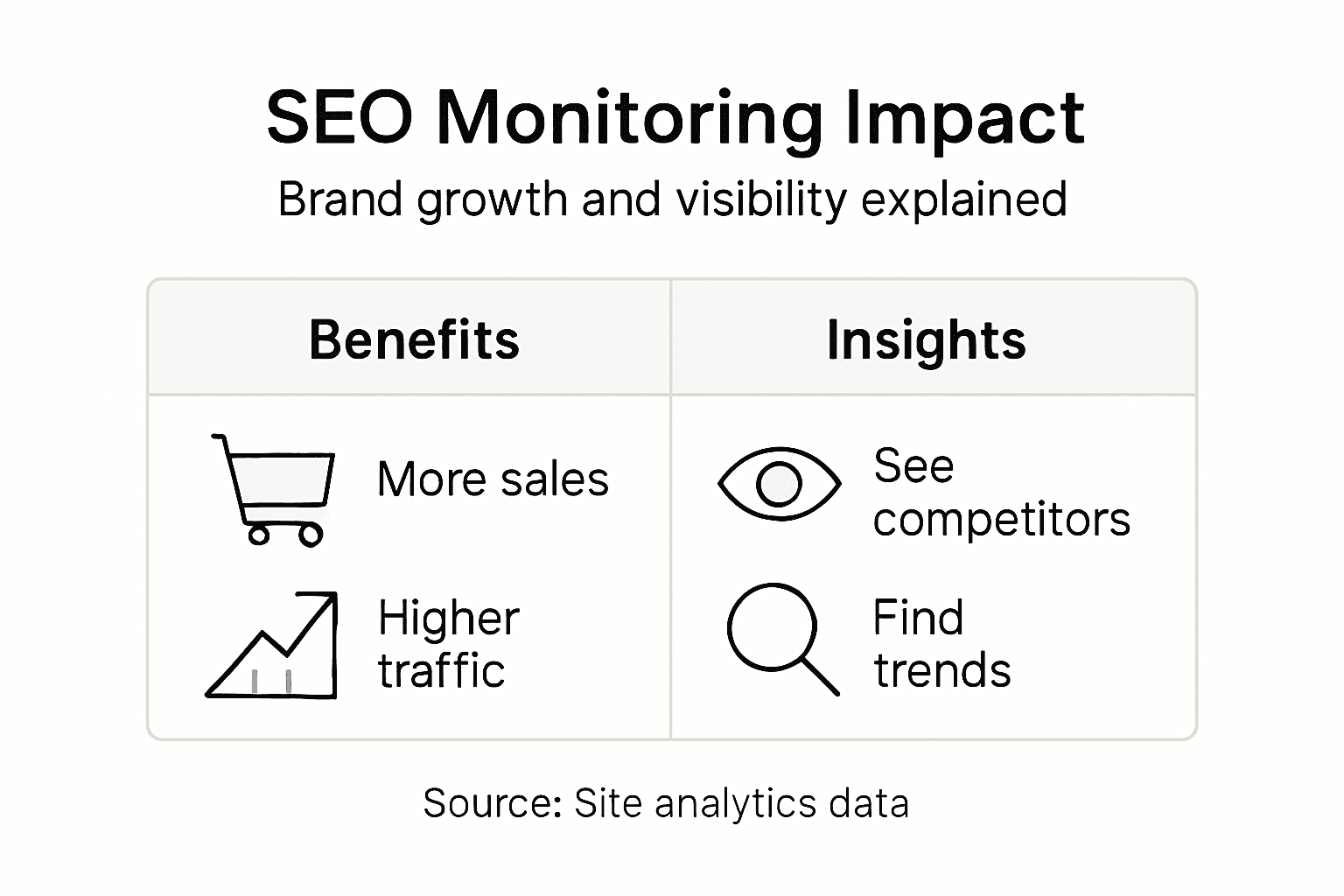
The financial impact compounds over time. Organic traffic doesn't spike overnight. But when you monitor performance consistently and make strategic adjustments, the cumulative effect creates sustainable growth. A sustainable growth means lower customer acquisition costs, less dependence on paid advertising, and revenue that doesn't disappear when you cut your ad budget. After 12 months of consistent SEO monitoring and optimization, many ecommerce brands report 50 to 100 percent increases in organic revenue while cutting their total marketing spend.
Pro tip: Set a weekly 30-minute block to review which product pages got organic traffic but generated zero conversions, then immediately audit those landing pages for search intent mismatches and prioritize fixes for your highest-traffic underperformers.
Risks of Neglecting SEO Performance Data
Ignnoring SEO performance data doesn't make problems disappear. It makes them invisible until they explode. A mid-sized furniture retailer stopped tracking their organic performance in 2021, assuming their previous ranking gains were permanent. Two years later, they realized their top 50 keywords had all dropped out of the first three pages of Google. By then, their competitors had filled the void. They lost an estimated 400,000 dollars in annual organic revenue before they even noticed something was wrong. That's the real cost of neglecting SEO data. You don't see the damage until months have passed.
Without consistent monitoring, you become vulnerable to threats you can't detect. SEO poisoning attacks involve adversaries manipulating search rankings to promote malicious content or damage your brand reputation. If someone targets your site with negative SEO tactics or malicious backlinks, you won't know until your rankings tank. A competing brand could be actively harming your search visibility right now, and without monitoring, you're flying blind. Attackers exploit the gap between attack and detection. The longer you go without checking your SEO data, the more damage accumulates. One ecommerce manager discovered her site had been targeted with thousands of spammy backlinks only when a newsletter subscriber mentioned she couldn't find the brand in search results anymore.
The business damage extends beyond lost traffic. Organizations that fail to monitor performance data risk relying on inaccurate information that leads to poor targeting decisions and diminished competitive advantage. You make marketing investments based on assumptions instead of facts. You keep pouring money into content that isn't generating revenue. You miss seasonal trends until the season has passed. You don't know which products your customers are searching for, so you optimize for the wrong keywords. You can't identify which content needs updates to maintain rankings, so older content gradually loses visibility. Each month without data costs you more than the month before.
Competitive blindness is perhaps the most dangerous risk. Your competitors are monitoring their performance, spotting opportunities, and moving fast. They see that a particular product category is trending in search and optimize for it immediately. You don't notice until they're already ranking. They identify a weak competitor and take market share. You're still optimizing for keywords from two years ago. In fast-moving markets like ecommerce, moving slowly gets you left behind permanently. The longer you neglect SEO data, the wider the gap becomes.
The table below summarizes common risks faced by ecommerce brands that neglect SEO performance monitoring:
| Risk Type | Business Impact | Visibility Consequence |
|---|---|---|
| Lost rankings | Revenue declines, less traffic | Can go unnoticed for months |
| SEO poisoning | Damaged reputation, competitor gains | Potential brand harm in search |
| Bad investment decisions | Wasted marketing budget | Rely on inaccurate data |
| Seasonal trends missed | Missed revenue opportunities | Late response to market changes |
| Competitive blindness | Losing market share | Reacts slowly to competitor moves |
Pro tip: Set up automated alerts that notify you immediately when any of your top 20 revenue keywords drops more than three positions or when you detect unusual backlink activity, so you catch problems within 24 hours instead of months.
Unlock Your SEO Potential With AI-Driven Monitoring
If you understand the critical need to monitor SEO performance consistently to catch keyword ranking drops and alignment with search intent, you already know how damaging it is to fly blind. The challenge is turning raw data into actionable insights that boost organic traffic and revenue sustainably. At Babylovegrowth.ai, we empower ecommerce brands to seize control with AI-powered SEO tools designed to automate keyword tracking, content optimization, and backlink management—all tailored for real business outcomes. Our platform transforms the complex task of SEO monitoring into a seamless process that uncovers hidden growth opportunities and protects your rankings proactively.

Ready to watch your organic revenue climb with precision tracking and predictive insights The future of SEO is automated and intelligent. Visit Babylovegrowth.ai today to start optimizing your top traffic-driving keywords effortlessly. Learn how our daily SEO articles, 30-day content plans, and technical audits help you stay ahead of competitors This is the moment to stop guessing and start growing with confidence.
Frequently Asked Questions
What is the importance of monitoring SEO performance?
Monitoring SEO performance is crucial because it helps you understand how well your website ranks in search engine results and tracks organic traffic trends. This information allows you to make data-driven adjustments to your SEO strategies, enhancing visibility and maximizing revenue.
What key metrics should I track for SEO performance?
You should focus on key metrics such as organic traffic volume, click-through rates, conversion rates, domain authority, and rankings for your target keywords. These metrics reveal valuable insights about user engagement and the effectiveness of your SEO efforts.
How can AI tools improve my SEO performance tracking?
AI tools enhance SEO performance tracking by automating data collection, providing real-time insights, and predicting future trends. They can monitor thousands of keywords simultaneously and identify patterns that help you make informed decisions about your content and strategy.
What are the risks of neglecting SEO performance data?
Neglecting SEO performance data can lead to lost rankings, missed seasonal trends, and poor investment decisions, ultimately resulting in decreased traffic and revenue. Without monitoring, issues may go unnoticed until they significantly impact your business.
Recommended
Smart SEO,
Faster Growth!
Most Read Articles
Generative Engine Optimization (GEO)
Learn how Generative Engine Optimization (GEO) helps your content rank in AI search engines like ChatGPT and Google AI. This comprehensive guide explains the differences between SEO and GEO, why it matters for your business, and practical steps to implement GEO strategies for better visibility in AI-generated responses.
DylenJan 18, 2025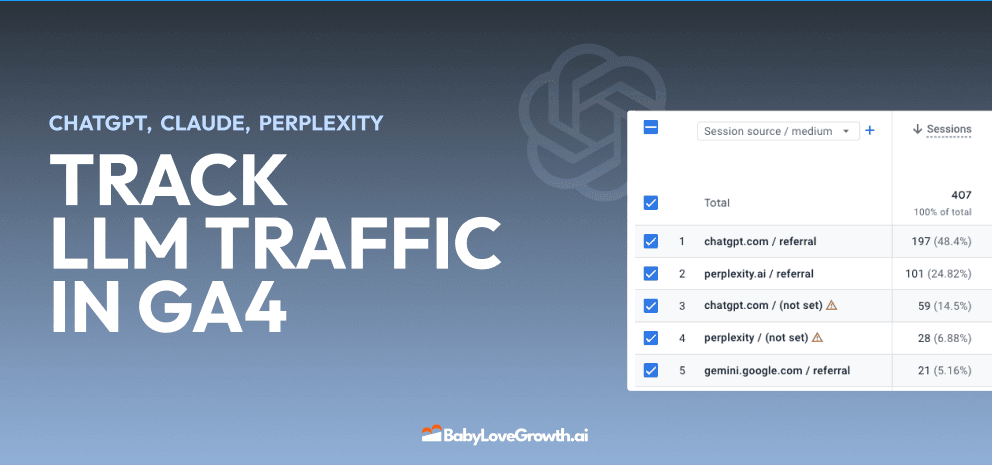
Track LLM Traffic in Google Analytics 4 (GA4)
Learn how to track and analyze traffic from AI sources like ChatGPT, Claude, Perplexity, and Google Gemini in Google Analytics 4. This step-by-step guide shows you how to set up custom filters to monitor AI-driven traffic and make data-driven decisions for your content strategy.
DylenMar 18, 2025
How to Humanize AI Text with Instructions
Learn practical techniques to make AI-generated content sound more natural and human. This guide covers active voice, direct addressing, concise writing, and other proven strategies to transform robotic text into engaging content.
DylenApril 7, 2025
Open AI Revenue and Statistics (2024)
Comprehensive analysis of OpenAI financial performance, user engagement, and market position in 2023. Discover key statistics including $20B valuation, $1B projected revenue, and 100M+ monthly active users.
DylenOctober 03, 2025