How to Track SEO Performance in 2026: A Practical Guide


TL;DR:
- Tracking SEO performance involves measuring visibility, traffic, and business results, with organic search driving over 53% of website visits.
- Effective tracking requires focusing on key metrics across visibility, traffic, engagement, and outcomes while using free tools initially and adding paid ones as needed.
SEO performance tracking is the practice of measuring how well your search optimization efforts translate into visibility, traffic, and business results. Organic search drives over 53% of trackable website visits, making it the single largest traffic channel for most businesses. Knowing how to track SEO performance means connecting rankings and impressions to actual revenue, not just watching numbers move. This guide covers the metrics that matter, the tools that work, and the monitoring workflow that keeps you focused without burning out.
Which key SEO metrics should you track?
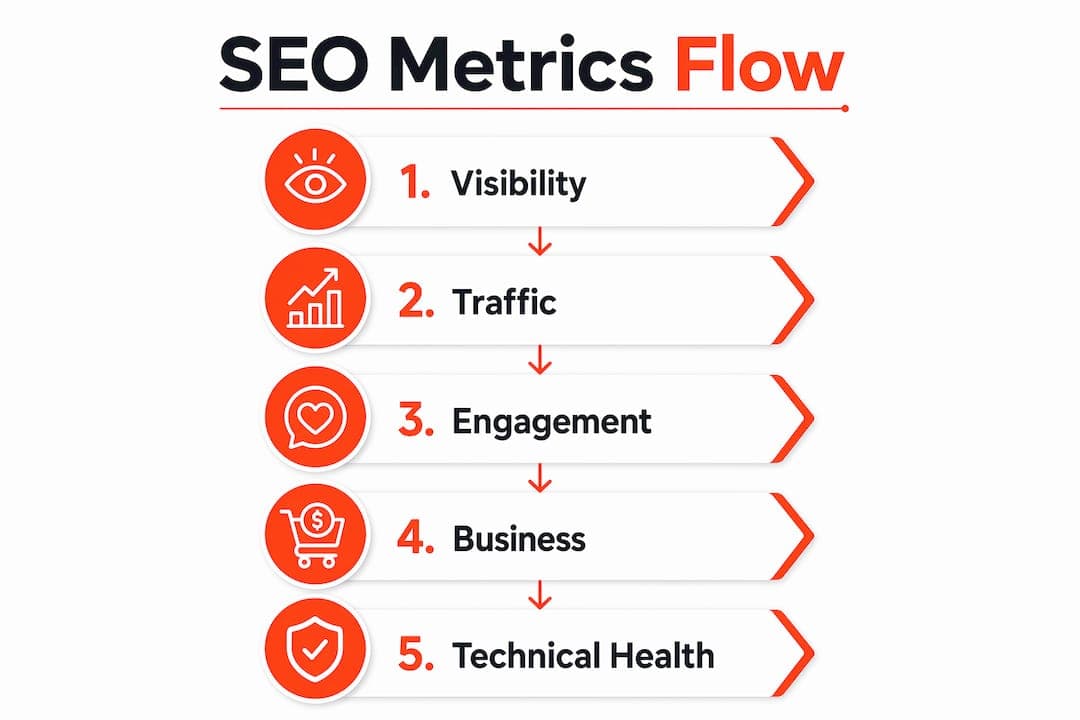
SEO performance metrics fall into four categories: visibility, traffic, engagement, and business outcomes. Tracking all four gives you a complete picture. Tracking only one, like rankings, gives you a false sense of progress.

Visibility metrics
Rankings, impressions, and click-through rate (CTR) measure how often your site appears and how often searchers click. Top three positions capture 54.4% of all clicks, so moving a keyword from position 8 to position 3 can dramatically change your traffic volume. CTR below 3% on a high-impression page signals a title or meta description problem, not a ranking problem.
Traffic and engagement metrics
Organic sessions, split between branded and non-branded queries, reveal whether you are growing a new audience or just capturing people who already know you. Non-branded growth is the stronger signal for SEO health. Engagement time per session, as measured in Google Analytics 4, replaces the old bounce rate metric and gives a more accurate read on content quality.
Business outcome metrics
Organic conversions, leads, phone calls, and revenue are the metrics that justify your SEO budget. Without connecting traffic to outcomes, you are reporting activity, not results. Set up GA4 event tracking for form submissions, purchases, and phone click events from day one.
Technical health metrics
Index coverage, crawl errors, and Core Web Vitals belong in every monitoring workflow. A page that Google cannot crawl cannot rank. Core Web Vitals scores directly affect ranking eligibility under Google's page experience signals.
AI visibility metrics
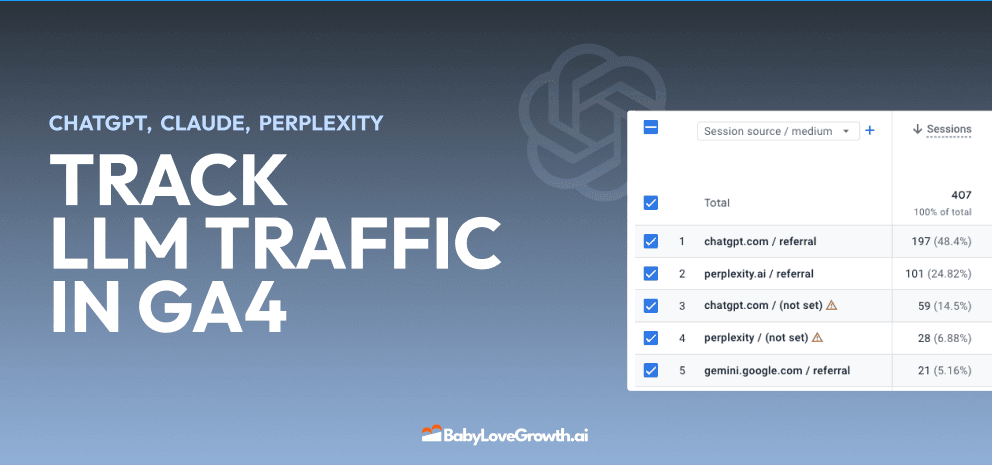
Tracking AI citation frequency and share of voice is critical in 2026 because AI search features can absorb clicks even when your traditional rankings stay stable. A brand that ranks on page one but never appears in ChatGPT or Perplexity answers is losing ground it cannot see in standard reports. Add manual prompt testing or an AI visibility platform to your monthly review.
Pro Tip: Use Google Search Console's Performance report to filter for high-impression, low-click pages. These are your fastest wins. A title rewrite can double CTR without any link building.
What tools should you use for SEO tracking?
The right tool stack depends on your specific KPIs, not on collecting every data source available. Start with free tools, then add paid tools when you hit their limits.
Free foundational tools:
- Google Search Console is the only source of truth for how Google sees your site. Use it for impressions, CTR, index coverage, and crawl errors.
- Google Analytics 4 tracks post-click behavior, conversion events, and revenue attribution from organic traffic.
- Looker Studio connects both sources into a single dashboard, so you can report on the full funnel in one view.
When to add paid tools:
Free tools like Google Search Console and Google Analytics 4 cover essential SEO metrics, while paid tools starting at around $120/month provide advanced rank monitoring and backlink analysis. Add a paid platform when you need daily rank tracking across hundreds of keywords, backlink profile monitoring, or structured competitor benchmarking. For a deeper look at how agencies evaluate these options, the top SEO tools for agencies in 2026 covers current reporting standards and AI visibility tracking in detail.| Tracking need | Tool type | Cost |
|---|---|---|
| Google rankings and indexing | Google Search Console | Free |
| Traffic and conversions | Google Analytics 4 | Free |
| Dashboard and reporting | Looker Studio | Free |
| Rank tracking and backlinks | Paid SEO platform | ~$120+/month |
| AI visibility monitoring | AI visibility platform | Varies |
Pro Tip: Build your Looker Studio dashboard before you need it. Connecting GA4 and Google Search Console takes 20 minutes and saves hours of manual reporting every month.
How should you structure your monitoring workflow?
A disciplined cadence is the difference between useful data and noise. SEO monitoring should be segmented by cadence: daily checks for critical alerts, weekly keyword and traffic trends, monthly deep dives for conversions and backlink growth, and quarterly strategic reviews. Each layer serves a different purpose.
- Daily (15 minutes). Check for ranking crashes, manual actions in Google Search Console, and site errors. Do not review broad KPIs daily. You are looking for fires, not trends.
- Weekly. Review keyword movement, organic session trends, and CTR shifts. A weekly view smooths out the daily noise that causes unnecessary reactions.
- Monthly. Connect traffic data to conversions and revenue. Review backlink growth, technical health scores, and Core Web Vitals. This is where you spot patterns and adjust tactics.
- Quarterly. Conduct a full strategic review. Reassess your keyword targets, content gaps, and budget allocation. Decide which tactics to scale and which to drop.
Avoid "daily dashboard anxiety" by limiting daily checks to major technical or ranking issues. Broader KPIs reviewed weekly or monthly produce better decisions than daily monitoring of metrics that fluctuate naturally.
Pro Tip: Set up Google Search Console email alerts for manual actions and coverage errors. You get notified immediately without checking the dashboard every day.
How do you connect SEO data to business outcomes?
Proving SEO ROI requires linking organic traffic directly to revenue, not just reporting sessions and rankings. Connecting organic traffic data in GA4 to specific conversion events over 90-day rolling windows is best practice for demonstrating ROI and smoothing out search behavior volatility.
The practical steps are straightforward:
- Set up GA4 conversion events for every action that has business value: form submissions, purchases, phone clicks, and chat initiations.
- Use 90-day rolling windows when reporting organic revenue. Monthly snapshots miss seasonal patterns and algorithm fluctuation.
- Integrate your CRM to track leads that originate from organic search through to closed deals. GA4 shows the conversion; your CRM shows the revenue.
- Report on cost per organic lead alongside total conversions. This number makes SEO investment tangible to stakeholders who do not follow rankings.
Vanity metrics like total impressions or average position look good in a slide deck but do not justify budget. Business ROI metrics must outweigh vanity metrics for meaningful reporting. The moment you tie organic traffic to a dollar figure, SEO stops being a cost center and becomes a revenue channel. For a structured approach to measuring SEO performance for agencies, the methods for connecting visibility to business value are covered in depth.
What are the most common SEO tracking mistakes?
Most SEO tracking failures come from doing too much, not too little. Common mistakes include tracking too many metrics without clear focus and reacting too quickly to short-term ranking fluctuations. Both errors lead to misinformed decisions.
The specific pitfalls to watch for:
- Tracking 20+ metrics with no priority. Pick 5–7 KPIs tied directly to your business goals and ignore the rest until those are healthy.
- Reacting to weekly ranking drops. Rankings fluctuate naturally. A single week of decline means nothing without a 30-day trend to support it.
- Ignoring technical SEO health. Index coverage errors and slow Core Web Vitals scores silently suppress rankings without triggering obvious alerts.
- Skipping AI visibility in 2026. AI visibility represents a new layer of SEO measurement where brands must track presence in AI-driven answers. Ignoring it means missing a growing share of organic reach.
- Failing to connect SEO to revenue. Traffic reports without conversion data do not prove value to decision-makers.
"The goal of SEO tracking is not to monitor everything. It is to monitor the right things at the right frequency, so you can act on real signals instead of reacting to noise."
Key Takeaways
Effective SEO performance tracking connects visibility metrics to business outcomes through a disciplined, cadence-based workflow that includes both traditional and AI visibility signals.
| Point | Details |
|---|---|
| Track four metric categories | Cover visibility, traffic, engagement, and business outcomes for a complete picture. |
| Start with free tools | Google Search Console and Google Analytics 4 cover the essentials before adding paid platforms. |
| Use a segmented cadence | Daily for critical issues, weekly for trends, monthly for ROI, and quarterly for strategy. |
| Connect traffic to revenue | Use GA4 conversion events and 90-day rolling windows to prove SEO ROI to stakeholders. |
| Add AI visibility tracking | Monitor AI citation frequency and share of voice alongside traditional rankings in 2026. |
Why most SEO dashboards tell you less than you think
I have reviewed hundreds of SEO reports over the years, and the most common problem is not missing data. It is too much data with no clear hierarchy. Teams spend hours building dashboards that show 40 metrics and then cannot answer the one question that matters: is SEO driving revenue?
The shift that actually changes outcomes is treating your SEO report like a business report, not a technical audit. Rankings and impressions belong in the appendix. Organic leads and cost per acquisition belong at the top. When you structure reporting that way, stakeholders stop asking "why did we drop three positions?" and start asking "how do we get more of this?"
The AI visibility piece is where I see the biggest blind spot right now. Brands that rank well on Google are watching their click-through rates erode because AI-generated answers are answering the query before the user reaches the results. Traditional rank tracking does not catch this. You need to be testing your brand and target queries in ChatGPT, Perplexity, and Claude on a monthly basis and logging what you find. It is manual work today, but the signal is real.
The teams that win at SEO measurement are not the ones with the most sophisticated tools. They are the ones with the clearest KPI hierarchy, the most consistent review cadence, and the discipline to ignore noise. Build that discipline first. The tools will follow.
— MEET
Babylovegrowth makes SEO tracking more than a reporting exercise
Tracking SEO performance is only half the work. Acting on what you find is the other half.
Babylovegrowth gives digital marketers and business owners the tools to move from insight to action. The AI-powered keyword discovery platform surfaces hidden opportunities your current reports are missing. The backlink building software automates link acquisition so your domain authority grows alongside your content. The AI crawlability audit checks whether AI bots can actually access and index your site, a check that standard audits skip entirely. When your tracking workflow identifies a gap, Babylovegrowth gives you the tools to close it.
FAQ
What is SEO performance tracking?
SEO performance tracking is the process of measuring how well your SEO efforts produce visibility, traffic, and business results using tools like Google Search Console and Google Analytics 4.
How often should you check SEO metrics?
Check for critical technical issues daily, review keyword and traffic trends weekly, and connect traffic to conversions monthly. Quarterly strategic reviews align with the 3–6 month impact cycle of SEO campaigns.
What is the most important SEO metric?
Organic conversions and revenue are the most important metrics because they connect SEO activity directly to business value. Rankings and impressions matter only as leading indicators of future traffic.
How do you track SEO ROI?
Set up GA4 conversion events, use 90-day rolling windows for revenue reporting, and integrate your CRM to track organic leads through to closed deals. Organic traffic connected to specific conversion events over 90-day windows is the standard for demonstrating SEO ROI.
Do you need to track AI visibility in 2026?
Yes. AI search features can absorb clicks even when traditional rankings stay stable, so monitoring AI citation frequency and share of voice is now part of a complete SEO measurement workflow.