Organic Ranking Tips 2026: What Marketers Need to Know


TL;DR:
- In 2026, content quality, topical expertise, and user engagement are the primary factors driving SEO success. Building interconnected topic clusters and acquiring high-quality backlinks greatly accelerate ranking and AI citations. Improving internal links and answer-first content structures are essential for maintaining and boosting rankings.
Organic search ranking in 2026 is defined by five core factors: content quality, keyword placement, backlinks, topical expertise, and user engagement. Together, these five factors account for 75% of Google's ranking power, with content quality alone driving roughly 23% of that weight. AI Overviews have reshaped the game further, pushing SEO philosophy away from keyword density and toward being the best next click for any given searcher. The marketers winning in 2026 treat organic ranking tips not as a checklist but as an integrated system.
1. What are the essential organic ranking factors driving SEO success in 2026?
Content quality and depth carry the single largest ranking weight at approximately 23%. That means a well-researched, clearly structured article on a specific topic consistently outranks a thin page stuffed with keywords. Depth signals expertise. Expertise builds trust with both Google and readers.

Strategic keyword placement in title tags and H1 headings accounts for roughly 14% of ranking influence. Placing your primary keyword in the first 100 words and in at least one subheading still moves the needle. The key is natural placement, not repetition.
Authoritative backlinks remain the single highest-weighted individual factor, but the emphasis has shifted entirely to quality, relevance, and editorial credibility. One link from a respected industry publication outperforms 50 links from low-authority directories. Topical expertise, built through cluster content, drives roughly 13% of ranking power. User engagement signals, including dwell time and return-to-SERP behavior, contribute another 12%.2. How to build and optimize topical clusters for faster ranking
A topic cluster is a group of interconnected articles covering a subject from multiple angles, all linked back to a central pillar page. Clustered content ranks keywords 3–5x faster than isolated pages. That speed advantage comes from Google recognizing your site as an authority on the full topic, not just one keyword.
Sites with five or more interconnected topic articles generate 86% more AI citations than isolated pages. That figure matters because AI Overviews increasingly drive branded search volume. Getting cited in an AI Overview means more people search your brand name directly.
Building an effective cluster requires:
- A pillar page covering the broad topic with depth and internal links to each spoke
- At least five spoke articles targeting specific subtopics or long-tail questions
- Anchor-diverse internal links, meaning varied anchor text pointing from pillar to spoke and back
- Consistent formatting so Google can extract clear, self-contained answers from each section
Pro Tip: Refresh your topic clusters every quarter. Update statistics, add new subtopics, and re-submit the pillar URL to Google Search Console. Fresh clusters hold rankings longer and attract new AI citations.
Babylovegrowth automates this process with its 30-day content planning feature, which maps full cluster structures before a single article is written.
3. What user engagement signals matter most for organic ranking?
Pogo-sticking is the strongest negative ranking signal identified in 2026. Pogo-sticking happens when a user clicks your result, immediately returns to the search results page, and clicks a competitor instead. Google's NavBoost system reads that behavior as a clear signal that your page failed to satisfy the query.Dwell time and return-to-SERP behavior are the two positive and negative engagement metrics NavBoost weighs most heavily. A page that keeps readers engaged for two or more minutes sends a strong positive signal. A page that loses readers in under 30 seconds sends the opposite.
Practical tactics to reduce pogo-sticking and improve user engagement include:
- Answer the query directly in the first 40–60 words of each section, not after three paragraphs of context
- Use clear H2 and H3 subheadings so readers can scan and find what they need fast
- Add credible author bios and cite sources visibly to build immediate trust
- Include interactive elements such as tables, comparison lists, or embedded tools to extend time on page
Pro Tip: Test your pages with a five-second rule. If a reader cannot identify the main answer within five seconds of landing, restructure the opening paragraph.
The relationship between bounce rate and SEO is direct. Pages with a 41–55% bounce rate consistently outrank pages above 70% in competitive keyword categories.
4. How to use structured data and technical SEO for AI citation
Schema markup is no longer optional for competitive rankings. FAQ and HowTo schema correlation with AI snippet eligibility has tripled since 2018. Structured data tells AI systems exactly what your content answers, making it far easier to extract and cite.
AI systems prioritize verifiable claims and structured data over long, vague content. That means a 600-word article with clear schema, cited statistics, and a direct answer structure can outperform a 2,000-word article with no markup. Factual density beats word count.
Core technical SEO requirements in 2026:
| Technical Factor | Standard to Meet | Why It Matters |
|---|---|---|
| Page speed (LCP) | Under 2 seconds | Core Web Vitals directly affect ranking |
| Mobile usability | Full mobile rendering | Google indexes mobile-first |
| HTTPS | Required sitewide | Treated as a baseline hygiene factor |
| Schema markup | FAQ, HowTo, Article | Triples AI snippet eligibility |
| Crawlability | Clean XML sitemap, no broken links | Ensures full indexing |
Pro Tip: Run a crawlability audit before publishing new cluster content. Broken internal links and orphaned pages block Google from recognizing your cluster as a connected authority structure.
Babylovegrowth's AI crawlability audit tool checks whether AI bots can access and index your pages correctly, catching technical gaps that standard audits miss.
5. What are the best backlink strategies for 2026?
Backlinks remain the top-weighted ranking factor in 2026, but the rules have changed. Volume no longer wins. A single contextual link from a credible publisher in your niche carries more ranking weight than 100 links from unrelated directories. Google's spam detection has become precise enough to penalize low-quality link schemes reliably.
Earned media backlinks, where journalists or bloggers cite your original research or data, deliver the highest authority. Publishing original studies, surveys, or proprietary data gives other sites a reason to link to you editorially. That is the most durable form of link acquisition available.
Effective backlink strategies for 2026 include:
- Publishing original research or data that other sites in your niche want to cite
- Pitching guest articles to credible industry publications with contextual links back to your pillar pages
- Building relationships with journalists covering your industry through PR outreach
- Using digital PR campaigns tied to newsworthy data or trends
Pro Tip: Integrate backlink acquisition into your content calendar. Every major cluster you publish should include a PR brief targeting at least three relevant publications for outreach.
Avoid reciprocal link schemes, paid link networks, and mass directory submissions. These tactics trigger spam signals and can result in manual penalties that take months to recover from.
Key Takeaways
The most effective organic search strategies in 2026 combine content quality, topic cluster completion, user engagement optimization, structured data, and editorially earned backlinks into one integrated system.
| Point | Details |
|---|---|
| Content quality leads rankings | At roughly 23% weight, depth and factual density outperform keyword stuffing every time. |
| Clusters rank faster | Five or more interconnected articles rank keywords 3–5x faster and generate 86% more AI citations. |
| Pogo-sticking kills rankings | Immediate return-to-SERP behavior is the strongest negative signal in Google's NavBoost system. |
| Schema markup triples AI eligibility | FAQ and HowTo structured data has tripled correlation with AI snippet selection since 2018. |
| Backlink quality beats quantity | One editorial link from a credible publisher outweighs dozens of low-authority links. |
What I've learned about SEO that most guides still get wrong
Most SEO guides in 2026 still treat ranking factors as independent levers. Pull the backlink lever. Pull the keyword lever. That mental model is outdated and it costs marketers real traffic.
What I've seen work consistently is treating SEO as a closed loop. Content quality drives engagement. Engagement signals reinforce rankings. Strong rankings attract backlinks. Backlinks amplify topical authority. Topical authority accelerates cluster ranking speed. Every factor feeds the others. When you neglect one, the whole system underperforms.
The area I see most marketers underinvest in is internal linking within clusters. They publish five articles on a topic and then link them loosely or not at all. Google cannot recognize a cluster it cannot crawl as a connected structure. Anchor-diverse, pillar-to-spoke linking is not a nice-to-have. It is the mechanism that makes cluster authority flow.
The second blind spot is user engagement. Marketers spend weeks on keyword research and hours on backlink outreach, then publish pages that lose readers in 30 seconds because the opening paragraph buries the answer. Answer-first content structure in the first 40–60 words is one of the highest-leverage changes you can make right now, and it costs nothing.
The marketers who will win organic search in 2026 are the ones who treat technical SEO, content depth, and user experience as one discipline, not three separate departments.
— MEET
Babylovegrowth tools built for 2026 organic growth
Applying these strategies manually at scale is where most teams hit a wall. Babylovegrowth was built specifically to remove that bottleneck.
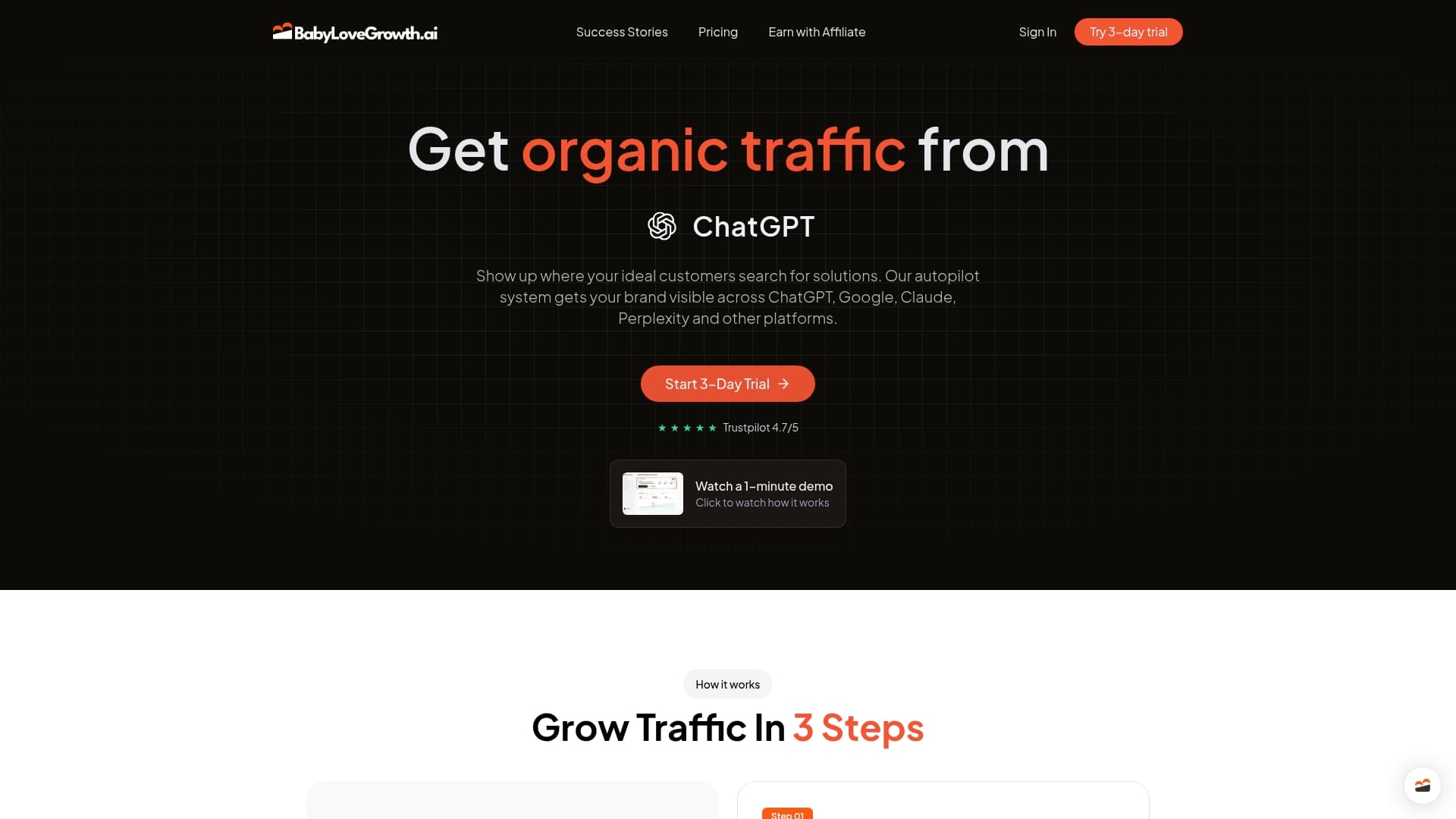
The platform's AI keyword discovery tool surfaces hidden keyword opportunities your competitors have not found yet, mapping them directly into cluster structures ready for publishing. For backlinks, Babylovegrowth's link acquisition platform automates contextual, quality-focused outreach at a scale that manual PR cannot match. The AI crawlability audit catches technical gaps before they cost you rankings. If you are serious about ranking higher on Google in 2026, these tools close the gap between strategy and execution.
FAQ
What are the top organic ranking factors in 2026?
Content quality, keyword placement, backlinks, topical expertise, and user engagement account for 75% of Google's ranking power. Content quality alone carries roughly 23% of that weight.
How does pogo-sticking affect Google rankings?
Pogo-sticking is the strongest negative ranking signal in Google's NavBoost system. When users return to search results immediately after clicking your page, Google interprets it as a failure to satisfy the query and lowers your ranking.
How many articles do I need in a topic cluster?
At least five interconnected articles per topic cluster maximizes AI citation rates and ranking speed. Sites with five or more cluster articles generate 86% more AI citations than isolated pages.
Does schema markup really help with AI Overviews?
Yes. FAQ and HowTo schema correlation with AI snippet eligibility has tripled since 2018. Structured data makes it easier for AI systems to extract and cite your content directly.
How important are backlinks compared to content quality in 2026?
Backlinks remain the highest-weighted individual ranking factor, but quality and editorial relevance now matter far more than volume. One contextual link from a credible publisher in your niche outperforms dozens of low-authority links.