How to Write SEO-Friendly Content That Ranks (2025)


Table of Contents
- Plan Content Around User Search Intent
- Optimize Your Content For Keywords
- Structure Your Blog Post For Readers
- Improve Content Readability And Flow
Quick Summary
| Takeaway | Explanation |
|---|---|
| Plan Content Around User Search Intent | Understand and align your content with the four primary search intent types: informational, navigational, transactional, and commercial investigation to attract and engage your target audience effectively. |
| Optimize Your Content for Keywords | Implement a nuanced keyword strategy that includes primary, secondary, and long-tail keywords, focusing on natural integration within critical content areas to enhance both user value and search engine visibility. |
| Structure Your Blog Post for Readers | Create a logical flow with a clear content hierarchy, employing strategic use of headings and formatting techniques to enhance readability and user engagement while ensuring a smooth reading experience. |
| Improve Content Readability and Flow | Focus on improving content accessibility by using active voice, eliminating jargon, and ensuring sentences remain concise and varied, which enhances comprehension and keeps readers engaged. |
Plan Content Around User Search Intent
Successful SEO-friendly content starts with understanding precisely what users want when they search for information. Search intent is the core motivation behind a user's query, and aligning your content directly with these intentions determines your ability to attract and engage your target audience.
Decoding the Four Primary Search Intent Types
Understanding search intent requires recognizing the four fundamental categories users typically explore:
- Informational Intent: Users seeking knowledge or answers to specific questions. These searchers want comprehensive, clear explanations that resolve their queries.
- Navigational Intent: Users looking to find a specific website or webpage. They have a destination in mind and want direct, efficient paths.
- Transactional Intent: Users ready to make a purchase or complete an action. They seek detailed product information, comparisons, and clear purchasing pathways.
- Commercial Investigation Intent: Users researching potential purchases, comparing options, and evaluating solutions before making a final decision.
By mapping your content to these specific intent categories, you create targeted, relevant material that search engines and users will appreciate.
Strategic Content Alignment Techniques
Effective content planning requires a systematic approach to matching user needs with your content strategy. According to Outbrain, thinking 'outside-in' means researching what your audience genuinely searches for, not just what seems interesting to your business.
Start by conducting comprehensive keyword research that goes beyond surface-level terms. Look for:
- Long-tail keywords reflecting specific user questions
- Semantic variations and related search terms
- Question-based queries in your industry
Utilize tools like Google's 'People Also Ask' sections, keyword research platforms, and forum discussions to uncover genuine user interests. Surfer SEO recommends focusing on creating long-form, helpful content that targets low-competition keywords to improve engagement and visibility.
When developing content, ask critical questions: What specific information are users seeking? What problems are they trying to solve? What depth of explanation will truly satisfy their search intent?
For instance, if users search "how to write SEO-friendly content," they likely want a comprehensive guide covering strategy, techniques, and practical implementation—not just surface-level advice.
Remember that search intent isn't static. Regularly audit your content's performance, analyze user behavior through analytics, and be prepared to refine your approach. Search trends evolve, and your content strategy must adapt accordingly.
By meticulously planning content around user search intent, you transform your approach from generic information distribution to targeted, user-centric communication that search engines reward with higher rankings and increased organic traffic.
Optimize Your Content for Keywords
Keyword optimization remains a critical strategy for creating SEO-friendly content that ranks well and attracts targeted organic traffic. However, modern keyword optimization goes far beyond simple keyword stuffing, requiring a nuanced, strategic approach that balances search engine requirements with genuine user value.
Strategic Keyword Placement And Research
Effective keyword optimization begins with comprehensive research and intelligent implementation. Moz recommends a multi-dimensional approach to keyword selection that considers search volume, competition, and relevance.
When selecting keywords, focus on:
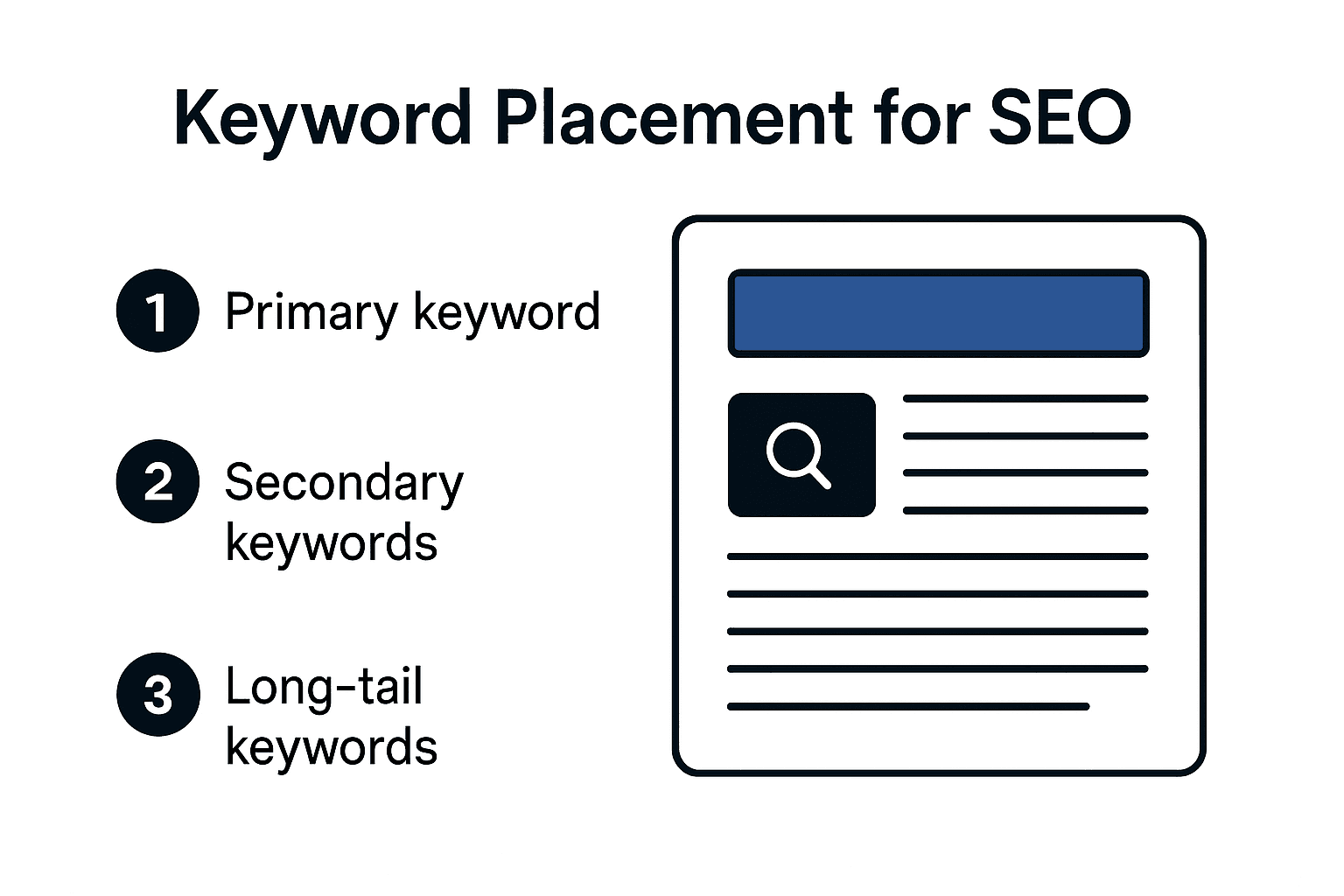
- Primary Keywords: Your main target term that directly represents the content's core topic
- Secondary Keywords: Semantically related terms that provide context and depth
- Long-Tail Keywords: Specific, conversational phrases that capture precise user intent
Incorporate keywords naturally within critical content areas:
- Page title
- First paragraph
- Headings and subheadings
- Meta description
- Image alt text
- Throughout content body
Advanced Keyword Integration Techniques
Modern SEO demands a sophisticated approach to keyword usage. According to Search Engine Journal, the goal is creating contextually rich content that reads naturally while signaling relevance to search algorithms.
Key strategies include:
- Use semantic variations and related terms to demonstrate comprehensive topic coverage
- Avoid excessive repetition that makes content feel artificial
- Prioritize readability and user experience over mechanical keyword insertion
- Implement keywords in a way that provides genuine value to the reader
For example, when writing about "how to write SEO-friendly content," don't just repeat the phrase mechanically. Instead, explore related concepts like keyword research, content structure, user intent, and writing techniques that comprehensively address the topic.
Utilize tools like Google's Keyword Planner, SEMrush, or Ahrefs to identify:
- Keyword difficulty
- Search volume
- Related search queries
- Competitive landscape
Remember that keyword optimization is an ongoing process. Regularly review and update your content to maintain relevance and alignment with evolving search trends. Monitor your content's performance, analyze user engagement metrics, and be prepared to refine your approach based on real-world data.
By implementing a thoughtful, strategic approach to keyword optimization, you create content that not only ranks well but genuinely serves your audience's informational needs.
Structure Your Blog Post for Readers
Creating an SEO-friendly blog post goes beyond keyword optimization—it requires a strategic approach to content structure that enhances readability, engagement, and user experience. The way you organize and present information can significantly impact how readers interact with your content and how search engines evaluate its quality.
Create a Clear Content Hierarchy
A well-structured blog post follows a logical flow that guides readers through the content seamlessly. Search Engine Land emphasizes the importance of creating clear information hierarchies that serve both users and search engines.
Effective content structure typically includes:
- Compelling Headline: Capture attention and communicate the core value proposition
- Introduction: Briefly outline what readers will learn
- Subheadings: Break content into digestible sections
- Body Paragraphs: Provide detailed, valuable information
- Conclusion: Summarize key points and provide actionable insights
Use headings strategically to create a logical content flow. H2 headings should represent main topics, while H3 headings can dive into specific subtopics. This approach helps readers quickly scan and understand the content's structure.
Optimize Readability and User Experience
According to Bynder's content optimization guidelines, effective blog post structure involves several key formatting techniques:
- Use short, concise paragraphs (3-4 sentences maximum)
- Incorporate bullet points to highlight key information
- Bold important terms or concepts for emphasis
- Use white space to prevent visual overwhelm
- Include relevant images or graphics to break up text
Consider the visual experience of your readers. Large blocks of text can be intimidating and discourage engagement. Break your content into smaller, more digestible chunks that make reading effortless.
When writing about complex topics like "how to write SEO-friendly content," use clear, straightforward language. Avoid industry jargon that might confuse readers. Your goal is to make complex information accessible and understandable.
Utilize topic clusters—a strategy where a main pillar page covers a broad topic comprehensively, with supporting pages exploring specific aspects in depth. This approach not only improves user experience but also signals to search engines that your content provides comprehensive, authoritative information.
Consider the reader's journey through your content. Each section should smoothly transition to the next, creating a narrative flow that keeps readers engaged. Use transitional phrases that connect ideas and guide readers through your argument or explanation.
Remember that mobile readers now represent a significant portion of online content consumption. Ensure your blog post structure is responsive and easily readable on smaller screens. This means shorter paragraphs, clear headings, and a design that adapts to different device sizes.
By prioritizing reader-friendly structure, you create content that not only ranks well in search results but provides genuine value to your audience. The ultimate goal is to make information consumption as smooth and enjoyable as possible.
Improve Content Readability and Flow
Readability is the cornerstone of effective content creation, transforming complex information into accessible, engaging material that resonates with readers. Beyond mere word selection, improving content readability involves strategic writing techniques that make your message clear, compelling, and easy to consume.
Writing for Comprehension and Engagement
Yoast SEO recommends specific metrics for creating highly readable content. Aim to structure your writing so that:- 75% of sentences are under 20 words
- Transition words appear in over 30% of sentences
- Paragraph lengths remain under 150 words
- Maintain a Flesch Reading Ease score between 60-70
These guidelines aren't about oversimplifying content but about making complex ideas more digestible. As content design expert Sarah Richards explains, the goal is to "open up" accessibility, ensuring more readers can comprehend and engage with your material.
Practical Readability Enhancement Techniques
Improving content flow requires a multifaceted approach. Search Engine Land highlights that enhanced readability directly impacts user engagement metrics, which are crucial indirect ranking factors.
Key strategies include:
- Use active voice to create direct, clear statements
- Eliminate unnecessary technical jargon
- Break complex concepts into step-by-step explanations
- Incorporate varied sentence structures
- Use conversational language that feels natural
When discussing technical topics like "how to write SEO-friendly content," translate complex ideas into everyday language. Imagine explaining the concept to a colleague over coffee—this approach helps create more approachable, understandable content.
Consider your sentence and paragraph rhythm. Alternate between shorter, punchy sentences and more complex, detailed explanations. This variation keeps readers engaged and prevents monotony.
Utilize readability tools like Hemingway Editor or Grammarly to assess your content's complexity. These tools provide insights into sentence structure, word choice, and overall comprehension level.
Pay special attention to your introduction and conclusion. The introduction should immediately capture attention and clearly outline what readers will learn. The conclusion should synthesize key points and provide actionable insights.
Remember that readability isn't just about words—it's about creating a smooth, intuitive reading experience. Use subheadings, bullet points, and strategic formatting to guide readers through your content. Visual breaks and clear hierarchies help readers quickly understand and navigate your material.
Ultimately, great content balances informative depth with effortless comprehension. By prioritizing readability, you create content that not only ranks well in search results but genuinely connects with and helps your audience.
Frequently Asked Questions
What is SEO-friendly content?
SEO-friendly content is written with the intent to rank well in search engines. It involves understanding user search intent, optimizing for relevant keywords, and providing valuable, engaging information that meets readers' needs.
How can I identify user search intent?
To identify user search intent, analyze the type of queries people use. These can be categorized as informational, navigational, transactional, or commercial investigation. Tools like keyword research platforms and Google's 'People Also Ask' can help uncover these insights.
What are the best practices for keyword optimization?
Best practices for keyword optimization include using a mix of primary, secondary, and long-tail keywords naturally throughout your content, including in titles, headings, and meta descriptions, while maintaining readability and user engagement.
Why is content structure important for SEO?
Content structure is crucial for SEO because it enhances readability and user experience. A clear hierarchy with headings, subheadings, and logical flow helps both readers and search engines understand the content, leading to better engagement and improved rankings.
Transform Your SEO Strategy with Automated Solutions
Feeling overwhelmed by the complexities of creating SEO-friendly content that genuinely ranks? You're not alone. Many content creators struggle to align with user search intent, optimize for effective keywords, and maintain a reader-friendly structure while aiming to enhance organic visibility. If only there were a way to simplify this process while ensuring your content remains engaging and search-optimized!
Introducing BabyLoveGrowth.ai, your trusted parter in SEO content generation! With our three-step streamlined process, we take the guesswork out of your SEO strategy:
- In-depth Business Analysis: Understand user needs and competitive positioning.
- Custom 30-Day Content Plan: Tailor your content strategy to reflect user search intent while implementing optimal keywords.
- Automated SEO-Optimized Article Generation: Effortlessly create engaging content that drives traffic and keeps your audience coming back for more.
Don’t let the challenges of SEO hold you back any longer. Start transforming your content today and witness the difference automated solutions can make! Visit BabyLoveGrowth.ai now to elevate your online presence effortlessly.
Recommended Articles
- Proven SEO for IT Services: Skyrocket Business Growth
- SEO for Real Estate Agencies: Simple Strategies to Grow Your Business
- What Is Topical Authority in SEO? The Ultimate Guide to Boost Your Rankings
- Boost Your Business with SEO for Auto Repair Shops: A Practical Guide
- Definitive Guide: Types of Backlinks in Off Page SEO 2025