How to Conduct Keyword Research for SEO in 2025


Keyword research in 2025 looks nothing like it did a few years ago. Every year, search engines change, and yet one fact stands out—long-tail keywords now account for more than 70 percent of all search traffic. Surprised? Many marketers still chase high-volume broad terms, expecting bigger rewards. The real gold lies in decoding intent and strategically using keyword diversity, which can put you miles ahead of your competition.
Table of Contents
- Understand Keyword Types And User Intent
- Find Keyword Ideas And Opportunities
- Analyze Keywords And Choose The Best
- Use Keywords In Your Content Strategy
Quick Summary
| Takeaway | Explanation |
|---|---|
| Understand Keyword Types | Classify keywords into seed and long-tail categories to target both broad and specific user intents effectively. |
| Utilize Internal Insights | Leverage your business knowledge and customer interactions to generate relevant seed keywords for more effective research. |
| Analyze SERP Features | Examine what types of content currently rank for your target keywords to identify gaps and opportunities for superior content creation. |
| Integrate Keywords Naturally | Ensure keywords are seamlessly incorporated within high-quality content that answers user questions, avoiding keyword stuffing for better user experience. |
| Implement a Dynamic Strategy | Periodically review and adapt your keyword strategy, considering evolving trends and shifts in user behavior to maintain SEO effectiveness. |
Understand Keyword Types and User Intent
Keyword research goes far beyond simply finding popular search terms. Successful SEO strategies require a deep understanding of keyword types and the underlying user intent that drives search behaviors.
Categorizing Keywords for Strategic Targeting
Keywords are not created equal. They can be strategically divided into several important categories that help marketers and content creators develop more precise targeting strategies. Seed keywords represent broad, high-volume search terms that capture general interest. These are typically short phrases with significant search volume but often lack specific user intent.
In contrast, long-tail keywords offer more nuanced opportunities. These longer, more specific phrases typically have lower search volumes but demonstrate much higher conversion potential. For example, while "running shoes" is a seed keyword, "best lightweight running shoes for marathon training" is a long-tail keyword that reveals precise user intent and demonstrates a more targeted search approach.
According to Shopify's Keyword Research Guide, understanding the balance between seed and long-tail keywords is crucial for developing a comprehensive SEO strategy that captures both broad visibility and specific user needs.
Decoding User Search Intent
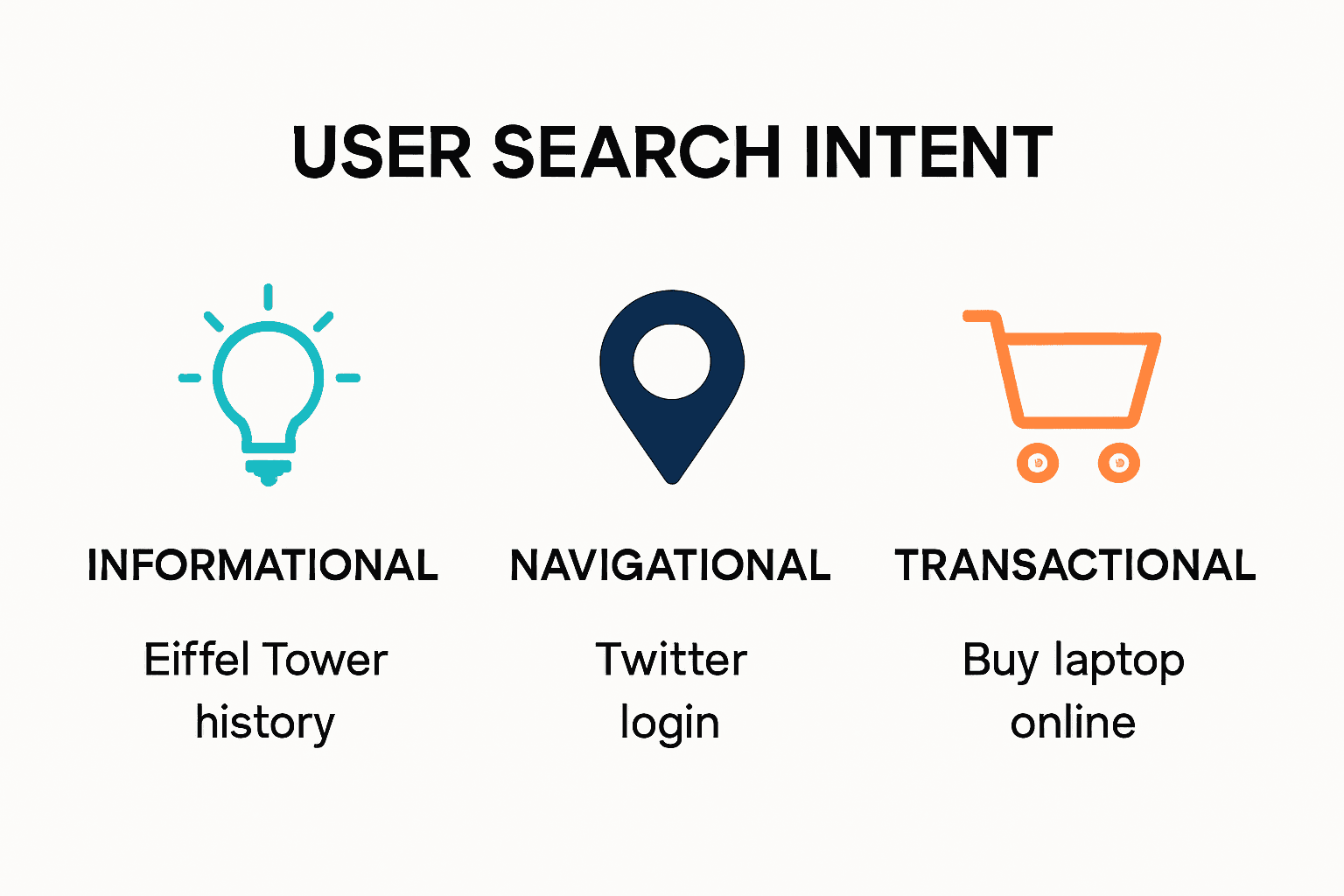
Understanding user intent transforms keyword research from a mechanical process to a strategic art. Search queries typically fall into four primary intent categories:
- Informational Intent: Users seeking knowledge or answers ("how to conduct keyword research")
- Navigational Intent: Searching for a specific website or page
- Transactional Intent: Ready to make a purchase or take action
- Commercial Investigation Intent: Comparing products or services before deciding
By analyzing these intent types, you can align your content more precisely with what users actually want. This approach moves beyond simple keyword matching and focuses on delivering genuine value.
Strategic Keyword Diversity
A sophisticated keyword strategy incorporates both branded and nonbranded keywords, along with semantic variations. Branded keywords include your company or product names, while nonbranded keywords capture broader market interest. Semantic keywords help search engines understand context and relationship between terms.

For instance, if you're researching keywords for running shoes, semantic variations might include terms like "athletic footwear," "marathon training gear," or "comfortable running equipment." This approach helps create a more comprehensive content strategy that captures multiple related search intents.
By developing a nuanced understanding of keyword types and user intent, you transform keyword research from a basic checklist into a strategic approach that connects your content with the right audience at the right moment in their search journey.
Find Keyword Ideas and Opportunities
Discovering new keyword opportunities requires a strategic and multifaceted approach that goes beyond traditional search techniques. Successful keyword research involves creative exploration and understanding the various sources of potential keyword ideas.
Internal Knowledge and Customer Insights
The most powerful keyword research often begins closest to home. Your existing business knowledge, customer interactions, and internal data provide rich insights for keyword discovery. Start by brainstorming seed keywords based on your product offerings, services, and unique value propositions.
Consult different departments within your organization to uncover valuable keyword perspectives. Customer service teams, for instance, hear direct language customers use when describing problems or seeking solutions. Sales teams understand the specific questions and concerns potential clients raise during interactions.
According to Exploding Topics, effective keyword research starts with creating a comprehensive list of seed keywords by:
- Evaluating your product and service offerings
- Checking Google Search Console and Analytics
- Browsing top social media hashtags
- Talking to customer service teams
- Exploring trend libraries
Digital Tools and Research Platforms
Modern keyword research demands leveraging sophisticated digital tools that provide deep insights into search behaviors. Platforms like Google Keyword Planner, SEMrush, and Ahrefs offer comprehensive keyword research capabilities.These tools help you:
- Discover related keywords
- Analyze search volume
- Understand keyword difficulty
- Identify competitive landscapes
- Explore semantic variations
Interestingly, WordStream's SEO Trends report highlights that AI-driven search results are expanding, suggesting researchers should consider emerging answer engines as potential keyword sources.
Competitive and Trend-Based Keyword Research
Competitive analysis provides another rich avenue for keyword discovery. Analyze competitors' content, website structures, and ranking keywords to identify potential opportunities they might have missed. Tools like SpyFu and SEMrush can help uncover these insights.
Trend research is equally crucial. Platforms like Google Trends reveal emerging search interests and seasonal keyword variations. Social media platforms, industry forums, and trending hashtags can also indicate evolving user interests and potential keyword opportunities.
Remember that keyword research is an ongoing process. The digital landscape continuously evolves, and successful SEO strategies require consistent monitoring and adaptation. By combining internal insights, advanced digital tools, and trend analysis, you can develop a dynamic keyword strategy that captures emerging opportunities and connects with your target audience effectively.
Analyze Keywords and Choose the Best
Selecting the right keywords requires a strategic evaluation process that goes beyond simple search volume metrics. Successful keyword selection involves comprehensive analysis and understanding of multiple critical factors.
Evaluating Keyword Metrics
Keyword analysis demands a holistic approach that considers several essential metrics. Search volume indicates how many times a keyword is searched monthly, providing insight into potential audience reach. However, high search volume alone does not guarantee keyword effectiveness.
Keyword difficulty represents how challenging it will be to rank for a specific term. This metric considers competition, existing content, and domain authority. According to Exploding Topics, the most effective keyword research strategy involves finding a balance between low-competition keywords and high-traffic keywords to maximize visibility while maintaining realistic ranking potential.
Additional crucial metrics include:
- Click-through rate potential
- Relevance to your content
- Commercial intent
- Organic click potential
Search Intent and SERP Analysis
Understanding search intent transforms keyword selection from a numbers game to a strategic decision. Keyword research experts recommend thoroughly checking two critical aspects:
- Search Intent Verification: Determine whether users searching the keyword are looking for information, ready to make a purchase, or comparing options
- SERP Feature Analysis: Examine what type of content currently ranks for the keyword (videos, featured snippets, image packs)
SERP analysis helps you understand the competitive landscape and identify opportunities for creating content that can potentially outperform existing results. Look for keywords where:
- Current top results have weak content
- There are gaps in addressing user questions
- Your unique expertise can provide additional value
Prioritizing and Selecting Keywords
After gathering comprehensive data, develop a strategic keyword selection process. Create a scoring system that weighs different metrics based on your specific goals. A typical scoring might include:
- Search volume (30% weight)
- Keyword difficulty (25% weight)
- Relevance to business goals (20% weight)
- Conversion potential (15% weight)
- Content creation feasibility (10% weight)
This approach allows for a nuanced, data-driven keyword selection strategy that goes beyond simplistic ranking metrics.
Remember that keyword selection is not a one-time event but an ongoing process. The digital landscape continuously evolves, and successful SEO requires regular review and adaptation of your keyword strategy. By combining rigorous analysis, understanding search intent, and maintaining flexibility, you can develop a keyword approach that drives meaningful organic traffic and supports your broader marketing objectives.
Use Keywords in Your Content Strategy
Transforming keyword research into an effective content strategy requires strategic implementation and thoughtful integration. Successful keyword usage goes far beyond simple placement and demands a nuanced approach that balances user experience with search engine optimization.
Natural Keyword Integration
Keyword integration should feel organic and seamless. Forcing keywords into content creates a disjointed reading experience that alienates readers and signals low-quality content to search engines. Instead, focus on creating valuable, informative content where keywords emerge naturally within the context.
Start by understanding the primary search intent behind your target keywords. This means crafting content that genuinely answers user questions and provides comprehensive information. For example, if your keyword is "how to conduct keyword research," your content should provide a detailed, step-by-step guide that comprehensively addresses the topic.
According to SEO.com's keyword research guidelines, effective keyword usage involves:
- Placing primary keywords in page titles
- Incorporating secondary keywords in subheadings
- Maintaining a natural, conversational tone
Strategic Content Structuring
Content structure plays a critical role in keyword optimization. Your content should follow a logical flow that incorporates keywords strategically without compromising readability. This means:
- Using primary keywords in the main title
- Incorporating variations in subheadings
- Spreading related keywords throughout the content
- Ensuring each section addresses a specific aspect of the topic
Advanced Keyword Optimization Techniques
Beyond basic keyword placement, advanced optimization involves understanding semantic search and topic clustering. This means creating content ecosystems where related articles interlink and provide comprehensive coverage of a subject.
Consider developing content clusters that explore a topic from multiple angles. For a keyword like "keyword research," you might create supporting content such as:
- Beginner's guides
- Advanced technique articles
- Tool comparisons
- Case studies demonstrating successful implementation
This approach signals to search engines that you have deep expertise in the subject matter. By creating comprehensive, interconnected content, you improve your chances of ranking for multiple related keywords and establishing topical authority.
Remember that keyword strategy is not static. Continuously monitor your content's performance, track keyword rankings, and be prepared to adapt your approach. SEO is an ongoing process of refinement and improvement. By maintaining flexibility, staying user-focused, and consistently delivering high-quality content, you can develop a keyword strategy that drives meaningful organic traffic and supports your broader marketing objectives.
Frequently Asked Questions
What is keyword research in SEO?
Keyword research in SEO involves identifying and analyzing search terms that users enter into search engines. This process helps marketers and content creators understand user intent and develop targeted content strategies.
Why are long-tail keywords important for SEO in 2025?
Long-tail keywords are crucial because they account for more than 70% of all search traffic. They are usually more specific and less competitive, resulting in higher conversion potential compared to broad keywords.
How can I find keyword ideas for my content?
You can find keyword ideas by leveraging your internal knowledge, customer interactions, using digital tools like Google Keyword Planner or Ahrefs, and conducting competitive analysis to explore what keywords your competitors are ranking for.
What metrics should I consider when analyzing keywords?
When analyzing keywords, consider metrics such as search volume, keyword difficulty, relevance to your content, click-through rate potential, and commercial intent to make informed keyword selections.
Elevate Your Keyword Research Game with BabyLoveGrowth.ai
Are you ready to harness the full potential of long-tail keywords and user intent to boost your SEO strategy in 2025? Discover the best-kept secret behind effective keyword integration and content structuring with BabyLoveGrowth.ai. Our sophisticated AI-driven platform is designed to tackle the exact challenges highlighted in your quest for effective keyword research, transforming them into actionable insights that outrank your competition.

Don't just aim for search traffic—convert it! With our automated content generation, custom 30-day content plans, and in-depth business analysis, we help you align your content strategy seamlessly with your audience's intent, so your high-quality articles capture attention and foster engagement. Take control of your SEO journey today! Visit https://babylovegrowth.ai to start your transformation. Embrace the future of SEO and let us handle the heavy lifting, so you can focus on growing your business NOW!
Recommended Articles
- The Ultimate Guide to Dofollow Backlink: Boost Your SEO Strategy
- How to Start the Blog: A Comprehensive Guide for New Bloggers
- The Ultimate Guide to Meta Tags: Enhancing Your Website's SEO
- On Page Off Page SEO Definition 2025: Essential Guide
- What is Website Optimization? Your Simple Guide to Boost Site Performance