Why Choose Automated SEO for Effortless Growth


Most American businesses are surprised to learn that over 60 percent of digital marketers still believe automated SEO is a hands-off shortcut. The world of search engine optimization is changing fast, and automation powered by artificial intelligence now shapes how online content is created and ranked. Understanding what automated SEO can and cannot do helps businesses make smarter marketing decisions while avoiding costly mistakes that come with outdated assumptions.
Table of Contents
- Automated SEO Explained And Common Misconceptions
- Types Of Automated SEO And Key Differences
- AI-Powered Content Creation And Publishing
- Technical Audits, Backlink Building, And Optimization
- Comparing Automated And Manual SEO Approaches
- Risks, Limitations, And Best Practices In Automation
Key Takeaways
| Point | Details |
|---|---|
| Automated SEO Enhances Efficiency | Automated SEO leverages AI and machine learning to optimize processes, making them faster and more precise than traditional methods. |
| Human Oversight is Essential | Despite the power of automation, human creativity and strategic insight are crucial for successful implementation and navigation of complex SEO landscapes. |
| Various Models Exist | Automated SEO encompasses models like Rule-Based, Machine Learning, Hybrid, and Predictive Analytics, each suited for different needs and strategies. |
| Balance is Key | Organizations should integrate automated tools as supportive partners alongside human efforts to ensure both technical precision and creative authenticity. |
Automated SEO Explained and Common Misconceptions
Automated SEO represents a strategic technological approach that leverages artificial intelligence and machine learning to streamline search engine optimization processes. Unlike traditional manual methods, automated SEO uses sophisticated algorithms to analyze website performance, generate content, and optimize digital strategies with unprecedented speed and precision.
Many digital marketers harbor misconceptions about automated SEO capabilities. Common textbook SEO myths suggest that AI plugins are automatic ranking guarantees, when in reality, these tools require human strategic oversight and intelligent implementation. Successful automation demands a nuanced understanding of search algorithms, content relevance, and strategic keyword placement.
The core components of automated SEO typically include:
- Content Generation: AI-powered tools that create SEO-optimized articles
- Technical Analysis: Automatic website performance and structure audits
- Keyword Research: Machine learning algorithms identifying high-potential search terms
- Competitive Intelligence: Real-time tracking of competitor digital strategies
By integrating AI-driven SEO article generation, businesses can dramatically reduce content production time while maintaining high-quality, search-optimized material. The key is viewing automation as an intelligent assistant rather than a complete replacement for human creativity and strategic thinking. Automated tools excel at data processing and pattern recognition, but human expertise remains crucial for interpreting complex search landscape nuances.
Understanding automated SEO requires recognizing its strengths and limitations. These technologies provide powerful optimization capabilities, but they are not magical solutions. Successful implementation demands continuous monitoring, strategic refinement, and a deep comprehension of your specific digital marketing objectives.
Types of Automated SEO and Key Differences
Automated SEO encompasses diverse technological approaches, each designed to address specific digital marketing challenges. Traditional SEO methodologies differ dramatically from AI-driven strategies in speed, data processing, and technical optimization capabilities, presenting businesses with multiple strategic pathways for enhancing online visibility.
The primary types of automated SEO can be categorized into several distinct models:
- Rule-Based Automation: Predefined algorithms executing specific optimization tasks
- Machine Learning SEO: Advanced systems that adapt and learn from performance data
- Hybrid Automation: Combining human strategic input with AI-powered tools
- Predictive SEO Analytics: Using sophisticated algorithms to forecast search trends
Understanding the nuanced differences between AI SEO and traditional optimization approaches reveals critical strategic implications. Traditional methods rely heavily on manual keyword research, link building, and content optimization, whereas AI-driven techniques leverage machine learning to process vast datasets, identify emerging trends, and generate dynamic content strategies with unprecedented precision.
Businesses must carefully evaluate their specific requirements when selecting an automated SEO approach. Comprehensive SEO audit software enables organizations to understand their current digital performance, identify optimization opportunities, and implement data-driven improvements. The most effective automated SEO solutions seamlessly integrate technological capabilities with human creativity, recognizing that strategic insight remains paramount in navigating complex digital landscapes.
AI-Powered Content Creation and Publishing
AI-powered content creation represents a transformative approach to digital marketing, leveraging advanced algorithms to generate high-quality, strategically optimized content at unprecedented scales. The emergence of Answer Engine Optimization (AEO) and Generative SEO signals a radical shift in content production methodologies, emphasizing conversational relevance and semantic complexity beyond traditional keyword targeting.
The core capabilities of AI content generation include:
- Rapid Content Production: Creating multiple content variations simultaneously
- Semantic Understanding: Generating contextually relevant material
- Personalization: Adapting content tone and style for specific audience segments
- Multilingual Support: Producing content across different language platforms
Technical Audits, Backlink Building, and Optimization
Technical SEO audits represent a critical foundation for digital marketing success, providing comprehensive insights into website performance and potential optimization opportunities. Advanced automated techniques can manipulate search result strategies through sophisticated technical edits and strategic backlink approaches, highlighting the complex landscape of modern search engine optimization.
The primary components of technical SEO audits and optimization include:
- Site Structure Analysis: Evaluating website architecture and crawlability
- Performance Metrics: Assessing page load speeds and technical responsiveness
- Indexing Evaluation: Identifying and resolving potential indexing barriers
- Mobile Compatibility: Ensuring responsive design across multiple devices

Comparing Automated and Manual SEO Approaches
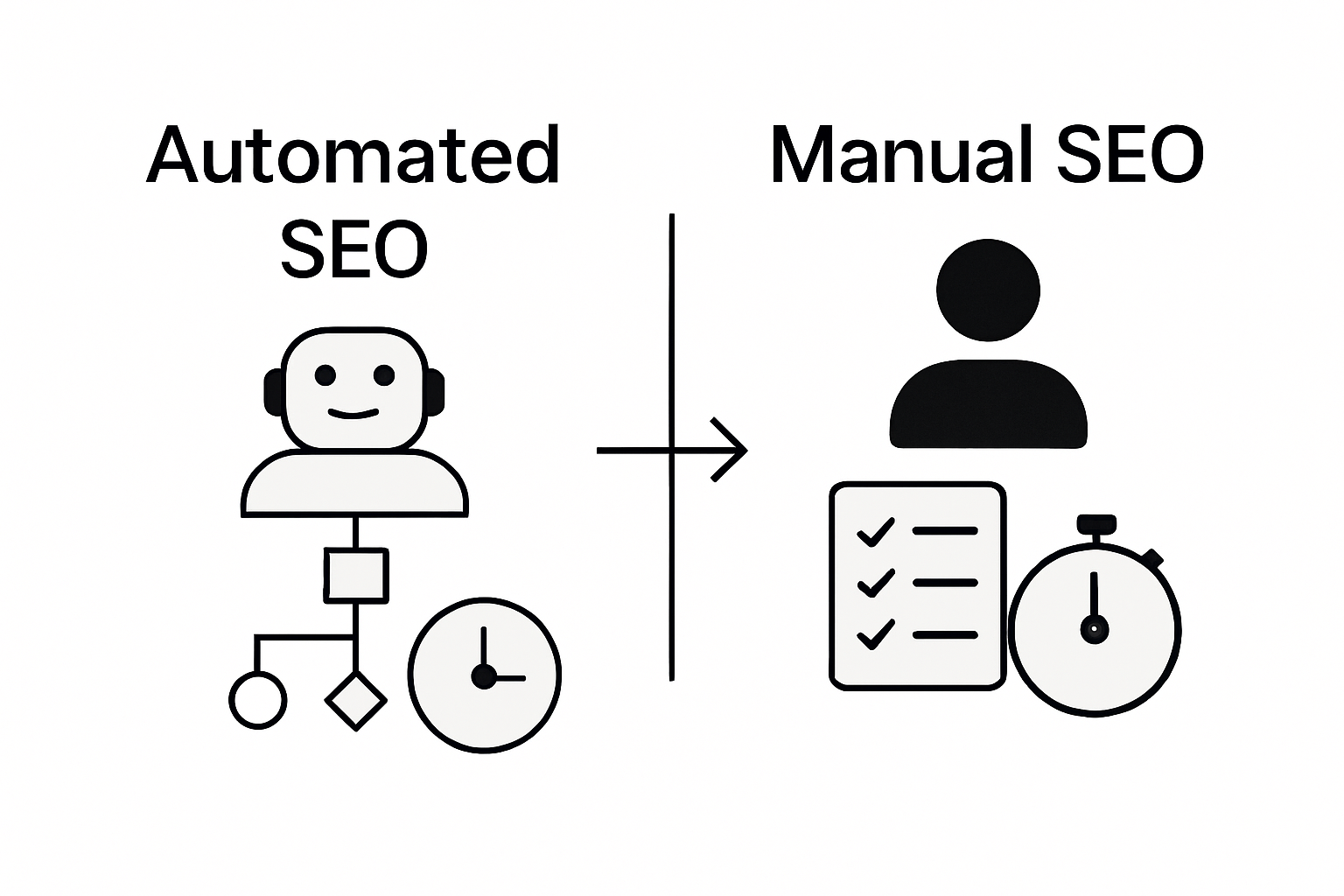
Search engine optimization strategies have dramatically evolved, presenting businesses with two distinct approaches to digital visibility: manual and automated SEO techniques. While traditional manual methods rely on human expertise and individual analysis, automated SEO leverages advanced technological capabilities to streamline complex optimization processes.
Key differences between manual and automated SEO approaches include:
- Speed of Execution: Automated tools process data exponentially faster
- Scalability: Machine learning systems handle large-scale optimization
- Consistency: Algorithms provide uniform optimization standards
- Cost-Effectiveness: Reduced human labor requirements
- Real-Time Adaptation: Automated systems respond immediately to search algorithm changes
Risks, Limitations, and Best Practices in Automation
SEO automation presents both transformative opportunities and significant challenges for digital marketers. The risks of over-automating SEO include potential loss of creativity, generic content generation, and potential brand voice dilution, underscoring the critical need for strategic human oversight.
Key risks and limitations of SEO automation encompass:
- Content Homogenization: Algorithmic content can lack unique perspective
- Contextual Misinterpretation: AI systems may misunderstand nuanced search intent
- Ethical Concerns: Potential for manipulative optimization techniques
- Algorithm Detection: Search engines increasingly penalize automated manipulation
- Creative Limitations: Reduced capacity for innovative storytelling
Unlock Effortless Growth with Automated SEO Solutions
If you are struggling with time-consuming manual SEO processes or worried about maintaining consistent, high-quality content and backlinks, automated SEO is the answer. This article highlights challenges like content homogenization, complex technical audits, and real-time adaptation to search algorithm changes. At Babylovegrowth.ai, we understand these pain points and offer a powerful AI-driven platform designed to boost your organic traffic with minimal manual effort. Our solutions include daily SEO-optimized content creation, automated publishing, and strategic backlink building, ensuring your brand stays visible in both AI and traditional search engines.
Experience the future of digital marketing by visiting Babylovegrowth.ai and explore how our SEO automation tools and technical SEO audits provide the perfect blend of algorithmic precision and human strategy. Start your journey toward effortless, scalable growth today and secure your spot ahead in competitive search rankings.
Frequently Asked Questions
What is automated SEO?
Automated SEO refers to the use of artificial intelligence and machine learning to streamline and enhance search engine optimization processes, making it faster and more efficient compared to manual methods.
How does automated SEO help in content generation?
Automated SEO tools can quickly produce SEO-optimized content by analyzing trends and target keywords, significantly reducing the time needed for content creation while ensuring relevance and quality.
What are the main components of automated SEO?
The primary components of automated SEO include content generation, technical analysis of website performance, keyword research through machine learning, and competitive intelligence monitoring.
What are the risks associated with automated SEO?
Risks of automated SEO include content homogenization, potential ethical concerns, and a possible loss of creative voice. It's crucial to balance automation with human oversight to mitigate these risks.
Recommended
- SEO Automation Platform | Automate Your Entire SEO Workflow
- Automated SEO Audits | Continuous Site Monitoring & Issue Detection
- SEO Article Generator | Create Ranking-Optimized Content with AI
- SEO Audit Software | Comprehensive Technical SEO Analysis
Smart SEO,
Faster Growth!
Most Read Articles
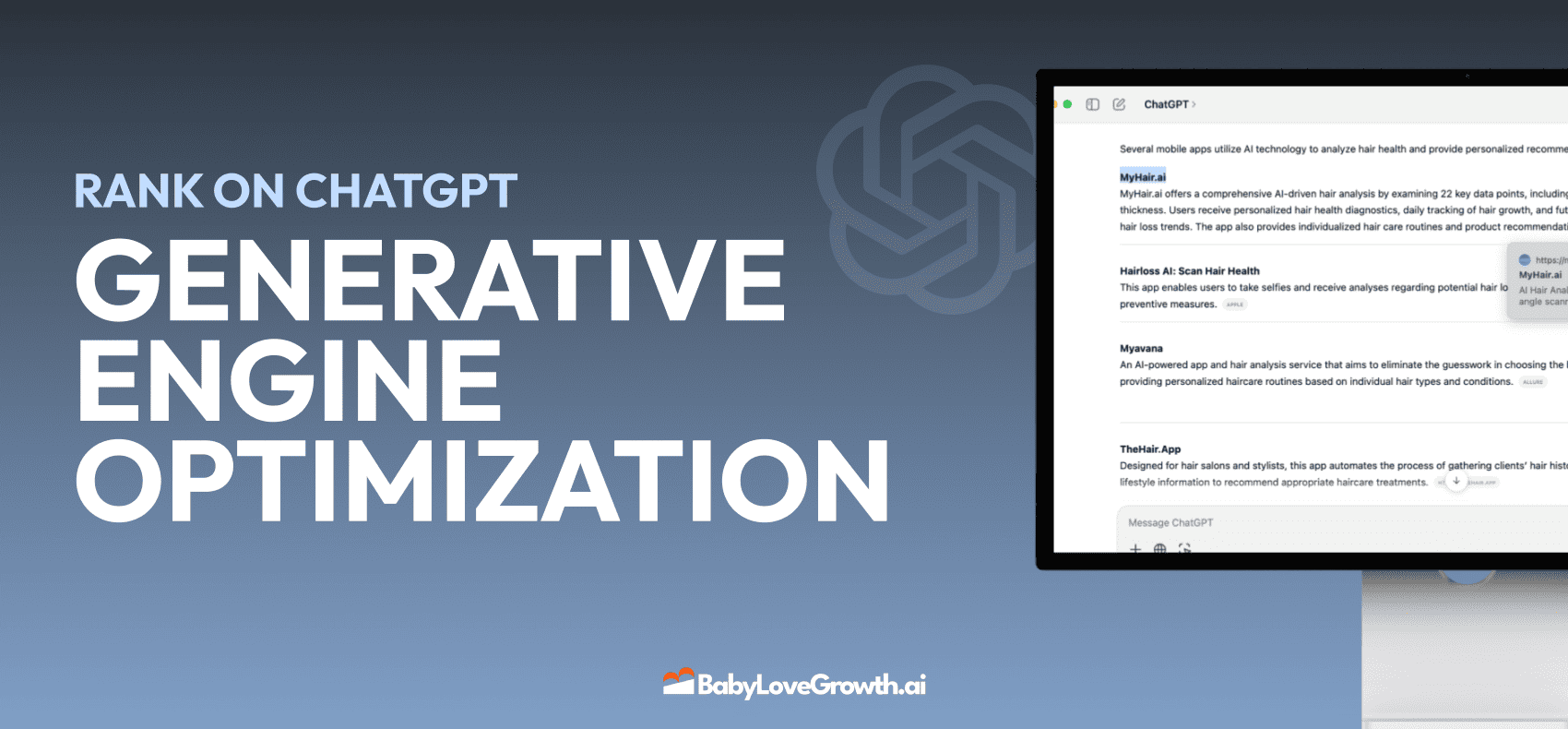
Generative Engine Optimization (GEO)
Learn how Generative Engine Optimization (GEO) helps your content rank in AI search engines like ChatGPT and Google AI. This comprehensive guide explains the differences between SEO and GEO, why it matters for your business, and practical steps to implement GEO strategies for better visibility in AI-generated responses.
DylenJan 18, 2025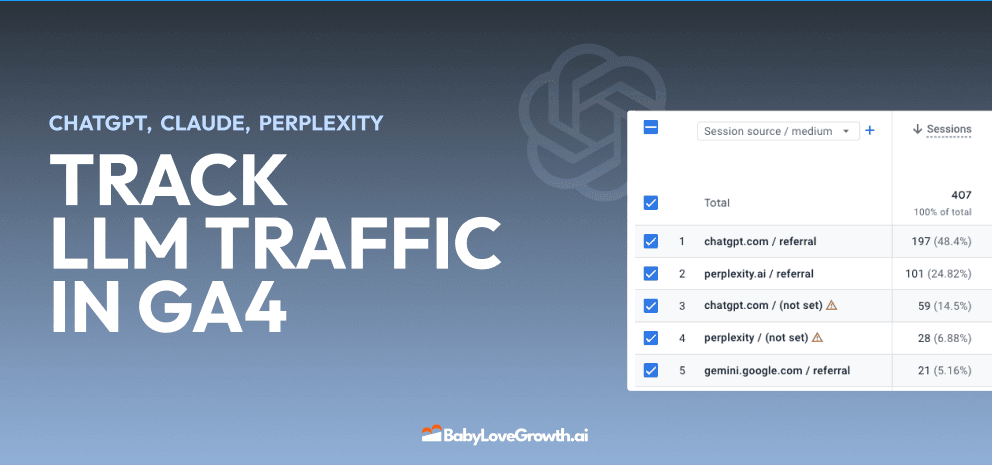
Track LLM Traffic in Google Analytics 4 (GA4)
Learn how to track and analyze traffic from AI sources like ChatGPT, Claude, Perplexity, and Google Gemini in Google Analytics 4. This step-by-step guide shows you how to set up custom filters to monitor AI-driven traffic and make data-driven decisions for your content strategy.
DylenMar 18, 2025
How to Humanize AI Text with Instructions
Learn practical techniques to make AI-generated content sound more natural and human. This guide covers active voice, direct addressing, concise writing, and other proven strategies to transform robotic text into engaging content.
DylenApril 7, 2025
Open AI Revenue and Statistics (2024)
Comprehensive analysis of OpenAI financial performance, user engagement, and market position in 2023. Discover key statistics including $20B valuation, $1B projected revenue, and 100M+ monthly active users.
DylenOctober 03, 2025