Website Performance: Why Speed and UX Matter


Launching a website often brings excitement, but confusion follows when slow speeds or poor interaction frustrate both you and your customers. Website performance is not just a technical checklist, it shapes real user experiences and can directly impact your search ranking. By debunking popular myths and focusing on measured responsiveness and perceived speed, you can make smarter choices that lead to better results without wasting resources on ineffective fixes.
Table of Contents
- Website Performance Essentials and Common Myths
- Key Metrics for Measuring Website Speed
- How Performance Impacts SEO and UX
- Optimizing Content and Technical Elements
- Risks of Poor Performance and Costly Errors
Key Takeaways
| Point | Details |
|---|---|
| Website performance is multifaceted | It involves loading time, interactivity, visual stability, and responsiveness, requiring a comprehensive approach to optimization. |
| Performance impacts SEO and user experience | Faster load times not only reduce bounce rates but also improve search engine rankings, directly influencing business success. |
| Continuous monitoring is essential | Regular audits and performance metrics help identify potential issues before they affect user engagement and satisfaction. |
| Optimization is an ongoing process | Effective performance enhancement requires consistent analysis, targeted improvements, and adaptation to new technologies and user expectations. |
Website Performance Essentials and Common Myths
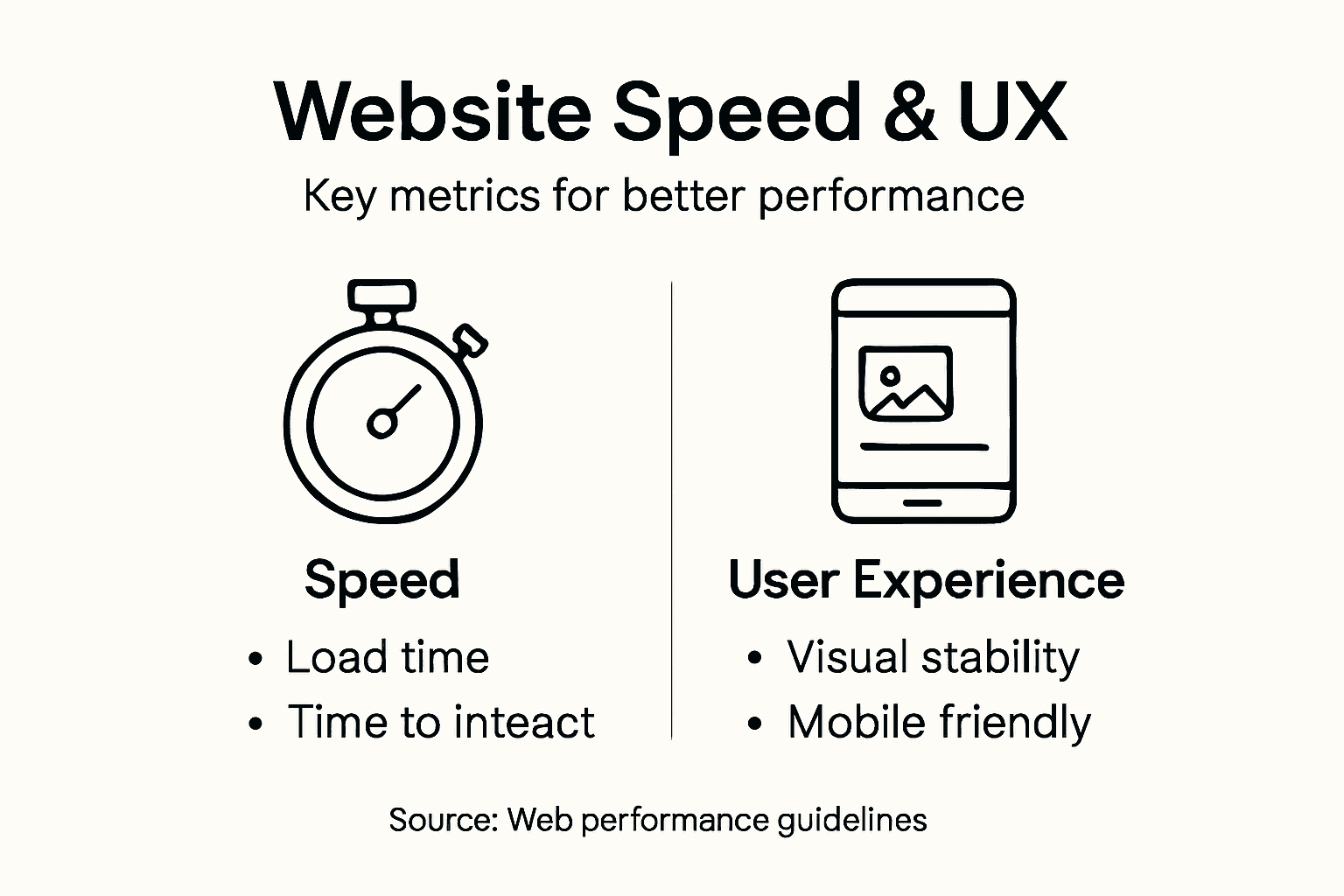
Website performance represents far more than just loading speed - it's a complex ecosystem of technical optimization and user experience design. Web performance metrics encompass both objective measurements and subjective user perceptions about how quickly and smoothly a website responds.
Understanding website performance requires breaking down several critical components:
- Loading Time: How quickly initial page content appears
- Interactivity: Speed of user interface responses
- Visual Stability: Smoothness of content rendering
- Responsiveness: How fast buttons, links, and interactive elements react
Contrary to popular belief, website performance isn't a simple checklist. Performance optimization involves nuanced strategies that require careful implementation and continuous monitoring. Some common myths persist that can mislead website owners:
- Myth: Faster always means better performance
- Myth: Performance optimization is a one-time task
- Myth: All performance improvement techniques work universally
Real performance optimization demands a strategic approach. This means reducing file sizes, minimizing server requests, and carefully selecting optimization techniques that align with your specific website architecture.
Technical Performance Factors:
- Server response time
- File compression techniques
- Image and media optimization
- Efficient JavaScript and CSS delivery
User Experience Considerations:
- Perceived loading speed matters as much as actual speed
- Mobile responsiveness is critical
- Smooth transitions improve user perception
Pro tip: Regularly audit your website's performance using multiple tools and metrics to get a comprehensive understanding of its technical health and user experience.
Key Metrics for Measuring Website Speed
Measuring website speed goes beyond simple load times - it's a comprehensive analysis of how users experience your digital platform. Performance metrics provide crucial insights into website responsiveness and user interaction efficiency.
Key performance metrics can be categorized into several critical areas:
- Loading Speed Metrics:
- Time to First Byte (TTFB)
- First Contentful Paint (FCP)
- Largest Contentful Paint (LCP)
- User Experience Metrics:
- Bounce Rate
- Session Duration
- Conversion Rate
Website owners and developers must understand that speed isn't just about technical performance, but about creating a seamless user journey. Web metrics in software testing reveal complex interactions between technical performance and user engagement.

Essential Speed Measurement Tools:
Here's a quick comparison of website speed measurement tools and their primary strengths:
| Tool Name | Key Feature | Best Use Case |
|---|---|---|
| PageSpeed Insights | Actionable suggestions | Quick audits, recommendations |
| Chrome Developer Tools | Real-time analysis | Debugging specific issues |
| Firefox Network Monitor | Detailed requests view | Analyzing network activity |
| WebPageTest | Multi-location testing | Global speed monitoring |
- PageSpeed Insights
- Firefox Network Monitor
- Chrome Developer Tools
- WebPageTest
Performance Tracking Considerations:
- Analyze metrics across different devices
- Monitor both mobile and desktop performance
- Track performance consistently over time
These metrics help identify potential bottlenecks, optimize resource loading, and ultimately create a more responsive website that keeps users engaged and satisfied.
Pro tip: Regularly benchmark your website's performance using multiple tools to get a comprehensive understanding of its speed and user experience.
How Performance Impacts SEO and UX
Web performance fundamentally shapes both search engine rankings and user engagement. Website speed is no longer just a technical metric - it's a critical factor determining online success for businesses across digital platforms.
The interconnected relationship between performance, SEO, and user experience can be broken down into key components:
-
Search Engine Ranking Factors:
- Page load speed
- Mobile responsiveness
- Content accessibility
- Interaction stability
-
User Experience Considerations:
- First impression timing
- Navigation smoothness
- Content rendering speed
- Interactive element responsiveness
Performance Impact Hierarchy:
- Faster load times reduce bounce rates
- Improved user engagement signals quality to search engines
- Better ranking leads to increased organic traffic
- Enhanced user experience drives conversions
Crucial Performance Metrics:
- Time to First Byte (TTFB)
- First Contentful Paint (FCP)
- Largest Contentful Paint (LCP)
- Cumulative Layout Shift (CLS)
Companies that prioritize website performance create more accessible, engaging digital experiences that both users and search algorithms reward.
Pro tip: Continuously monitor your website's performance metrics using multiple tools to identify and address potential speed bottlenecks before they impact user experience.
Optimizing Content and Technical Elements
HTML optimization strategies are crucial for delivering fast, accessible web experiences that keep users engaged and search engines satisfied. Technical performance is not just about speed - it's about creating seamless, responsive digital interactions.Critical optimization techniques span multiple technical domains:
-
Content Optimization:
- Minimize file sizes
- Use modern image formats
- Implement lazy loading
- Compress multimedia assets
-
Technical Performance Factors:
- Resource loading prioritization
- Efficient HTML structure
- Minimal HTTP requests
- Server-side rendering considerations
Front-end performance strategies reveal that successful optimization requires a holistic approach. Websites must balance technical efficiency with content quality, ensuring that performance enhancements don't compromise user experience.
Optimization Hierarchy:
- Analyze current website performance
- Identify critical bottlenecks
- Implement targeted improvements
- Continuously monitor and refine
Key Optimization Techniques:
- Preload critical CSS and fonts
- Defer non-critical JavaScript
- Use content delivery networks (CDNs)
- Implement intelligent caching strategies
Technical optimization is an ongoing process that demands consistent attention and adaptation to emerging web technologies and user expectations.
Pro tip: Regularly conduct comprehensive performance audits using multiple tools to uncover and address potential optimization opportunities before they impact user experience.
Risks of Poor Performance and Costly Errors
Web performance challenges extend far beyond technical metrics - they represent critical business risks that can dramatically impact revenue and brand reputation. Slow websites don't just frustrate users; they actively drive potential customers away.
The cascading consequences of poor website performance include multiple strategic vulnerabilities:
-
User Experience Risks:
- Increased bounce rates
- Reduced engagement
- Lower conversion potential
- Diminished brand perception
-
Business Performance Impacts:
- Decreased search engine rankings
- Lost revenue opportunities
- Higher customer acquisition costs
- Reduced market competitiveness
Performance Risk Hierarchy:
- Initial user frustration
- Decreased site credibility
- Reduced organic search visibility
- Potential permanent customer loss
Quantifiable Performance Risks:
- 53% of mobile users abandon sites taking over 3 seconds to load
- 1-second delay can reduce conversions by 7%
- Search engines penalize slow-loading websites
- Performance impacts both desktop and mobile experiences
Understanding and mitigating these risks requires a proactive, comprehensive approach to digital performance management.
The table below summarizes common technical and user experience pitfalls, along with their potential business impact:
| Issue Type | Example Pitfall | Potential Business Impact |
|---|---|---|
| Technical Performance | Uncompressed images | Slower pages, lost visitors |
| User Experience | Delayed interactivity | Higher bounce rates |
| Mobile Optimization | Poor responsiveness | Lower mobile conversions |
| SEO Ranking | Slow initial load | Reduced search visibility |
Pro tip: Implement continuous performance monitoring and create a rapid response protocol to address potential speed issues before they significantly impact user experience.
Boost Your Website Speed and User Experience with AI-Driven SEO Solutions
The article highlights the critical challenge of enhancing website performance, focusing on speed and user experience as key drivers of SEO success and user engagement. If slow load times and poor responsiveness are hurting your bounce rates and search rankings, it is essential to adopt smart strategies that combine technical optimization with compelling content. Elements like reducing Time to First Byte and improving Largest Contentful Paint matter greatly for your Google and ChatGPT rankings.
Babylovegrowth.ai offers an all-in-one AI-powered SEO platform designed to simplify organic growth by delivering high-quality, optimized content automatically. By leveraging AI-generated articles and a backlinks exchange ecosystem, you can align your site’s technical improvements with a steady stream of relevant, engaging content that Google values. Discover how our platform integrates AI to build your rank-high strategy with a personalized 30-day content plan, saving you time while boosting your website’s performance and visibility.
Improve both speed and user experience to lower bounce rates and increase conversions with smart automation.

Ready to transform your website’s performance and SEO with an automated, proven method? Visit Babylovegrowth.ai now to start your free trial and experience the benefits of AI-driven content and backlink strategies. Take control of your website’s speed and user experience and watch your organic traffic grow effortlessly. Learn more about our Rank-High Services and step into the future of SEO on autopilot.
Frequently Asked Questions
What are the key components of website performance?
Website performance involves several components, including loading time, interactivity, visual stability, and responsiveness. Each of these factors contributes to the overall user experience.
How does website performance impact SEO?
Website performance directly affects SEO as search engines consider page load speed, mobile responsiveness, and interaction stability when ranking web pages. Faster, well-performing websites tend to rank higher in search results.
What are some common myths about website performance?
Common myths about website performance include the belief that faster always means better, that optimization is a one-time task, and that all performance techniques work universally for every website.
What tools can I use to measure my website's speed?
Popular tools for measuring website speed include PageSpeed Insights for actionable suggestions, Chrome Developer Tools for real-time analysis, Firefox Network Monitor for detailed request views, and WebPageTest for multi-location testing.
Recommended
Smart SEO,
Faster Growth!
Most Read Articles
Generative Engine Optimization (GEO)
Learn how Generative Engine Optimization (GEO) helps your content rank in AI search engines like ChatGPT and Google AI. This comprehensive guide explains the differences between SEO and GEO, why it matters for your business, and practical steps to implement GEO strategies for better visibility in AI-generated responses.
DylenJan 18, 2025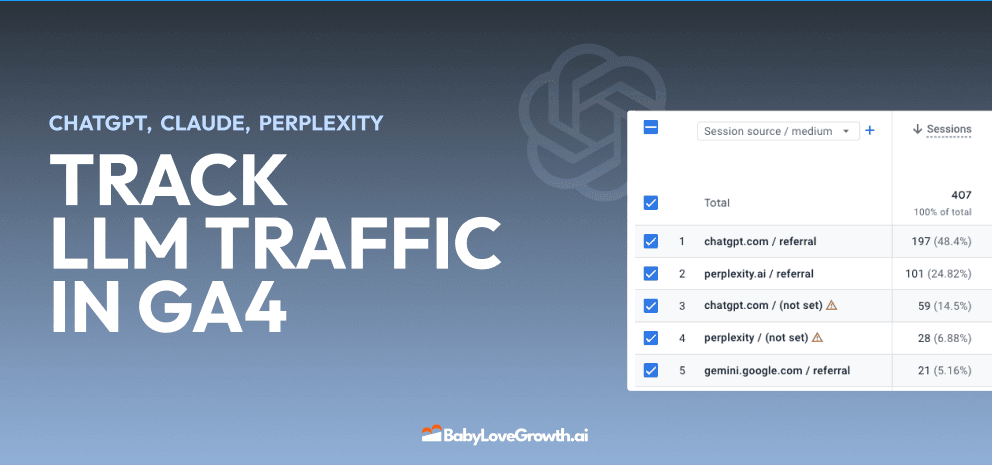
Track LLM Traffic in Google Analytics 4 (GA4)
Learn how to track and analyze traffic from AI sources like ChatGPT, Claude, Perplexity, and Google Gemini in Google Analytics 4. This step-by-step guide shows you how to set up custom filters to monitor AI-driven traffic and make data-driven decisions for your content strategy.
DylenMar 18, 2025
How to Humanize AI Text with Instructions
Learn practical techniques to make AI-generated content sound more natural and human. This guide covers active voice, direct addressing, concise writing, and other proven strategies to transform robotic text into engaging content.
DylenApril 7, 2025
Open AI Revenue and Statistics (2024)
Comprehensive analysis of OpenAI financial performance, user engagement, and market position in 2023. Discover key statistics including $20B valuation, $1B projected revenue, and 100M+ monthly active users.
DylenOctober 03, 2025