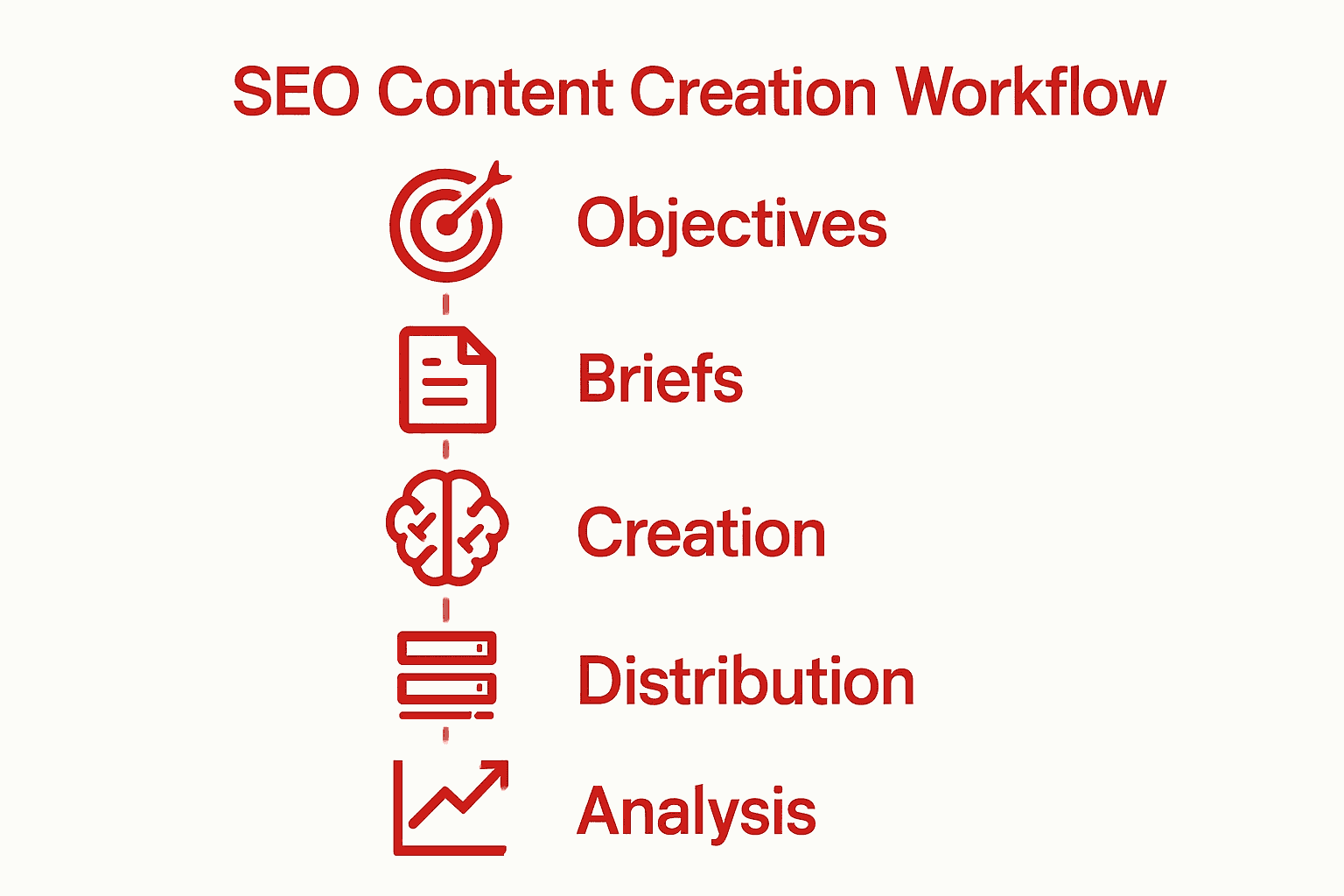
SEO Content Creation Workflow for Consistent Organic Growth


Most american businesses face a tough reality online: about 90 percent of web pages get zero search traffic from Google. If you want to rise above the digital noise and attract your ideal audience, setting clear SEO objectives and picking the right target keywords is the first critical step. This guide walks you through a proven workflow so you can build a strong strategy that drives rankings and real results.
Table of Contents
- Step 1: Establish Clear SEO Objectives And Target Keywords
- Step 2: Generate And Structure Optimized Content Briefs
- Step 3: Create SEO-Driven Content With AI Automation
- Step 4: Publish And Distribute Content Across Platforms
- Step 5: Analyze Performance And Refine Workflow
Quick Summary
| Key Point | Explanation |
|---|---|
| 1. Define clear SEO goals | Establish specific objectives like increasing traffic or generating leads to align your SEO strategy with business outcomes. |
| 2. Create detailed content briefs | Develop content briefs that outline target keywords, search intent, and content structure to guide effective writing. |
| 3. Utilize AI for content creation | Leverage AI tools to automate content drafts, but ensure human review for quality and alignment with brand voice. |
| 4. Strategically publish and distribute | Identify suitable platforms for content and maintain a consistent posting schedule for broader audience reach. |
| 5. Analyze and refine performance regularly | Monitor key metrics and user behavior to adjust strategies based on data and improve future content effectiveness. |
Step 1: Establish Clear SEO Objectives and Target Keywords
Successful SEO begins with strategic keyword targeting and precise objective setting. According to Cademix, establishing clear SEO objectives is fundamental to enhancing online visibility and driving organic traffic.
Start by defining your primary business goals and translating them into measurable SEO outcomes. Are you aiming to increase website traffic, generate leads, boost conversions, or improve brand awareness? Each objective requires a unique keyword strategy. Keyword Research Tool can help you uncover high potential search terms aligned with your specific goals.
To identify target keywords effectively, analyze search volume, competition level, and relevance to your audience. Focus on long-tail keywords that demonstrate specific user intent and have lower competition. These more precise phrases often convert better than broad, generic terms. Pro tip: Group related keywords into thematic clusters to create more comprehensive content strategies.
As research from IJCA Online suggests, advanced SEO strategies depend on understanding user search behavior. Your keyword selection should reflect genuine user needs and search patterns, not just arbitrary volume metrics.
Next, you will move into developing a content strategy that systematically targets these carefully selected keywords.
Step 2: Generate and Structure Optimized Content Briefs
Creating an effective content brief is the strategic blueprint that transforms your keyword research into actionable content planning. Using the SEO Article Generator can streamline this process by providing data-driven insights for your content development strategy.
A comprehensive content brief should include several critical components. Start by outlining your primary target keyword and supporting secondary keywords. Define the specific search intent behind these keywords identifying whether users seek information, want to make a purchase, or need a solution to a problem. Map out the content structure including potential headings, key points to cover, and the overall narrative flow that will address user needs while maintaining SEO best practices.
Next, analyze the top-ranking content for your target keywords to understand the depth and angle of coverage required. This competitive analysis helps you identify content gaps and opportunities to differentiate your piece. Consider elements like recommended word count, recommended media types (images, videos, infographics), and the overall user experience you want to create.
Pro tip: Your content brief should be flexible enough to allow creative interpretation while providing clear strategic guidance. Think of it as a roadmap that guides writers without constraining their ability to produce engaging, original content.
With a solid content brief in hand, you are now prepared to move into the actual content creation phase of your SEO workflow.

Step 3: Create SEO-Driven Content With AI Automation
AI-powered content creation represents a transformative approach to developing high-quality SEO optimized articles efficiently. According to research from IJERT, AI tools can significantly enhance productivity while ensuring originality and coherence in content generation.
To leverage AI automation effectively, integrate your comprehensive content brief with an advanced Contentful SEO Automation platform. Begin by inputting your target keywords, search intent, and structural guidelines into the AI system. The technology will then generate initial content drafts that align with your specific SEO requirements, analyzing semantic relationships and ensuring topical depth.
Carefully review and refine the AI generated content. While automation provides a strong foundation, human oversight remains critical to maintain authenticity and inject nuanced insights. Pay special attention to ensuring the content reads naturally, addresses user intent comprehensively, and maintains your brand voice. As research from Zyflora suggests, successful AI content generation requires a strategic blend of technological capabilities and human expertise.
Pro tip: Use AI as a collaborative tool rather than a complete replacement for human creativity. The most effective SEO content emerges from a symbiotic relationship between artificial intelligence and human refinement.
With your AI-assisted content draft complete, you are now ready to move into the next phase of content optimization and preparation for publication.
Step 4: Publish and Distribute Content Across Platforms
Publishing and distributing your SEO optimized content strategically is crucial for maximizing organic reach and engagement. Leveraging a comprehensive Content Publishing Platform can streamline the process of multichannel content distribution and ensure consistent visibility across digital ecosystems.
Begin by identifying the most relevant platforms for your target audience. This includes your primary website or blog, social media channels, industry specific forums, and content syndication networks. Each platform requires slight content modifications to match audience expectations and platform guidelines. For instance social media posts might need shorter versions with engaging snippets while blog platforms allow for more comprehensive deep dive content.
Implement a systematic publishing schedule that maintains consistent content flow without overwhelming your audience. Use scheduling tools to automate publication across different platforms ensuring optimal posting times based on audience engagement metrics. Develop a cross platform promotion strategy that amplifies your content reach by creating platform specific teaser content that drives traffic back to your primary long form content.
Pro tip: Always monitor content performance across different platforms and be prepared to adjust your distribution strategy based on real time engagement data and audience feedback.
With your content successfully published and distributed you are now ready to track and analyze its performance to inform future content creation strategies.
Step 5: Analyze Performance and Refine Workflow
Performance analysis represents the critical feedback loop that transforms good SEO strategies into exceptional organic growth mechanisms. According to research from IJCA Online, continuously refining your workflow is essential for adapting to evolving search engine algorithms and changing user behaviors.
Begin by establishing a comprehensive performance tracking system that monitors key metrics such as organic traffic, keyword rankings, click through rates, and content engagement levels. Leverage analytics platforms that provide granular insights into how your content performs across different channels. Cademix suggests utilizing AI powered monitoring tools to streamline this analysis process and identify nuanced performance trends that might escape manual review.
Develop a systematic approach to interpreting performance data. Look beyond surface level metrics to understand the underlying reasons for content success or underperformance. Analyze user behavior patterns, identify content gaps, and correlate performance metrics with your initial keyword and content brief objectives. This deep dive analysis will help you iteratively improve your content creation and distribution strategies.
Pro tip: Create a quarterly performance review process where you not only analyze data but also document insights and recommended workflow adjustments. Treat your SEO strategy as a living document that continuously evolves based on real world performance.
With a clear understanding of your content performance, you are now equipped to make data driven decisions that will continuously improve your organic growth strategies.
Unlock Consistent Organic Growth with AI-Driven SEO Automation
If you find yourself overwhelmed by the complexity of establishing clear SEO objectives, managing detailed content briefs, and ensuring timely publishing across multiple channels then you are not alone. The article highlights how integrating AI-powered workflows can solve these pain points by streamlining keyword research, content creation, and optimization with precision and speed. Embracing automation is essential to overcome challenges like monitoring intricate performance metrics or adapting to evolving search behaviors without sacrificing creativity or quality.
Babylovegrowth.ai is designed specifically to meet these challenges head on. Our platform automates everything from daily branded SEO articles supported by comprehensive keyword targeting to hassle-free content publishing across your preferred CMSs. With advanced technical website audits and intelligent backlink management you gain a competitive edge that translates into higher rankings and measurable organic traffic growth.
Take control of your SEO content workflow with Babylovegrowth.ai today. Visit Babylovegrowth.ai to explore how AI automation can transform your content strategy. Don’t let disjointed processes or resource limits hold your brand back. Start driving consistent organic growth now by leveraging our proven tools that keep pace with search engine evolution and user intent.
Frequently Asked Questions
What are the key objectives to set for an SEO content creation workflow?
Establish objectives such as increasing website traffic, generating leads, or improving brand awareness. Define measurable outcomes for each goal to create a targeted keyword strategy based on your business objectives.
How can I identify the best keywords for my SEO content?
Analyze search volume, competition, and relevance to your audience. Focus on long-tail keywords and group related terms into clusters to develop a comprehensive content strategy.
What should I include in a content brief for SEO?
Your content brief should outline primary and secondary keywords, search intent, and content structure. Include key points and headings to ensure the content meets user needs and follows SEO best practices.
How can I effectively use AI in my content creation process?
Use AI to generate initial drafts based on your content brief and target keywords. Refine the AI-generated content to ensure it matches your brand voice and addresses user intent before publication.
What strategies should I implement for publishing and distributing my SEO content?
Identify the right platforms for your audience and customize your content for each. Use a systematic publishing schedule to ensure consistent flow and create promotional snippets to drive traffic back to your main content.
How can I analyze the performance of my SEO content?
Track key metrics such as organic traffic, keyword rankings, and engagement levels. Develop a routine performance review process to interpret data and adjust your strategies based on insights gleaned from the analysis.
Recommended
- Content Strategy Platform | Plan Data-Driven Content with AI
- SEO Article Generator | Create Ranking-Optimized Content with AI
- SEO Automation Platform | Automate Your Entire SEO Workflow
- Contentful SEO Automation