On-Page SEO Optimization Process for Scalable Results


Strong organic growth never happens by accident. For SEO professionals and agency leaders driving results at scale, assessing and optimizing website structure forms the backbone of any high-impact strategy. Thorough evaluation of technical foundations, meta elements, and semantic content is the difference between scattered efforts and systematic improvement. This guide highlights the power of a structured approach to on-page SEO, empowering you to spot hidden gaps, enhance relevance, and build sustainable search success with confidence.
Table of Contents
- Step 1: Assess Website Structure And SEO Readiness
- Step 2: Optimize Meta Tags And Headings For Keywords
- Step 3: Enhance Content Quality And Semantic Relevance
- Step 4: Implement Internal Linking And Schema Markup
- Step 5: Verify Improvements With Analytics And SEO Tools
Quick Overview
| Key Insight | Clarification |
|---|---|
| 1. Assess Technical SEO Elements | Evaluate site structure and key components to enhance search performance. |
| 2. Optimize Meta Tags Effectively | Use strategic keywords in meta titles and descriptions for better visibility. |
| 3. Enhance Content Quality | Develop rich, relevant content that addresses user intent and needs. |
| 4. Implement Internal Linking | Create a logical linking structure to improve navigation and topic authority. |
| 5. Verify SEO Improvements | Use analytics tools to measure performance and identify trends. |
Step 1: Assess website structure and SEO readiness
Assessing your website's SEO readiness is critical to developing a strategic optimization plan. This initial evaluation allows you to understand your current digital infrastructure and identify potential improvement areas for enhanced search engine performance.
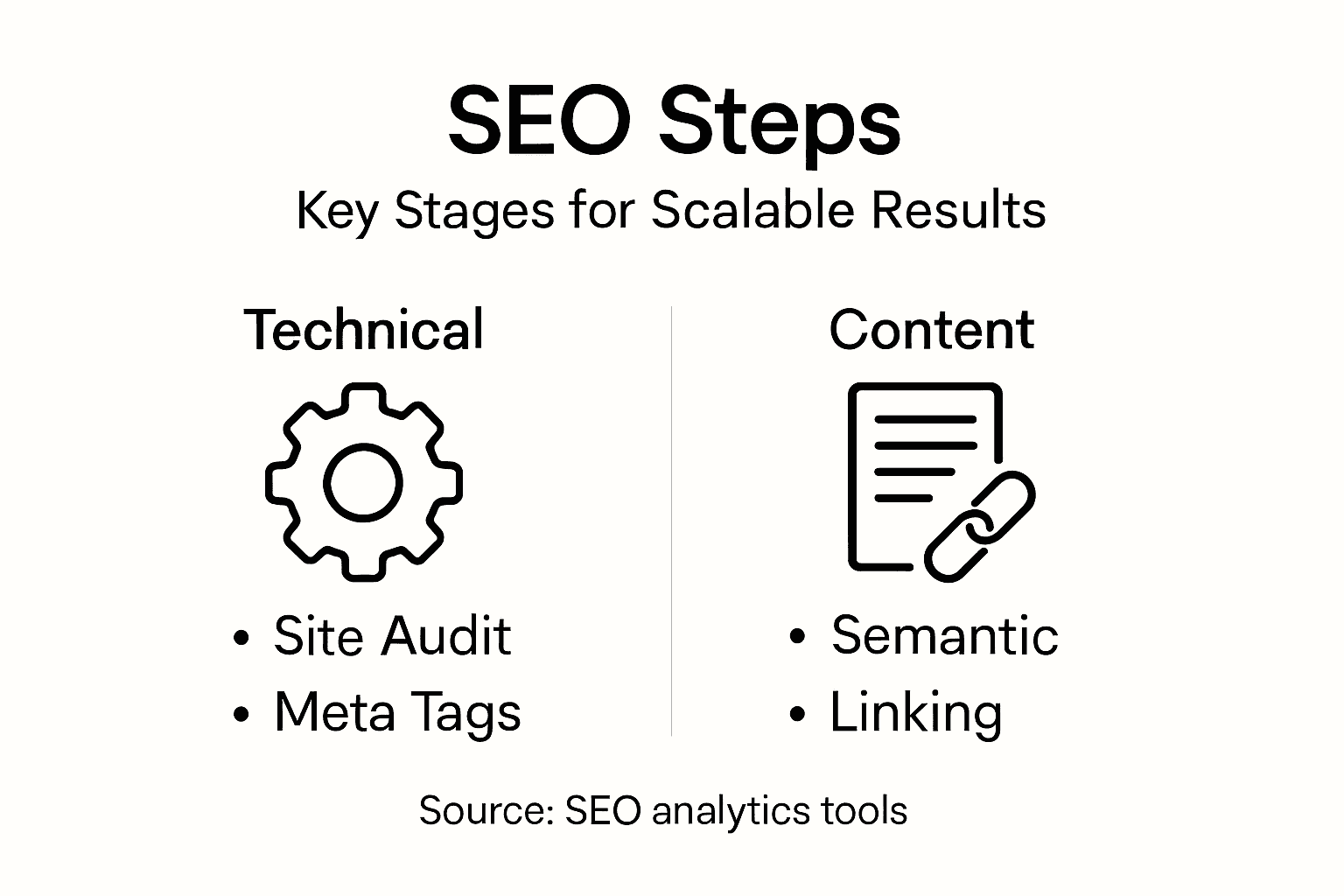
The assessment process involves comprehensive analysis across multiple dimensions. Start by conducting a thorough technical review that examines your site's foundational elements. You'll want to focus on key structural components:
- Site architecture and navigation clarity
- URL structure and permalink optimization
- Internal linking strategy
- Mobile responsiveness
- Page loading speed
- Current indexing status
Utilize diagnostic tools to evaluate technical infrastructure systematically. These tools help identify potential barriers preventing search engines from effectively crawling and understanding your website's content. Pay special attention to areas like metadata quality, header tag hierarchy, and XML sitemap configurations.

Critical technical elements requiring immediate review include structured data markup, canonical tag implementations, and robots.txt file settings. Each component plays a significant role in communicating your website's content relevance and accessibility to search engine algorithms.
Here's a summary of key technical SEO elements and their business impact:
| Technical Element | Core Function | Business Impact |
|---|---|---|
| Site Architecture | Organizes site structure | Improves crawlability and UX |
| Page Loading Speed | Measures site responsiveness | Reduces bounce rates, boosts rankings |
| Mobile Responsiveness | Ensures usability on mobile devices | Expands audience, increases conversions |
| Structured Data Markup | Adds context for search engines | Enables rich results in SERPs |
| Robots.txt Configuration | Controls crawler access | Protects sensitive data, optimizes crawl budget |
A comprehensive technical audit reveals the hidden roadblocks preventing optimal search engine visibility.
Pro tip: Run a comprehensive website audit using multiple diagnostic tools to cross-reference and validate technical SEO findings, ensuring no critical issues are overlooked.
Step 2: Optimize meta tags and headings for keywords
Optimizing meta tags and headings is a critical strategy for improving your website's search engine visibility and user engagement. This step transforms your content's structural elements into powerful SEO tools that communicate relevance and intent to search algorithms.
Begin by crafting strategic meta titles and descriptions that incorporate primary keywords naturally. Your goal is to create compelling, concise metadata that attracts both search engines and potential visitors. Develop meaningful HTML headings that provide clear content hierarchy and improve overall page readability. Focus on these key optimization techniques:
- Use primary keywords in H1 tags
- Create descriptive, action-oriented subheadings
- Maintain a logical heading hierarchy (H1 > H2 > H3)
- Keep meta descriptions under 160 characters
- Include target keywords in the first 50-60 characters of meta titles
Each heading should communicate the section's core message while integrating relevant keywords seamlessly. The most effective headings start with strong, descriptive verbs and provide immediate context for both users and search engines. Avoid keyword stuffing by focusing on natural, readable language that genuinely describes the content.
Strategic keyword placement in headings transforms content from invisible to irresistible for search algorithms.
Pro tip: Periodically review and update your meta tags and headings to ensure they remain aligned with current content and emerging keyword trends.
Step 3: Enhance content quality and semantic relevance
Enhancing content quality and semantic relevance is crucial for creating compelling, user-focused digital experiences that resonate with both search engines and human readers. This step transforms your content from generic information into a targeted, meaningful resource that drives engagement and delivers genuine value.
Semantic content relevance requires a deep understanding of your audience's needs and search intent. Develop content that goes beyond surface-level keyword matching by incorporating these strategic approaches:- Conduct comprehensive user intent research
- Map content to specific audience pain points
- Use natural language and conversational tone
- Incorporate comprehensive, in-depth explanations
- Include real-world examples and practical applications
- Integrate semantically related keywords and concepts
Focus on creating contextually rich content that demonstrates expertise and provides comprehensive insights. This means developing material that anticipates user questions, addresses potential concerns, and offers actionable solutions. Your goal is to create content that feels like a personalized conversation with your target audience.
Truly relevant content speaks directly to the user's needs, transcending mere keyword optimization.
Pro tip: Regularly audit your content using advanced semantic analysis tools to ensure ongoing relevance and alignment with evolving user search behaviors.
Step 4: Implement internal linking and schema markup
Implementing strategic internal linking and schema markup is a powerful approach to enhancing your website's search engine optimization and content discoverability. This step transforms your website's technical infrastructure into a sophisticated semantic network that search engines can easily understand and index.
Structured data markup strategies help search engines interpret your content more accurately, enabling rich search results and improved visibility. Develop a comprehensive internal linking strategy that connects your content meaningfully while implementing schema markup to provide context:- Create a logical site-wide linking structure
- Link related content using descriptive anchor text
- Prioritize user navigation and content discovery
- Use schema markup to define content types
- Implement JSON-LD for structured data
- Ensure hierarchical and contextual link relationships
Focus on creating intelligent link networks that guide users through your content ecosystem. This means developing interconnected content pathways that provide value, reduce bounce rates, and signal content relevance to search algorithms. Pay special attention to how different pages relate semantically and use internal links to establish topical authority.
Strategic internal linking transforms isolated content into an interconnected knowledge ecosystem.
Pro tip: Periodically audit your internal links and schema markup to ensure they remain accurate, relevant, and aligned with your evolving content strategy.
Step 5: Verify improvements with analytics and SEO tools
Verifying your SEO optimization efforts requires a systematic approach to measuring and interpreting performance data. This critical step transforms raw metrics into actionable insights that guide your ongoing optimization strategy and demonstrate the tangible impact of your technical improvements.
Complete SEO audit techniques help you track and validate your website's search performance across multiple dimensions. Leverage these key analytics and verification strategies:- Monitor organic search rankings
- Track keyword performance and visibility
- Analyze website traffic and user engagement
- Review conversion rates and goal completions
- Examine page speed and technical performance
- Compare current metrics against baseline measurements
Utilize comprehensive tools like Google Analytics, Google Search Console, and specialized SEO platforms to gain a holistic view of your website's search performance. Focus on identifying trends, understanding user behavior, and discovering opportunities for continuous improvement. Pay close attention to metrics that directly reflect your optimization efforts.
See how key SEO analytics tools differ in focus and use:
| Tool | Main Focus | Example Use Case |
|---|---|---|
| Google Analytics | Traffic & engagement | Analyze user behavior trends |
| Google Search Console | Search visibility | Monitor keyword rankings |
| SEO Platforms | Technical issues | Diagnose crawls and on-page errors |
Data-driven insights transform SEO from guesswork into a precise, measurable science.
Pro tip: Create a standardized monthly reporting template that automatically compares current performance against previous periods, enabling quick identification of optimization trends and impact.
Unlock Scalable SEO Success With AI-Powered Solutions
If you found managing complex elements like site architecture, keyword optimization in meta tags, semantic content relevance, and structured internal linking challenging, you are not alone. These crucial steps define the "On-Page SEO Optimization Process for Scalable Results" but require consistent effort and technical skill. Struggling to maintain comprehensive audits or keep meta tags aligned with evolving keyword trends can hold back your website’s potential and emotional investment in long-term growth.
Babylovegrowth.ai offers a transformative way to conquer these pain points with automated tools designed to streamline the entire SEO process. From automated technical website auditing that identifies hidden issues to AI-driven keyword discovery and content planning, you gain scalable power and precision. Our platform ensures your meta tags, internal linking, and structured data markup stay optimized daily so you never miss opportunities to improve visibility and organic traffic.
Ready to replace guesswork with data-driven SEO that grows alongside your brand? Start harnessing AI-powered strategies today with Babylovegrowth.ai and watch your search engine rankings soar while saving valuable time and resources.
Frequently Asked Questions
How can I assess my website's current SEO readiness?
To assess your website's SEO readiness, conduct a comprehensive technical review focusing on key elements like site architecture, URL structure, and mobile responsiveness. Start by using diagnostic tools to evaluate your website systematically and identify areas that need improvement.
What are meta tags, and why are they important for my website?
Meta tags are snippets of text that describe a webpage's content to search engines and users. Optimizing your meta tags with relevant keywords and compelling descriptions can improve your search engine visibility and boost click-through rates, so ensure each page has unique and targeted meta information.
How do I enhance content quality for better SEO results?
Enhance your content quality by focusing on user intent and providing in-depth, valuable information. Incorporate natural language, real-world examples, and relevant keywords to create a conversation-like experience that answers your audience's needs.
What is the role of internal linking in on-page SEO?
Internal linking connects related content within your website, guiding users through your information while improving search engine indexing. Implement a logical internal linking strategy by using descriptive anchor text to enhance user navigation and authority across your site.
How can I measure the effectiveness of my SEO optimization efforts?
To measure the effectiveness of your SEO optimization, track metrics like organic search rankings, website traffic, and user engagement. Set up a monthly reporting process to quickly identify trends and improvements based on these data points.
Why is it necessary to verify technical improvements in SEO?
Verifying technical improvements is essential to ensure that your optimization efforts are translating into measurable results. Regularly analyze performance data to confirm that your changes are positively impacting search visibility and user behavior on your website.