Leveraging Online Reviews to Boost E-Commerce Sales


Nearly 89 percent of buyers read online reviews before making a purchase, with American consumers placing strong trust in peer feedback. In the crowded e-commerce market, gathering positive customer reviews builds your business’s reputation and drives growth. This guide lays out step-by-step strategies for setting up automated review collection channels, so you can efficiently manage online sentiment and boost your store’s visibility.
Table of Contents
- Step 1: Set Up Review Collection Channels
- Step 2: Encourage Customers to Leave Reviews
- Step 3: Monitor and Respond to Reviews
- Step 4: Utilize Positive Reviews in Marketing
- Step 5: Evaluate Results and Refine Approach
Quick Summary
| Key Insight | Explanation |
|---|---|
| 1. Set Up Review Collection Channels | Create strategic channels on various platforms to gather authentic customer feedback efficiently. |
| 2. Encourage Customer Participation | Use personalized requests and incentives to transform satisfied customers into review contributors. |
| 3. Monitor and Respond to Reviews | Develop a system to acknowledge all reviews promptly, showing that customer feedback is valued. |
| 4. Leverage Positive Reviews in Marketing | Integrate authentic customer reviews into your marketing to build trust and influence potential buyers. |
| 5. Evaluate and Refine Your Strategy | Systematically analyze review data to continuously improve your products and customer experience. |
Step 1: Set Up Review Collection Channels
Your goal in this step is to create strategic channels that efficiently gather customer reviews from multiple online platforms. By implementing a systematic approach, you will transform scattered feedback into a powerful marketing asset for your e-commerce business.
Start by identifying the primary digital touchpoints where your customers are most likely to share their experiences. This typically includes your website, social media profiles, and major third party review platforms like Google Reviews, Yelp, and industry specific review sites. Systematic review strategies recommend developing clear inclusion criteria for collecting authentic customer feedback.
To streamline this process, consider using automated review collection tools that can aggregate feedback across different channels. AI-powered review platforms can help you efficiently organize and analyze incoming reviews, saving significant time and providing deeper insights into customer sentiment. Configure these tools to send automatic review requests immediately after a purchase, increasing the likelihood of customer participation.
Here's a comparison of key automated review collection tools commonly used by e-commerce businesses:
| Tool Type | Main Benefit | Example Usage |
|---|---|---|
| Review Aggregator | Centralizes feedback from all channels | Multi-site review dashboard |
| AI Sentiment Analyzer | Identifies trends in customer opinions | Analyzing purchase sentiment |
| Automated Request Scheduler | Sends review requests post-purchase | Triggered email follow-ups |
| Template Generator | Guides customers for targeted feedback | Consistent question format |
Pro tip: Create a standardized review template with specific questions that guide customers toward providing meaningful and actionable feedback about their purchasing experience.
Step 2: Encourage Customers to Leave Reviews
Your mission in this step is to transform satisfied customers into active review contributors by creating a seamless and motivating review submission experience. The goal is to make leaving feedback as simple and rewarding as possible for your customers.
Research on customer reviews reveals that strategic communication can significantly boost review participation. Start by timing your review requests perfectly. Wait a few days after product delivery to ensure customers have had time to use and appreciate their purchase. Craft personalized email templates that are warm, appreciative, and include direct links to review platforms to reduce friction in the review process.
Pro tip: Implement a simple reward system like entry into a monthly drawing or a small discount on future purchases for customers who take the time to write a detailed review.
Step 3: Monitor and Respond to Reviews
In this critical step, you will transform customer reviews from passive feedback into an active strategy for improving your e-commerce business. Your goal is to create a responsive system that demonstrates you value customer input and are committed to continuous improvement.
Systematic review responses emphasize the importance of thorough and respectful communication. Set up automated monitoring tools that alert you to new reviews across different platforms. Establish a response protocol that requires acknowledgment of every review within 24 to 48 hours, regardless of whether it is positive or negative. For positive reviews, express genuine appreciation and highlight specific aspects of their experience that made them happy. For critical reviews, approach with empathy and a problem solving mindset. Professional feedback management suggests creating a structured approach to addressing customer concerns. Develop response templates that can be personalized quickly, ensuring consistency in tone and messaging. When responding to negative reviews, offer a direct solution or invitation to resolve the issue offline. Include contact information and demonstrate your commitment to customer satisfaction. Remember that potential customers read these interactions and your response can turn a negative review into a demonstration of exceptional customer service.Pro tip: Create a dedicated customer service email and phone line specifically for resolving review related issues to streamline your response process and show customers you take their feedback seriously.
Step 4: Utilize Positive Reviews in Marketing
In this strategic phase, you will transform customer reviews from simple feedback into powerful marketing assets that can significantly boost your e-commerce sales and brand credibility. Your mission is to showcase authentic customer experiences that inspire trust and motivate potential buyers.
Consumer review research demonstrates that strategic review integration can dramatically influence purchase decisions. Create a comprehensive marketing strategy that prominently features verified positive reviews across multiple channels. Design visually appealing graphics that highlight customer testimonials for social media platforms, website landing pages, and email marketing campaigns. Ensure these showcased reviews include specific product details and quantifiable benefits to enhance their persuasiveness. Online review psychology reveals that consumers seek reassurance through social proof. Develop a systematic approach to curating and displaying reviews that address potential customer concerns. Segment reviews by product category or customer profile to make them more targeted and relatable. Implement a rotating showcase of top reviews that demonstrates the breadth and depth of positive customer experiences across your product line.Pro tip: Create a dedicated testimonial section on your website that updates dynamically with the most recent and impactful customer reviews to maintain authenticity and current relevance.
Step 5: Evaluate Results and Refine Approach
In this crucial final stage, you will transform your review collection data into actionable insights that continuously improve your e-commerce strategy. Your objective is to develop a dynamic feedback loop that allows your business to learn and adapt based on customer experiences.
Research evaluation techniques emphasize systematic analysis of collected data. Implement a comprehensive review tracking system that measures key performance indicators such as review volume, average ratings, conversion rates, and sentiment trends. Use advanced analytics tools to segment reviews by product lines, customer demographics, and specific feedback themes. This granular approach will help you identify both strengths to celebrate and areas requiring immediate improvement.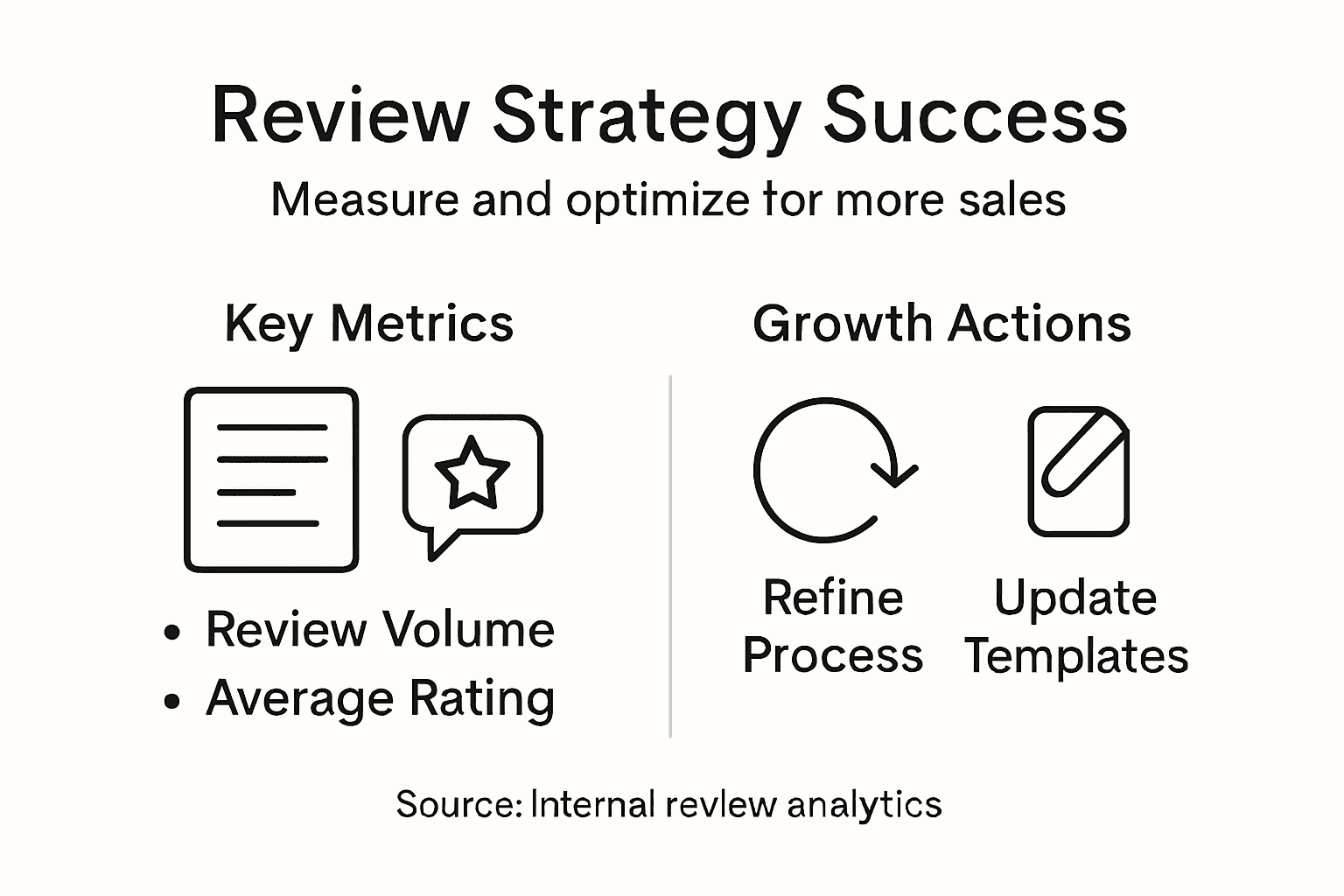
The following table summarizes crucial review metrics and their importance for ongoing improvement:
| Metric | What It Measures | Business Value |
|---|---|---|
| Review Volume | Number of new reviews collected | Indicates engagement |
| Average Rating | Overall customer satisfaction | Reveals product strengths/concerns |
| Conversion Rate | Impact on sales | Connects feedback to revenue |
| Sentiment Trends | Shifts in positive/negative tone | Spots emerging issues or wins |
Pro tip: Create an internal dashboard that visualizes review metrics in real time, allowing your team to quickly identify emerging trends and respond proactively.
Unlock the Power of Customer Reviews to Drive Your E-Commerce Growth
The article "Leveraging Online Reviews to Boost E-Commerce Sales" highlights the critical challenge of collecting, managing, and using customer feedback effectively to increase sales and brand trust. Many e-commerce businesses struggle with creating seamless review channels, encouraging authentic customer participation, and turning positive reviews into persuasive marketing tools. If you want to overcome these hurdles and harness reviews as a growth engine, a strategic, automated approach is essential.
Babylovegrowth.ai offers a proven solution designed to simplify this complexity by combining AI-powered content generation with advanced SEO strategies. With automated, high-quality articles that organically improve your search rankings, you can amplify your customer testimonials and positive reviews across Google and ChatGPT effortlessly. Our platform also supports comprehensive business analysis so you can measure the impact of reviews on your conversion rates and fine-tune your marketing messages based on real user feedback.
Discover how to maximize your online presence with AI-driven SEO and take control of your review strategy today.
Ready to turn reviews into revenue? Visit Babylovegrowth.ai now to start your free trial and experience how AI-powered automation can transform your e-commerce growth by effortlessly integrating customer feedback into your organic content strategy. Stay ahead, engage better, and boost sales with data-driven insights and continuous optimization.
Frequently Asked Questions
How can I set up channels to collect online reviews for my e-commerce business?
To set up channels for collecting online reviews, identify key digital touchpoints like your website and social media profiles. Utilize automated review collection tools to streamline the process and maximize customer feedback within the first few days after a purchase.
What strategies can I use to encourage more customers to leave reviews?
Create a seamless review submission experience by sending personalized review requests a few days after product delivery. Offer incentives, such as entry into a monthly drawing or discounts on future purchases, to motivate customers to participate in leaving detailed feedback.
How should I respond to both positive and negative reviews?
Acknowledge every review within 24 to 48 hours, showing appreciation for positive feedback and addressing any concerns in negative reviews. For negative comments, use a problem-solving approach and provide solutions, demonstrating a commitment to customer satisfaction.
What are effective ways to use positive reviews in my marketing?
Showcase verified positive reviews in your marketing materials, including social media, website pages, and email campaigns. Create visually appealing graphics that highlight customer testimonials, aiming to connect specific product details with quantifiable benefits to build trust with potential buyers.
How can I evaluate the effectiveness of my review collection strategy?
Implement a review tracking system to measure key performance indicators like review volume and average ratings. Use this data to refine your approach quarterly, ensuring your strategy adapts based on customer feedback trends and emerging issues, making adjustments as necessary.
What metrics should I focus on to improve my e-commerce sales through reviews?
Focus on metrics such as review volume, average rating, conversion rates, and sentiment trends. Regularly analyze these metrics and adjust your marketing and product strategies accordingly to enhance sales and customer satisfaction.