Storytelling’s Impact: Boosting Engagement and SEO


Transforming scattered facts into compelling stories is no longer just a creative choice but a proven way for digital marketers to connect emotionally in crowded online spaces. Storytelling, deeply rooted in human evolution, stands out as a method that not only builds trust and memorability but also helps e-commerce brands reach customers in meaningful ways. This guide explains storytelling as a strategic communication tool, highlighting techniques that drive deeper engagement and improve SEO performance for your digital campaigns.
Table of Contents
- Defining Storytelling for Digital Marketers
- Major Types of Brand Storytelling Techniques
- How Storytelling Enhances SEO Performance
- Effective Brand Narrative Elements and Strategies
- Risks, Pitfalls, and Common Storytelling Mistakes
Key Takeaways
| Point | Details |
|---|---|
| Storytelling Transforms Marketing | Engaging narratives enhance emotional connections with audiences, moving beyond traditional advertising methods. |
| Integration of Technology | Utilizing advanced technologies like AI and data analytics personalizes storytelling for deeper audience engagement. |
| SEO Benefits | Effective storytelling improves search engine performance by increasing user engagement metrics and creating shareable content. |
| Common Pitfalls | Brands should avoid oversimplifying narratives, ensuring consistency, authenticity, and alignment with audience expectations. |
Defining Storytelling for Digital Marketers
Storytelling represents a strategic communication approach that transforms raw information into compelling narratives designed to engage, persuade, and connect with audiences on an emotional level. In digital marketing, storytelling goes beyond traditional advertising by creating immersive experiences that resonate with consumers' deeper psychological needs and aspirations.
At its core, storytelling is a sophisticated method of communication that leverages narrative structures to deliver brand messages. Digital storytelling frameworks reveal that successful narratives must balance several critical elements:
- Relatable characters representing target audience personas
- Clear narrative arc with emotional progression
- Authentic brand voice and messaging
- Strategic plot development highlighting product/service value
- Emotional engagement that transcends transactional interactions
Modern digital storytelling integrates advanced technologies like artificial intelligence and data analytics to create personalized narrative experiences. Storytelling evolution through digital transformation demonstrates how brands can now craft dynamically adaptive stories that respond to individual user interactions and preferences.
The psychological power of storytelling stems from its ability to trigger neurochemical responses like oxytocin and dopamine, which generate feelings of trust, connection, and reward. By structuring content as narrative journeys, digital marketers can transform passive information consumption into active, memorable experiences that drive meaningful engagement.
Here's a summary of key differences between traditional advertising and modern digital storytelling for marketers:
| Aspect | Traditional Advertising | Modern Digital Storytelling |
|---|---|---|
| Audience Engagement | Passive consumption | Active emotional connection |
| Personalization | Generic messaging | Highly tailored experiences |
| Emotional Depth | Limited, rational appeals | Deep, psychological triggers |
| Technology Use | Basic media channels | Artificial intelligence, analytics |
| Content Longevity | Short-term campaigns | Ongoing narrative journeys |
Pro tip: Design your brand stories around universal human emotions and archetypal experiences that transcend demographic boundaries.
Major Types of Brand Storytelling Techniques
Brand storytelling represents a nuanced communication strategy with multiple sophisticated approaches designed to connect emotionally with target audiences. Storytelling classification frameworks reveal three primary dimensions for understanding narrative marketing techniques: source, media, and expression tools.
The primary types of brand storytelling techniques include:
- Origin Stories: Narratives exploring brand founding, mission, and core values
- Customer Experience Narratives: Real-world stories showcasing product impact
- Aspirational Stories: Future-oriented narratives demonstrating brand vision
- Character-Driven Narratives: Using compelling personas to illustrate brand personality
- Problem-Solution Storytelling: Demonstrating how products resolve specific challenges
Successful brand storytelling requires understanding audience psychology and crafting narratives that transcend mere product promotion. By integrating emotional triggers, authentic experiences, and strategic narrative structures, brands can transform conventional marketing into memorable, engaging stories that resonate deeply with consumers.

This reference table outlines advanced brand storytelling approaches and their strategic benefits:
| Approach | Description | Strategic Benefit |
|---|---|---|
| Archetypal Storytelling | Leverages universal psychological patterns | Strengthens emotional resonance |
| Transmedia Storytelling | Integrates narratives across platforms | Expands audience reach |
| Character-Driven | Uses personas to express brand identity | Builds relatable brand image |
| Aspirational Stories | Focuses on future brand vision | Inspires audience ambition |
Pro tip: Map your brand story across multiple platforms while maintaining a consistent emotional core and narrative voice.
How Storytelling Enhances SEO Performance
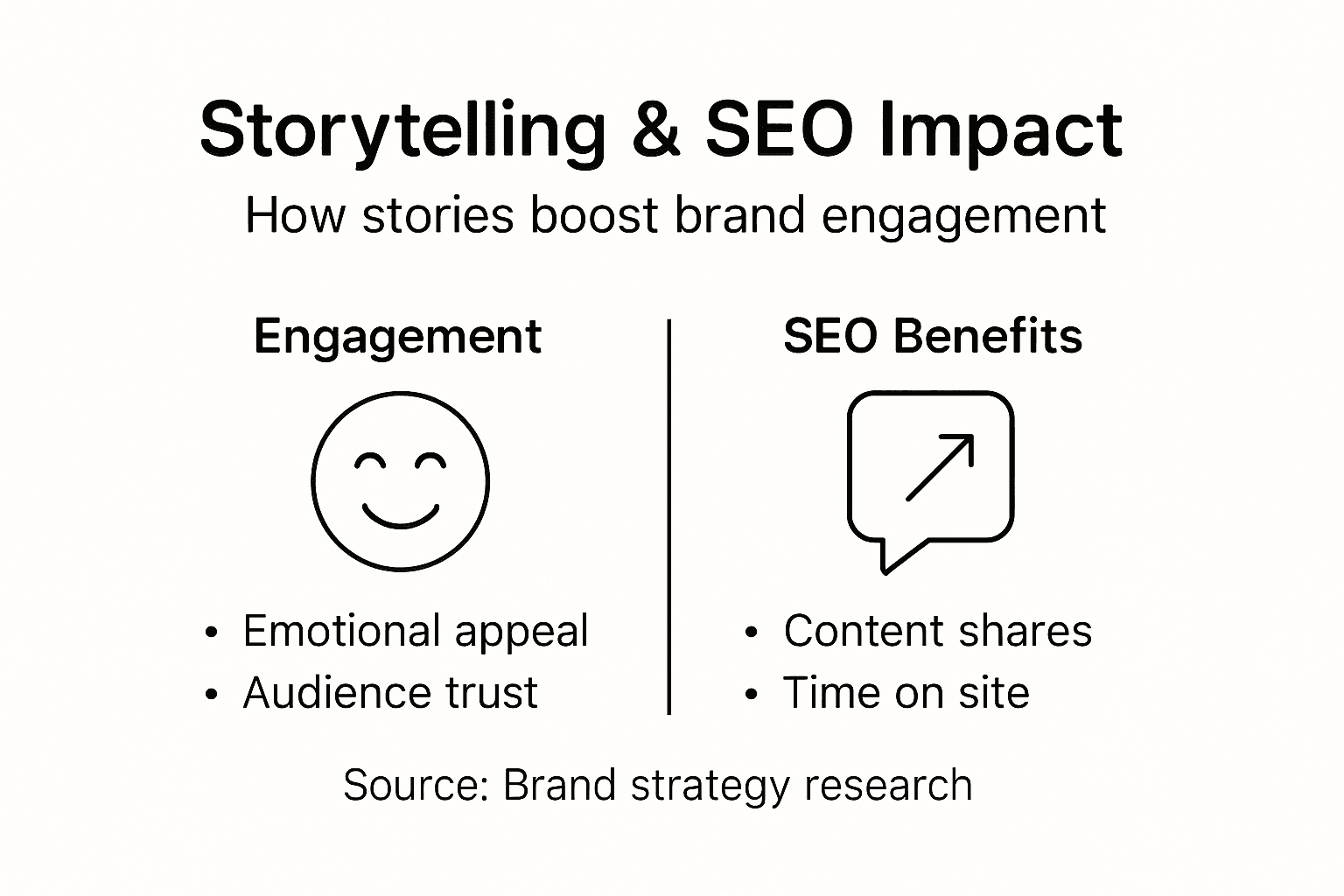
Storytelling techniques dramatically improve search engine optimization by transforming traditional content into engaging, shareable narratives that capture both human and algorithmic attention. Modern SEO demands more than keyword stuffing - it requires creating meaningful content experiences that keep readers deeply invested and signal high-quality information to search engines.The primary SEO performance enhancements from storytelling include:
- Increased user engagement metrics
- Reduced website bounce rates
- Extended average time-on-page duration
- Higher content shareability
- Improved organic search rankings
- Enhanced user experience signals
Successful storytelling in SEO requires understanding complex audience psychology and creating content that seamlessly blends informative insights with compelling narrative structures. Brands that master this approach can transform their digital presence from mere information providers to captivating storytellers who consistently rank higher and engage more deeply with their target audiences.
Pro tip: Develop story arcs that answer specific user questions while maintaining an authentic, conversational narrative flow.
Effective Brand Narrative Elements and Strategies
Strategic brand storytelling frameworks reveal critical narrative elements that transform ordinary content into compelling brand experiences. Successful storytelling goes beyond simple marketing messages, requiring a sophisticated approach that connects deeply with audience emotions and brand identity.The core elements of effective brand narratives include:
- Authenticity: Creating genuine, transparent stories
- Emotional Resonance: Triggering meaningful audience connections
- Consistent Brand Voice: Maintaining a unified narrative tone
- Character Development: Crafting relatable personas
- Conflict and Resolution: Demonstrating brand value through storytelling
- Audience-Centric Perspectives: Focusing on user experiences
Effective brand narratives require meticulous crafting, balancing emotional depth with strategic messaging. Successful storytellers understand that each narrative element must work harmoniously to create a compelling, memorable brand experience that resonates across multiple digital platforms.
Pro tip: Map your brand's narrative arc to align with audience emotional journeys, ensuring each story segment delivers meaningful value.
Risks, Pitfalls, and Common Storytelling Mistakes
Storytelling risks in content marketing reveal critical challenges that can undermine narrative effectiveness and brand credibility. Understanding these potential pitfalls is essential for creating compelling, authentic brand stories that resonate with audiences while maintaining strategic messaging integrity.The most common storytelling mistakes include:
- Oversimplification: Reducing complex narratives to bland, generic content
- Feature Overemphasis: Focusing on product specifications instead of emotional experiences
- Inconsistent Tone: Shifting narrative voice across different communication channels
- Lack of Authenticity: Creating stories that feel manufactured or insincere
- Ignoring Audience Perspective: Failing to align narratives with audience needs and expectations
- Neglecting Conflict Resolution: Presenting stories without meaningful narrative tension
Navigating storytelling challenges demands a nuanced approach that prioritizes audience connection over formulaic marketing tactics. By understanding potential narrative pitfalls, brands can develop more sophisticated, resonant stories that transcend traditional promotional content and create genuine, lasting audience relationships.
Pro tip: Regularly audit your brand narratives for authenticity, emotional depth, and alignment with audience expectations.
Elevate Your Brand Storytelling with AI-Powered SEO Solutions
The article highlights that effective storytelling transforms content from passive information into engaging narratives that boost SEO performance by increasing user engagement and delivering emotional resonance. If you struggle with creating authentic, personalized stories that consistently rank high on Google and ChatGPT, you are not alone. Many marketers face challenges aligning storytelling with SEO goals while maintaining genuine audience connection.
At Babylovegrowth.ai, we simplify this complex process by automating AI-generated, high-quality articles optimized specifically for SEO and storytelling impact. Our platform empowers you to harness advanced narrative techniques and strategic keyword integration without sacrificing authenticity or emotional depth. It offers a personalized 30-day content plan and a backlinks exchange ecosystem designed to improve your site’s authority and visibility naturally.
Experience measurable growth through:
- Tailored content that aligns with your brand voice and audience emotional journeys
- Automated optimization for Google and ChatGPT ranking factors
- Detailed business analysis that guides your storytelling strategy
Take control of your SEO storytelling and engage your audience like never before.
Discover how to make your brand stories rank higher and connect deeper with your customers.
Unlock your full SEO potential today at Babylovegrowth.ai

Are you ready to transform storytelling into tangible SEO success Use Babylovegrowth.ai to automate your content creation and backlink strategies and watch your engagement and search rankings soar. Start your free trial now and see the impact of AI-driven storytelling on your organic growth.
Frequently Asked Questions
How does storytelling enhance user engagement in digital marketing?
Storytelling enhances user engagement by creating immersive narratives that resonate emotionally with audiences, encouraging them to connect with the brand on a deeper level.
What are the key elements of effective brand storytelling?
The key elements of effective brand storytelling include authenticity, emotional resonance, consistent brand voice, character development, conflict and resolution, and audience-centric perspectives.
How can storytelling improve SEO performance for my website?
Storytelling improves SEO by creating engaging, shareable content that captures both user interest and search engine attention, leading to better user engagement metrics, reduced bounce rates, and improved organic search rankings.
What common mistakes should I avoid in brand storytelling?
Common mistakes in brand storytelling include oversimplifying narratives, focusing too much on features instead of emotional experiences, inconsistent tone, lack of authenticity, and neglecting audience perspectives.