How to Segment Target Audiences for Effective SEO Growth


Standing out in a crowded online market starts with knowing exactly who your customers are and what drives them. Many North American e-commerce teams struggle to tie their audience insights to goals that actually move the needle on growth. By focusing on actionable audience segmentation strategies, you create SEO initiatives that speak directly to what your best customers need and want, making every effort more focused and measurable.
Table of Contents
- Step 1: Define Reachable Business Goals
- Step 2: Analyze Current Customer Data Sources
- Step 3: Identify Actionable Audience Criteria
- Step 4: Create Detailed Audience Segments
- Step 5: Test And Validate Segmentation Strategies
Quick Summary
| Primary Insight | Detailed Explanation |
|---|---|
| 1. Set Clear SEO Goals | Establish specific, measurable goals tied directly to business objectives for effective SEO strategy. |
| 2. Analyze Customer Data | Utilize diverse data sources to gain insights into customer behaviors and preferences for better audience understanding. |
| 3. Develop Actionable Criteria | Create customer segments based on measurable criteria that inform strategic marketing decisions and enhance engagement. |
| 4. Create Distinct Segments | Apply various segmentation approaches to develop targeted personas that align with business goals and market changes. |
| 5. Validate Segmentation Regularly | Continuously test and refine audience segments to ensure their applicability and effectiveness through data-driven methods. |
Step 1: Define reachable business goals
Defining clear and achievable business goals is the critical first step in developing an effective SEO strategy that drives meaningful growth. Your goals must be specific, measurable, and directly connected to your broader business objectives.
Successful SEO goals align closely with your overall business strategy by focusing on metrics that translate into tangible outcomes. Specific SEO objectives should target key performance indicators like organic traffic, conversion rates, keyword rankings, and revenue generation. These goals help transform search engine optimization from an abstract concept into a strategic business driver.
To create effective SEO goals, consider these essential approaches:
- Analyze current performance by reviewing existing website analytics
- Identify specific target metrics such as traffic increase or conversion rate
- Set realistic timelines for achieving each goal
- Connect SEO goals to revenue by tracking how improved rankings impact sales
Your goals might include objectives like increasing organic search traffic by 25% within six months, improving average keyword rankings by 10 positions, or generating 50 new leads through search engine visibility.
Your SEO goals must be quantifiable and directly tied to business growth objectives.
Pro tip: Track your progress monthly and be prepared to adjust your strategy based on real performance data and emerging search trends.
Step 2: Analyze current customer data sources
Understanding your target audience begins with a comprehensive analysis of existing customer data sources. This critical step helps you develop more precise and effective SEO strategies that resonate with your specific customer segments.

Key customer data sources to explore include:
- Website analytics tracking user behavior and engagement
- Customer relationship management (CRM) systems
- Social media insights from platform analytics
- Google Search Console performance data
- Customer surveys and feedback channels
- Transactional data from sales records
Consider the different types of data that can enhance your understanding:
- First-party behavioral data from your website
- Transactional purchase history
- Demographic information
- Psychographic insights about customer motivations
Combining multiple data sources creates a more accurate and actionable customer segmentation strategy.
By systematically collecting and analyzing these diverse data points, you can develop a nuanced understanding of your target audience that enables more targeted and effective SEO approaches.
Here's a summary of how different customer data sources contribute to audience analysis:
| Data Source | Type of Data Provided | Typical Business Benefit |
|---|---|---|
| Website Analytics | User behavior patterns | Identify popular content |
| CRM Systems | Customer interaction history | Improve retention rates |
| Social Media Insights | Audience interests | Tailor content campaigns |
| Search Console | Search performance data | Optimize keyword rankings |
| Surveys & Feedback | Qualitative opinions | Refine product offerings |
| Sales Records | Purchase history | Segment customers by value |
Pro tip: Invest in robust analytics tools that can help you integrate and visualize data from multiple sources for more comprehensive audience insights.
Step 3: Identify actionable audience criteria
Creating meaningful audience segments requires moving beyond basic demographic information to develop truly actionable customer criteria that drive strategic marketing decisions. Advanced audience segmentation demands a nuanced approach that captures the complex motivations and behaviors of your target market.
To develop robust audience criteria, focus on these key dimensions that transform generic data into strategic insights:
- Behavioral triggers that indicate purchase readiness
- Specific pain points unique to each audience segment
- Engagement levels across different marketing channels
- Purchase history and frequency
- Consumer motivations beyond surface-level demographics
- Technology adoption and digital interaction patterns
Your segmentation should prioritize criteria that are:
- Measurable and quantifiable
- Substantially different between segments
- Accessible through marketing channels
- Directly connected to business objectives
Effective audience criteria translate raw data into actionable marketing strategies that drive meaningful engagement.
By carefully mapping these multidimensional characteristics, you can create segments that not only describe your audience but also predict their future behaviors and potential value to your business.
Pro tip: Continuously validate and refine your audience criteria by tracking segment performance and adjusting your approach based on real-world marketing outcomes.
Step 4: Create detailed audience segments
Developing precise audience segments requires a strategic approach that transforms raw data into meaningful customer profiles. Algorithmic clustering techniques enable marketers to group customers with similar characteristics and behaviors, creating powerful segmentation strategies that drive targeted marketing efforts.
To create robust audience segments, leverage multiple segmentation approaches:
- Demographic segmentation based on age, income, and occupation
- Geographic segmentation focusing on location and regional characteristics
- Behavioral segmentation tracking purchase patterns and engagement
- Psychographic segmentation exploring motivations and lifestyle choices
- Technographic segmentation analyzing digital behavior and technology adoption
Your segmentation process should follow these key steps:
- Collect comprehensive data from multiple sources
- Apply statistical clustering techniques
- Validate segment distinctiveness
- Develop targeted personas for each segment
- Map communication strategies to each group
Effective audience segments typically range from four to ten distinct groups that align with specific business objectives.
Successful segmentation requires continuous refinement, ensuring your audience profiles remain dynamic and responsive to changing market conditions.
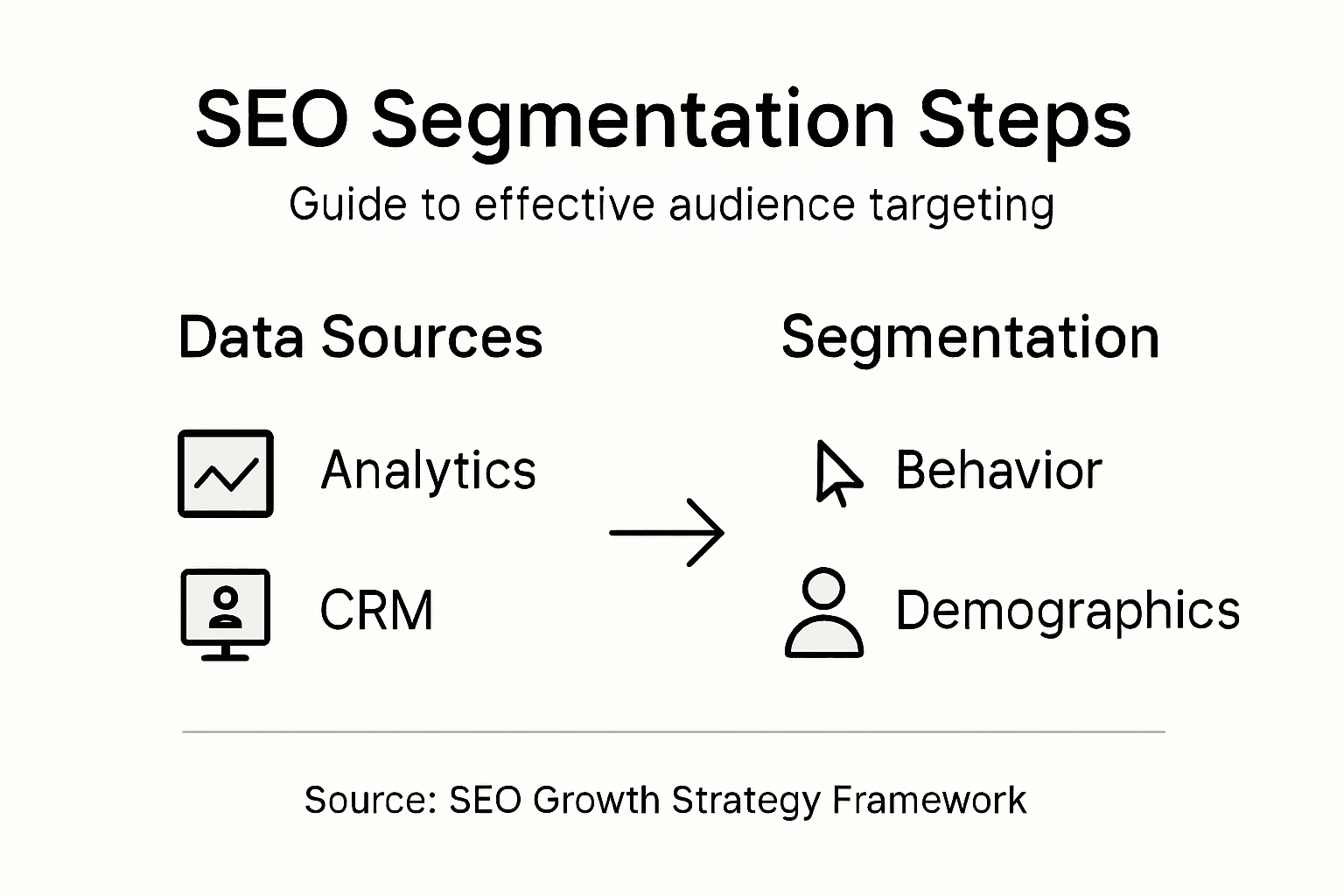
Compare the main audience segmentation approaches for marketing effectiveness:
| Segmentation Type | Primary Focus | Business Application |
|---|---|---|
| Demographic | Age, income, occupation | Target age-specific offers |
| Geographic | Location, region | Localize promotions |
| Behavioral | Purchase & engagement | Personalize messaging |
| Psychographic | Motivation, lifestyle | Influence brand positioning |
| Technographic | Digital usage patterns | Select channel strategies |
Pro tip: Regularly cross-validate your segments using machine learning algorithms to maintain segment accuracy and relevance.
Step 5: Test and validate segmentation strategies
Validating your audience segments is crucial to ensuring they deliver meaningful insights and drive effective marketing strategies. Advanced validation techniques help transform theoretical segments into robust, actionable marketing tools that can dramatically improve targeting precision.
To thoroughly test your segmentation approach, implement these comprehensive validation methods:
- Statistical validation using cluster analysis metrics
- Performance testing through targeted marketing campaigns
- Stability checks with bootstrapping techniques
- Cross-validation across different data subsets
- Expert review to ensure business relevance
Your validation process should include these critical steps:
- Calculate statistical significance using silhouette scores
- Measure campaign lift for each segment
- Conduct split-sample testing
- Compare segment performance over time
- Gather feedback from domain experts
Effective segment validation goes beyond numbers and ensures real-world marketing applicability.
Remember that segmentation is an iterative process. Your segments should evolve as you gather more data and insights about your target audience.
Pro tip: Implement a quarterly review process to reassess and refine your audience segments, ensuring they remain accurate and actionable.
Unlock Precise Audience Segmentation with AI-Powered SEO Solutions
Understanding your target audience is crucial for SEO success, but the process can be overwhelming. This article highlights essential challenges like defining actionable audience criteria, validating segments, and creating data-driven marketing strategies. If you want to move beyond guesswork and harness detailed audience insights that directly boost your organic traffic and conversions, integrating AI-driven automation is the smart path forward.
With Babylovegrowth.ai, you gain access to a comprehensive platform that simplifies audience segmentation and content optimization. Our AI-generated content and backlink exchange ecosystem work together to target your ideal customers based on behavior and motivations uncovered through advanced data analysis. This approach ensures your SEO efforts align perfectly with your business goals, turning complex segmentation into a manageable, high-impact growth strategy.
Ready to transform your SEO strategy by leveraging precise audience segments and AI automation?
Explore how Babylovegrowth.ai helps you automate content creation personalized to your audience segments. Begin your journey towards smarter, scalable SEO growth now with our 30-day personalized content plan and real-time ranking insights. Don’t wait to convert your data into meaningful results — start your free trial today and watch your organic visibility soar.
Frequently Asked Questions
How can I define actionable audience criteria for effective SEO growth?
To define actionable audience criteria, focus on measurable behaviors and motivations that indicate purchase readiness. Collect data on engagement levels, pain points, and purchase history to create customer segments that can drive targeted strategies. For example, analyze engagement patterns to identify at least three distinct audience segments.
What steps should I take to create detailed audience segments for my SEO strategy?
To create detailed audience segments, gather comprehensive data from multiple sources and utilize clustering techniques to identify similarities among your customers. Then, develop targeted personas and map communication strategies based on your findings. Aim to develop four to ten distinct groups for optimal marketing effectiveness.
How do I validate my audience segments for SEO growth?
Validating audience segments involves testing them through performance metrics and statistical analysis. Implement methods like campaign lift measurement and stability checks to confirm the usefulness of each segment. Perform this validation every quarter to ensure your segments evolve with changing audience behaviors.
What customer data sources should I analyze for audience segmentation?
You should analyze a variety of customer data sources, including website analytics, CRM systems, and social media insights. This comprehensive approach allows you to gather insights about customer behavior, preferences, and motivations. Combine this data to create a more nuanced view of your target audience, focusing on both qualitative and quantitative aspects.
How can I identify specific metrics to track for my SEO goals?
Identify specific metrics by first analyzing your current performance data and aligning your SEO objectives with broader business goals. Focus on key performance indicators such as organic traffic, conversion rates, and keyword rankings. Set measurable targets, like increasing organic traffic by 25% within six months, to assess your SEO strategy's success.
Recommended
Smart SEO,
Faster Growth!
Most Read Articles
Generative Engine Optimization (GEO)
Learn how Generative Engine Optimization (GEO) helps your content rank in AI search engines like ChatGPT and Google AI. This comprehensive guide explains the differences between SEO and GEO, why it matters for your business, and practical steps to implement GEO strategies for better visibility in AI-generated responses.
DylenJan 18, 2025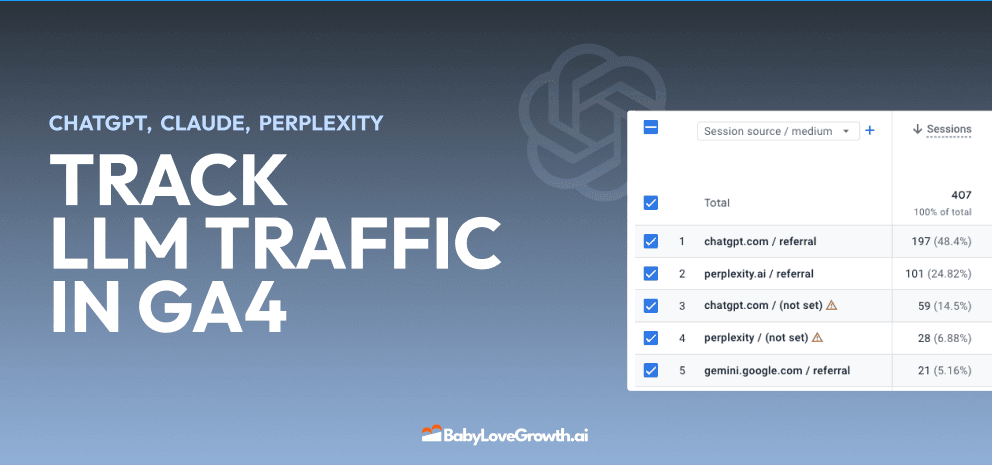
Track LLM Traffic in Google Analytics 4 (GA4)
Learn how to track and analyze traffic from AI sources like ChatGPT, Claude, Perplexity, and Google Gemini in Google Analytics 4. This step-by-step guide shows you how to set up custom filters to monitor AI-driven traffic and make data-driven decisions for your content strategy.
DylenMar 18, 2025
How to Humanize AI Text with Instructions
Learn practical techniques to make AI-generated content sound more natural and human. This guide covers active voice, direct addressing, concise writing, and other proven strategies to transform robotic text into engaging content.
DylenApril 7, 2025
Open AI Revenue and Statistics (2024)
Comprehensive analysis of OpenAI financial performance, user engagement, and market position in 2023. Discover key statistics including $20B valuation, $1B projected revenue, and 100M+ monthly active users.
DylenOctober 03, 2025