Examples of AI in eCommerce to boost sales and SEO in 2026


Choosing the right AI tools for your e-commerce business can feel overwhelming. Hundreds of vendors promise transformational results, but which ones actually deliver measurable gains in conversions and search rankings? This guide cuts through the noise with proven AI applications and practical selection criteria to help you invest confidently in tools that enhance customer experience while boosting organic visibility and revenue.
Table of Contents
- Criteria For Selecting AI Tools In E-Commerce
- Top AI Applications Transforming E-Commerce In 2026
- Comparing Leading AI E-Commerce Tools And Their Benefits
- Choosing The Right AI Solution For Your Business Needs
- Explore AI-Powered SEO And Keyword Tools To Grow Your E-Commerce Business
Key takeaways
| Point | Details |
|---|---|
| AI personalization increases conversions | Personalized recommendations can boost revenue by 10-30% through tailored product suggestions. |
| Search and pricing optimization drive growth | AI-powered search and dynamic pricing help customers discover products faster while maintaining competitive pricing. |
| Selection requires strategic evaluation | Assess ROI potential, system integration capabilities, and customer impact before committing to any AI solution. |
| Implementation timelines vary by tool | Most effective AI tools deliver measurable returns within 4-6 months when properly integrated. |
Criteria for selecting AI tools in e-commerce
Before investing in any AI solution, you need clear evaluation standards. Only 25% of AI initiatives delivered expected ROI over the past three years, making careful assessment critical to avoid costly mistakes.
Start by examining integration complexity. Your chosen tools must work seamlessly with your existing platform, whether Shopify, BigCommerce, or custom infrastructure. Compatibility issues create technical debt and delay time to value. Evaluate vendor documentation, API quality, and available support resources before signing contracts.
Next, prioritize customer experience impact. AI should solve real friction points in your buying journey. Does your site struggle with product discovery? Focus on AI search enhancements. High cart abandonment rates? Look into personalization engines or chatbots that guide purchasing decisions. Align AI investments with your specific pain points rather than chasing trendy features.
Finally, assess data security and privacy compliance. AI tools often require access to customer behavior data and transaction history. Ensure vendors meet GDPR, CCPA, and PCI-DSS standards. Review data handling policies and understand where customer information gets stored and processed.
Pro Tip: Start with one high-impact AI tool rather than implementing multiple solutions simultaneously. Master integration and measurement with a single application before expanding your AI stack. This approach reduces complexity and helps you build internal expertise systematically. Explore AI powered keyword discovery to understand how focused implementation drives results.
Top AI applications transforming e-commerce in 2026
Several AI categories consistently deliver measurable business outcomes. Understanding each application's strengths helps you prioritize investments.
Personalized product recommendations represent the most mature AI application in e-commerce. These systems analyze browsing behavior, purchase history, and demographic data to suggest relevant products. Personalized recommendations increase revenue by 10-30% by surfacing items customers might otherwise miss. Amazon pioneered this approach, and now accessible platforms bring similar capabilities to mid-market retailers.

AI-enhanced search transforms how customers find products. Natural language processing lets shoppers describe items conversationally rather than guessing exact product names. Visual search allows image uploads to find similar products. AI-enhanced search improves on-site conversion rates by 5-10% by reducing search abandonment and helping customers locate desired items faster. This technology particularly benefits stores with large, complex catalogs.
Dynamic pricing algorithms adjust product costs based on demand, competitor pricing, inventory levels, and customer segments. Airlines and hotels have used this approach for decades. E-commerce adoption accelerates as tools become more accessible and sophisticated. These systems maximize margins on high-demand items while clearing slow-moving inventory through strategic discounts.
Content generation AI produces product descriptions, meta titles, and category pages at scale. These tools maintain consistent brand voice while eliminating manual writing bottlenecks. Quality varies significantly between providers, so thorough testing remains essential before full deployment.
Customer service chatbots handle routine inquiries about shipping, returns, and product specifications. Effective implementations reduce support costs while maintaining 24/7 availability. However, poorly trained chatbots frustrate customers and damage brand perception. Test extensively with real customer scenarios before launching publicly. Combine chatbot capabilities with AI driven search online visibility strategies for comprehensive customer support.
Comparing leading AI e-commerce tools and their benefits
Different AI solutions serve distinct business needs. This comparison helps you evaluate options based on your priorities.
| AI Application | Primary Benefit | Implementation Complexity | Typical ROI Timeline |
|---|---|---|---|
| Personalization Engines | 10-30% revenue increase through targeted recommendations | Medium, requires customer data integration | 4-6 months |
| AI Product Search | 5-10% conversion lift from improved product discovery | Low to Medium, depends on catalog size | 3-5 months |
| Dynamic Pricing | Margin optimization and inventory turnover | High, needs competitor monitoring and business rules | 6-9 months |
| Content Generation | Faster product page creation and SEO optimization | Low, primarily quality review needed | 2-4 months |
| Customer Service Chatbots | Reduced support costs and 24/7 availability | Medium to High, requires conversation design | 5-8 months |
Personalization engines excel when you have sufficient historical data and diverse product catalogs. They struggle with new stores lacking behavioral patterns or businesses with limited SKUs. Integration typically requires development resources to connect customer data sources.
AI search platforms deliver quick wins for stores where customers know what they want but struggle to find it. Implementation complexity scales with catalog size and product attribute variety. Visual search adds development time but dramatically improves mobile shopping experiences.
Dynamic pricing demands sophisticated business logic and competitive intelligence infrastructure. Most AI investments recoup costs within 4-6 months, but pricing tools often take longer due to careful rollout requirements. Start with limited product segments before expanding.
Content generation tools vary wildly in output quality. Test multiple providers with your actual product data before committing. Human review remains necessary to catch errors and maintain brand standards. These tools work particularly well for technical products where specifications matter more than emotional storytelling.
Platform compatibility matters significantly. Shopify merchants benefit from native app integrations, while BigCommerce and Magento users often need custom development for advanced features.
Choosing the right AI solution for your business needs
Your selection process should align AI capabilities with specific business objectives. Start by identifying your top conversion barriers through analytics review and customer feedback analysis.
If average order value lags competitors, prioritize personalization and bundling recommendations. These tools excel at surfacing complementary products and premium alternatives. Effective personalization strategies increase revenue, retention, and order value by making each shopping session more relevant.
For stores with high bounce rates from search pages, invest in AI-powered product discovery. Natural language search and visual recognition dramatically reduce friction for mobile shoppers who struggle with traditional keyword interfaces.
When facing margin pressure, explore dynamic pricing carefully. This approach requires strong analytical capabilities and clear business rules to avoid race-to-the-bottom scenarios. Start with clearance inventory before applying to core products.
Consider your team's technical capabilities honestly. Some AI tools require ongoing tuning and optimization, while others operate more autonomously. Match complexity to available resources, or budget for external support during initial implementation.
Pro Tip: Request pilot programs or limited trials before full deployment. Test AI tools with a product subset or customer segment to validate performance claims and integration quality. Measure specific KPIs like conversion rate, average order value, or support ticket volume to quantify impact objectively. Understanding why SEO for ecommerce matters helps you evaluate how AI tools contribute to organic growth alongside conversion optimization.
Explore AI-powered SEO and keyword tools to grow your e-commerce business
Implementing AI for customer experience represents just one growth dimension. Organic search visibility determines how many potential customers discover your store initially. Our platform combines AI-driven content strategy with automated optimization to help e-commerce businesses rank higher across search engines and AI assistants like ChatGPT and Perplexity.
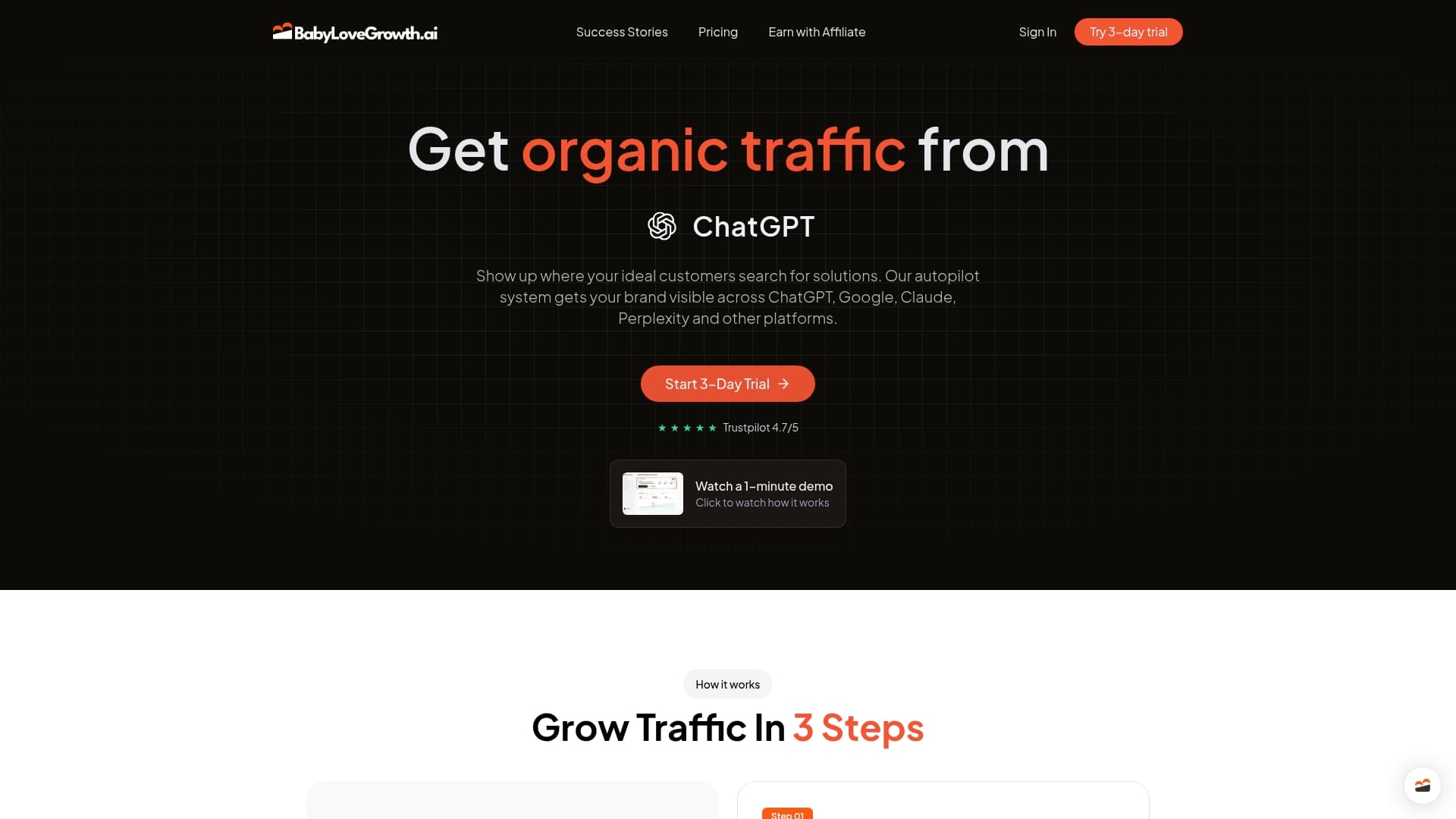
Discover profitable keyword opportunities through our keyword discovery system that identifies high-intent search terms your competitors miss. Use our keyword research tool to build comprehensive content plans that attract qualified traffic. Strengthen your domain authority with our SEO link building network that creates relevant, high-quality backlinks automatically. These AI-powered tools work together to drive sustainable organic growth alongside your conversion optimization efforts.
FAQ
What is AI personalization in e-commerce?
AI personalization uses machine learning algorithms to tailor product recommendations, content, and offers based on individual customer behavior and preferences. These systems analyze browsing patterns, purchase history, demographic data, and similar customer profiles to predict what each shopper wants to see. The technology creates unique experiences for every visitor, increasing relevance and conversion likelihood.
How does AI improve product search on e-commerce sites?
AI transforms traditional keyword search into natural language understanding that interprets customer intent rather than matching exact terms. Visual search capabilities let shoppers upload images to find similar products, particularly useful for fashion and home decor. These enhancements reduce search abandonment by helping customers locate desired items faster and discover alternatives they might not have considered. Learn more about AI driven search online visibility strategies to maximize these benefits.
What are common pitfalls in deploying AI chatbots for e-commerce?
Many eCommerce chatbots fail due to insufficient AI testing before public launch. Inadequate training data causes bots to provide incorrect product information, broken links, or irrelevant responses that frustrate customers. Poor handoff processes to human agents create dead ends when bots encounter complex questions. These failures damage brand perception and may increase cart abandonment rather than reducing it. Thorough testing with real customer scenarios and clear escalation paths prevents most chatbot disasters.How quickly can e-commerce businesses expect ROI from AI tools?
Most AI tools yield ROI within 4-6 months after successful implementation, though timelines vary by application complexity and integration quality. Simpler tools like content generation may show returns within 2-3 months, while dynamic pricing systems often require 6-9 months to optimize fully. ROI speed depends heavily on baseline performance, available customer data, and implementation thoroughness rather than tool selection alone.