Building Cross-Channel Strategies for Smarter Growth


Managing digital campaigns can quickly become overwhelming when customers expect seamless interactions from your website to a physical store and every touchpoint in between. For small to medium-sized e-commerce businesses, this challenge means efficiency and visibility are often at risk. Cross-channel strategies offer a unified approach that blends multiple retail channels, allowing businesses to craft smoother consumer journeys and elevate organic traffic. Discover how integrating your channels with automation can help your brand stand out internationally and drive consistent results.
Table of Contents
- What Are Cross-Channel Strategies?
- Primary Channel Types and Their Roles
- How Automation Powers Modern Execution
- Data Integration and Measurement Challenges
- Risks, Pitfalls, and Best Practices
Key Takeaways
| Point | Details |
|---|---|
| Cross-Channel Strategies | Integrating various retail channels creates a seamless consumer experience, enhancing engagement and performance. |
| Channel Types and Integration Levels | Marketing channels can be categorized as physical, digital, and hybrid, with varying levels of integration from multichannel to omnichannel. |
| Automation in Marketing | Automation transforms marketing into a proactive, data-driven process, increasing efficiency and personalization through intelligent algorithms and real-time analytics. |
| Data Integration Challenges | Effective cross-channel marketing requires overcoming data fragmentation and measurement complexity through centralized data management and robust analytics frameworks. |
What Are Cross-Channel Strategies?
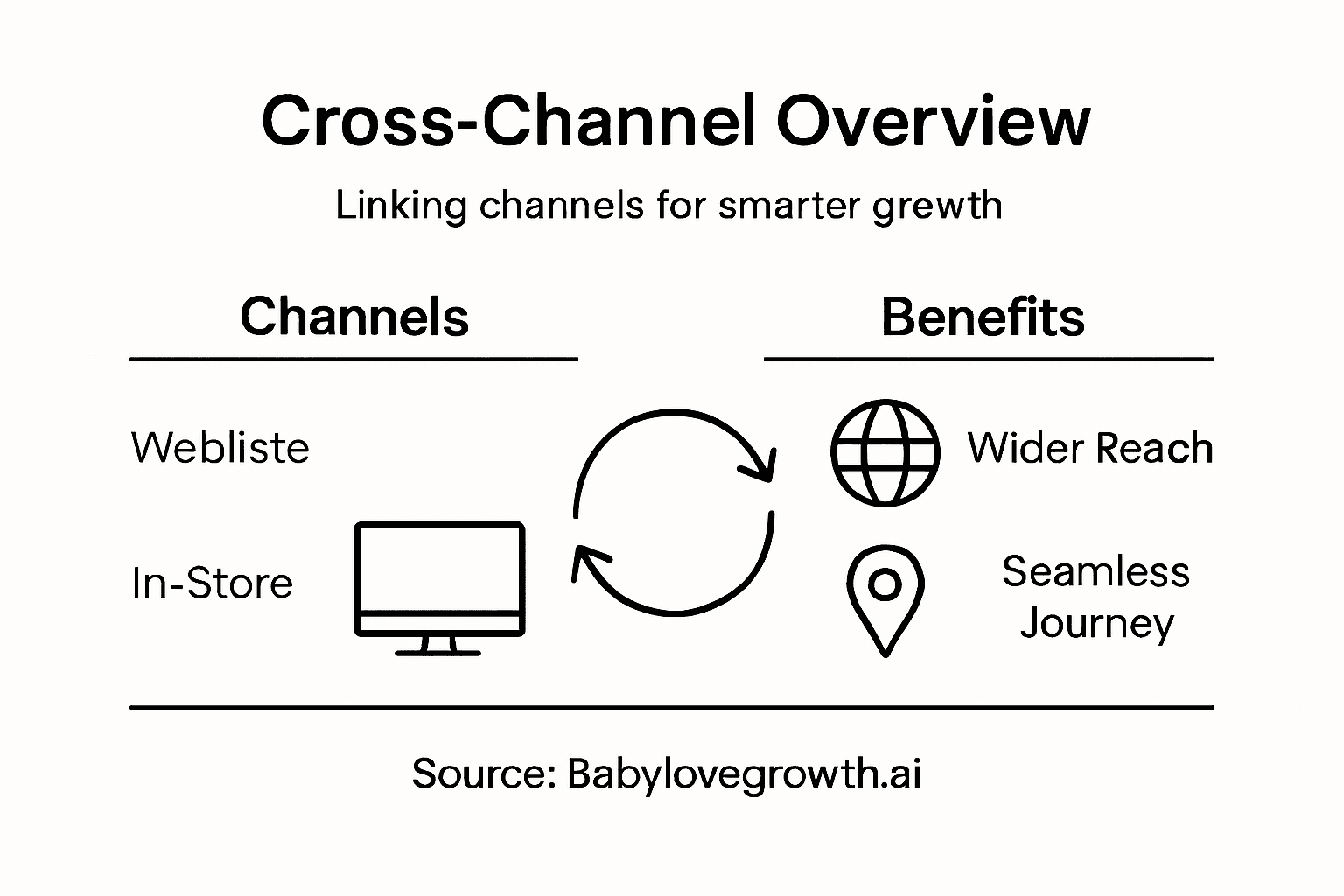
Cross-channel strategies represent a sophisticated approach to marketing that transcends traditional single-channel thinking. At its core, this methodology focuses on integrating various retail channels to create a seamless, interconnected consumer experience across multiple touchpoints.
The primary goal of cross-channel strategies is to unify marketing efforts, ensuring that interactions between businesses and consumers remain consistent and complementary, regardless of the platform or medium. Unlike traditional siloed marketing approaches, these strategies recognize that consumer behavior is complex and fluid, moving dynamically between online and offline environments.
Key components of cross-channel strategies typically include:
- Unified Customer Data: Aggregating consumer insights across different channels
- Consistent Messaging: Maintaining brand voice and communication style everywhere
- Integrated Technology: Using platforms that enable smooth information transfer
- Responsive Design: Creating experiences that adapt seamlessly across devices
Cross-channel integration goes beyond mere technical connection. It enhances firm innovation and performance by creating holistic consumer journeys that feel natural and intuitive. Successful companies like Apple have demonstrated how powerful this approach can be, blending digital and physical experiences to create compelling brand interactions.
Pro tip: Start mapping your customer's journey across all channels, identifying potential friction points and opportunities for smoother transitions.
Primary Channel Types and Their Roles
Marketers today have access to a diverse array of channel types that enable comprehensive customer engagement strategies. Marketing channel strategies encompass multiple approaches designed to reach and interact with customers across different platforms and touchpoints.
Traditionally, marketing channels can be categorized into three primary types:
- Physical Channels: Traditional brick-and-mortar stores, retail locations, event marketing, direct sales representatives
- Digital Channels: Websites, mobile apps, social media platforms, email marketing, search engine advertising
- Hybrid Channels: Integrated experiences combining online and offline interactions, like buy-online-pickup-in-store (BOPIS) services
Channel strategies evolve from basic multichannel approaches to more sophisticated integration models. Different strategic approaches include:
- Multichannel: Independent channels operating with minimal coordination
- Cross-Channel: Some integrated channels delivering coordinated experiences
- Omnichannel: Fully integrated, seamless customer journeys across all touchpoints
Each channel type serves unique roles in reaching specific customer segments and addressing different stages of the buyer's journey. Digital channels excel at awareness and initial engagement, physical channels provide tactile experiences and personal interactions, while hybrid channels offer flexibility and convenience.

Here's a comparison of multichannel, cross-channel, and omnichannel marketing strategies to clarify their differences:
| Strategy Type | Level of Integration | Customer Experience | Business Challenge |
|---|---|---|---|
| Multichannel | Low (channels operate separately) | Fragmented, inconsistent touchpoints | Channel silos |
| Cross-Channel | Moderate (some integration) | Coordinated, more consistent journey | Data and tech coordination |
| Omnichannel | High (fully unified) | Seamless, holistic brand experience | Complex measurement |
The most effective marketing strategies harmonize these channels to create a cohesive, customer-centric approach that feels natural and intuitive.
Pro tip: Conduct a comprehensive audit of your current channel performance, identifying strengths, weaknesses, and potential integration opportunities.
How Automation Powers Modern Execution
Automation has transformed digital marketing from a manual, time-consuming process into a sophisticated, intelligent system of interconnected workflows. Digital workflows now replace traditional manual operations, enabling marketers to execute complex strategies with unprecedented efficiency and precision.
The core components of modern marketing automation include:
- Intelligent Algorithms: Machine learning systems that predict customer behavior
- Real-Time Analytics: Instant performance tracking and insights generation
- Adaptive Workflow Management: Dynamic task routing and optimization
- Cross-Channel Synchronization: Seamless integration of marketing efforts
AI-driven intelligent automation is revolutionizing how businesses approach multi-channel marketing. Intelligent systems enhance information flow by providing real-time decision-making capabilities that were impossible just a few years ago. These technologies enable marketers to:
- Standardize repetitive marketing tasks
- Reduce human error
- Scale personalization efforts
- Optimize resource allocation
Automation transforms marketing from a reactive process to a proactive, data-driven strategic initiative.
By leveraging advanced technologies, companies can now create highly personalized, dynamically adjusted marketing experiences that adapt instantly to changing customer behaviors and market conditions.
The following table summarizes how automation transforms key aspects of cross-channel marketing:
| Marketing Aspect | Manual Approach | Automated Approach | Impact on Performance |
|---|---|---|---|
| Task Management | Time-consuming manual | Dynamic workflow routing | Increased efficiency |
| Data Analysis | Delayed reports | Real-time analytics | Faster leadership decisions |
| Personalization | Generic messaging | AI-based customization | Better customer engagement |
| Error Rates | Prone to mistakes | Standardized, error-reduced | Improved accuracy |
Pro tip: Implement incremental automation, starting with one channel and progressively expanding to create a fully integrated marketing ecosystem.
Data Integration and Measurement Challenges
Cross-channel marketing strategies face significant obstacles in data management and performance measurement. AI-driven analytics confronts complex integration challenges, requiring sophisticated approaches to overcome technical and strategic barriers.
The primary data integration challenges include:
- Platform Fragmentation: Disparate systems with incompatible data formats
- Algorithmic Bias: Potential skewing of insights due to limited data perspectives
- Scalability Issues: Difficulty maintaining performance as data complexity increases
- Privacy Compliance: Navigating complex regulatory requirements
Measurement complexity emerges from multiple critical factors. Cross-channel measurement requires comprehensive strategies that address fundamental technological and organizational challenges. Marketers must develop robust frameworks to address:
- Data source standardization
- Consistent attribution models
- Advanced analytics integration
- Continuous performance tracking
Successful data integration demands a holistic approach that transcends traditional technological boundaries.
Effective cross-channel measurement requires advanced technological infrastructure, interdepartmental collaboration, and a commitment to continuous learning and adaptation.
Pro tip: Invest in a centralized data management platform that supports seamless integration and provides unified analytics across all marketing channels.
Risks, Pitfalls, and Best Practices
Cross-channel marketing strategies demand careful navigation to avoid common implementation challenges. Major risks can derail marketing effectiveness, requiring strategic planning and proactive risk management.
Key risks and potential pitfalls include:
- Data Fragmentation: Disconnected systems creating inconsistent customer insights
- Messaging Inconsistency: Conflicting communication across different channels
- Technology Integration Barriers: Complex technical implementation challenges
- Attribution Complexity: Difficulty tracking true marketing performance
Marketing strategy optimization requires addressing these challenges through systematic approaches. Cross-channel best practices emphasize comprehensive solutions that transform potential risks into strategic opportunities. Marketers should focus on:
- Centralized data management
- Unified messaging frameworks
- Continuous performance monitoring
- Adaptive technological infrastructure
Successful cross-channel strategies transform potential obstacles into competitive advantages.
Implementing robust cross-channel approaches means creating flexible, integrated systems that can adapt to evolving customer behaviors and technological landscapes.
Pro tip: Conduct quarterly comprehensive audits of your cross-channel strategy, systematically identifying and addressing potential integration and communication gaps.
Unlock Seamless Cross-Channel Growth with AI-Powered SEO
Building effective cross-channel strategies means overcoming challenges like data fragmentation and inconsistent messaging. Your goal is to deliver a consistent, personalized journey that feels natural across channels. At Babylovegrowth.ai, we understand the complexities of integrating multiple platforms and automating workflows to create smarter growth paths. Our AI-driven content and backlink solutions simplify organic traffic expansion while maintaining the unified brand experience your cross-channel strategy demands.
Gain the competitive edge you need by automating your SEO with precision. Babylovegrowth.ai offers a 30-day personalized content plan designed to optimize your presence on Google and ChatGPT effortlessly. Experience how AI-generated articles and backlink exchanges can bring consistency and powerful measurement capabilities to your marketing ecosystem.
Take control of your cross-channel marketing evolution today. Visit Babylovegrowth.ai to start your free trial and discover how automation and AI can transform your SEO strategy into a seamless growth engine. Explore our rank-high services and detailed business analysis tools to align your marketing efforts across all channels with ease.
Frequently Asked Questions
What are cross-channel strategies in marketing?
Cross-channel strategies in marketing refer to integrated approaches that unify various retail channels to create a seamless and interconnected consumer experience across multiple touchpoints.
How do cross-channel strategies improve customer experience?
Cross-channel strategies improve customer experience by ensuring consistent messaging and branding across platforms, providing responsive design, and utilizing unified customer data to create holistic consumer journeys.
What is the difference between multichannel, cross-channel, and omnichannel marketing?
Multichannel marketing involves independent channels lacking coordination, cross-channel marketing includes some integration for a more consistent journey, while omnichannel marketing offers a fully unified experience across all touchpoints.
What role does automation play in cross-channel marketing?
Automation enhances cross-channel marketing by streamlining processes, enabling real-time analytics, standardizing tasks, and improving resource allocation, thereby allowing marketers to create personalized experiences efficiently.
Recommended
Smart SEO,
Faster Growth!
Most Read Articles
Generative Engine Optimization (GEO)
Learn how Generative Engine Optimization (GEO) helps your content rank in AI search engines like ChatGPT and Google AI. This comprehensive guide explains the differences between SEO and GEO, why it matters for your business, and practical steps to implement GEO strategies for better visibility in AI-generated responses.
DylenJan 18, 2025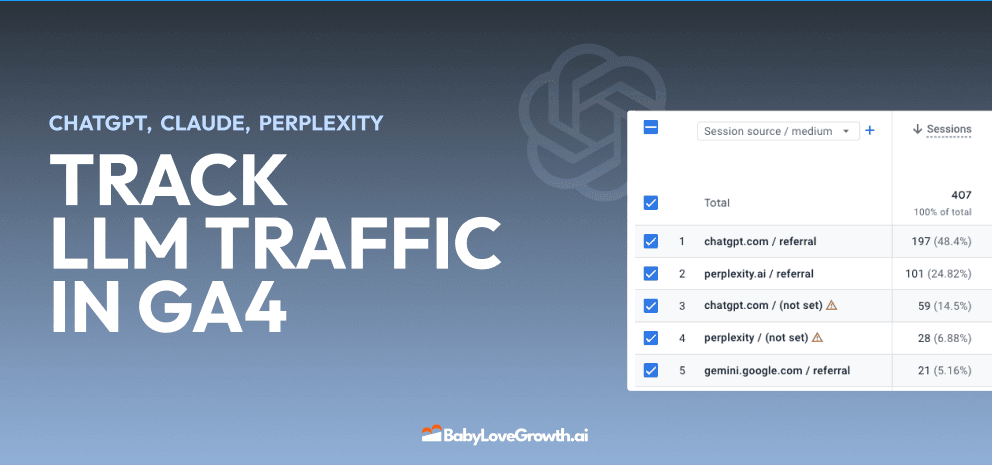
Track LLM Traffic in Google Analytics 4 (GA4)
Learn how to track and analyze traffic from AI sources like ChatGPT, Claude, Perplexity, and Google Gemini in Google Analytics 4. This step-by-step guide shows you how to set up custom filters to monitor AI-driven traffic and make data-driven decisions for your content strategy.
DylenMar 18, 2025
How to Humanize AI Text with Instructions
Learn practical techniques to make AI-generated content sound more natural and human. This guide covers active voice, direct addressing, concise writing, and other proven strategies to transform robotic text into engaging content.
DylenApril 7, 2025
Open AI Revenue and Statistics (2024)
Comprehensive analysis of OpenAI financial performance, user engagement, and market position in 2023. Discover key statistics including $20B valuation, $1B projected revenue, and 100M+ monthly active users.
DylenOctober 03, 2025