Analyzing Competitor Content for Winning SEO Strategies


Standing out in search results often feels like an uphill battle for many North American e-commerce brands. When rivals capture top spots on Google, understanding their moves is vital to shaping your own strategy. By focusing on competitor content evaluation, you gain clear direction on what works in your niche and discover where your store can carve out a stronger share of online attention.
Table of Contents
- Step 1: Identify Key Competitors in Your Niche
- Step 2: Gather Competitor Content Across Main Channels
- Step 3: Evaluate Content Topics, Formats, and SEO Elements
- Step 4: Benchmark Keyword Performance and Content Gaps
- Step 5: Validate Insights and Refine Your SEO Approach
Quick Summary
| Key Point | Explanation |
|---|---|
| 1. Identify your competitors | Use keyword research to find both direct and indirect competitors in your niche. |
| 2. Collect competitor content | Systematically gather content from various platforms to understand competitor strategies. |
| 3. Analyze content topics and SEO | Evaluate competitors' content types, keywords, and SEO elements to find advantages. |
| 4. Benchmark keyword performance | Analyze your keywords against competitors to uncover content gaps and opportunities. |
| 5. Validate insights regularly | Continuously assess your strategies to ensure they are effective and make necessary adjustments. |
Step 1: Identify Key Competitors in Your Niche
Understanding who your competitors are is the first critical step in developing a winning SEO strategy. This process involves strategic research to pinpoint which businesses are competing for the same digital real estate and audience attention in your specific market segment.
To effectively identify competitors, start by conducting a comprehensive online search using keywords relevant to your business. Google search results will reveal the primary players in your niche. Look beyond just direct business competitors and consider websites ranking for similar keywords and targeting comparable audiences. Competitive Analysis in SEO provides deeper insights into this strategic approach.
Here are some systematic methods to uncover your digital competitors:
- Use keyword research tools to identify websites ranking for similar search terms
- Analyze Google's first three search result pages for your primary keywords
- Check industry-specific directories and review platforms
- Monitor social media channels and online forums related to your niche
- Review advertising platforms and see who is targeting similar audience segments
When identifying competitors, categorize them into three primary groups:
Here's a summary of competitor types and their strategic importance:
| Competitor Type | Characteristics | Strategic Importance |
|---|---|---|
| Direct Competitors | Offer nearly identical products/services | Primary threat for market share |
| Indirect Competitors | Solve same problem, different approach | Reveal alternative solutions |
| Potential Competitors | New entrants or disruptive startups | Signal future threats, new trends |
- Direct Business Competitors: Companies offering nearly identical products or services
- Indirect Competitors: Businesses solving the same customer problem through different approaches
- Potential Competitors: Emerging brands or platforms that could disrupt your market segment
The most successful SEO strategies start with a thorough understanding of the competitive landscape.
Pro tip: Create a dynamic spreadsheet to track your competitors, including their website URLs, primary keywords, content strategies, and ranking positions to maintain an ongoing competitive intelligence system.
Step 2: Gather Competitor Content Across Main Channels
Successfully analyzing competitor content requires a systematic approach to collecting and reviewing their digital presence. By strategically mapping out their content distribution channels, you'll gain valuable insights into their marketing strategies and potential opportunities for differentiation.
Begin by exploring your competitors' primary online platforms, including their websites, blogs, social media profiles, and email newsletters. Content Distribution Strategies can provide additional context for comprehensive content gathering. Pay special attention to the types of content they produce, such as:
- Blog posts and articles
- Video content
- Podcasts and audio content
- Infographics and visual media
- White papers and downloadable resources
- Social media posts and engagement
- Email marketing campaigns
Utilize a variety of research tools and techniques to capture this content effectively:
- Use content discovery platforms like BuzzSumo
- Set up Google Alerts for competitor brand names
- Follow competitors on social media platforms
- Subscribe to their email newsletters
- Use competitive intelligence tools like SEMrush or Ahrefs
Comprehensive content gathering provides the foundation for strategic competitive analysis.
Pro tip: Create a dedicated folder or spreadsheet to systematically organize and categorize competitor content, enabling easier review and comparative analysis.
Step 3: Evaluate Content Topics, Formats, and SEO Elements
Effectively analyzing competitor content requires a comprehensive evaluation of their strategic approaches, diving deep into the nuanced aspects of their digital content. By systematically examining their content topics, formats, and underlying SEO elements, you'll uncover valuable insights that can inform and enhance your own content strategy.
Content optimization best practices reveal critical techniques for dissecting competitor content. When evaluating their materials, focus on several key dimensions:- Content Types: Blog posts, videos, podcasts, infographics, whitepapers
- Topic Clusters: Thematic groupings and content interconnectivity
- Keyword Strategy: Primary and secondary keyword usage
- Content Depth: Article length, detail level, and comprehensiveness
- Visual Elements: Graphics, charts, embedded media
Perform a detailed technical SEO assessment by examining these critical elements:
- Analyze meta titles and descriptions
- Check header tag hierarchy (H1, H2, H3)
- Review internal and external linking strategies
- Assess page load speed and mobile responsiveness
- Evaluate structured data implementation
Comprehensive content analysis transforms competitive insights into strategic advantages.
Pro tip: Create a standardized scoring matrix to objectively rate and compare competitor content across multiple dimensions, enabling more precise strategic planning.

Step 4: Benchmark Keyword Performance and Content Gaps
Mastering keyword performance benchmarking is crucial for uncovering strategic opportunities and understanding where your content can outperform competitors. By systematically analyzing keyword landscapes, you'll identify unexplored content territories and potential ranking improvements.
Competitive keywords analysis provides the foundation for mapping your digital content strategy. When benchmarking keyword performance, concentrate on these critical evaluation dimensions:- Search Volume: Potential traffic for specific keywords
- Keyword Difficulty: Competition level for ranking
- Current Ranking Positions: Your and competitors' search engine standings
- Click-Through Rates: Actual engagement metrics
- User Intent: Alignment between keyword and content purpose
Implement a comprehensive keyword gap analysis through these strategic steps:
- Use advanced keyword research tools
- Identify high-potential keywords competitors aren't targeting
- Analyze search intent behind each keyword
- Compare your current content against competitor coverage
- Prioritize keywords with optimal balance of volume and difficulty
Effective keyword benchmarking transforms competitive intelligence into actionable content strategy.
Pro tip: Develop a dynamic keyword tracking spreadsheet that automatically updates ranking positions and highlights emerging content opportunities.
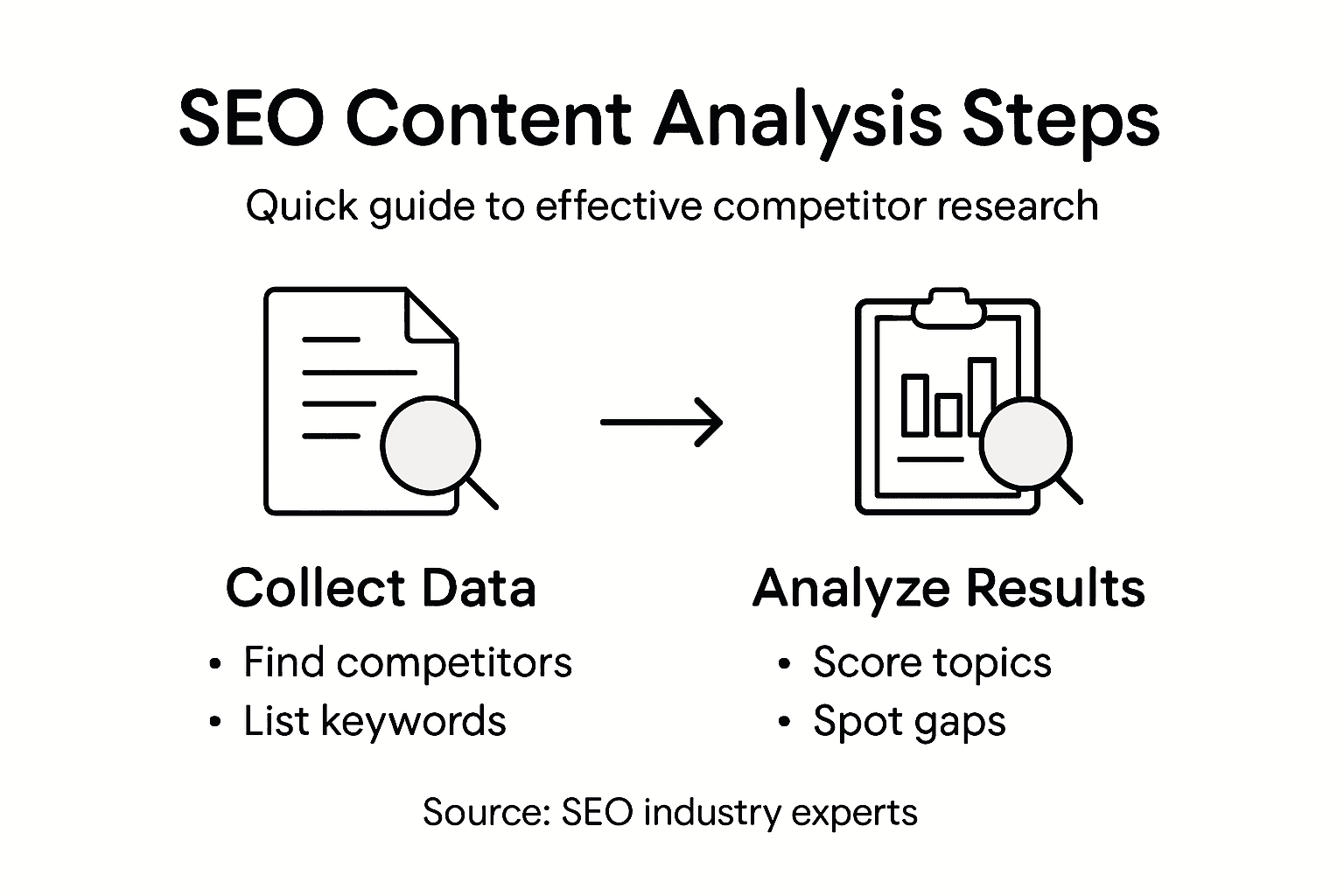
Step 5: Validate Insights and Refine Your SEO Approach
Validating your competitive insights transforms raw data into actionable strategic intelligence. This critical phase ensures that your SEO approach is not just based on observation, but grounded in measurable performance and continuous improvement.
SEO audits provide essential validation mechanisms for testing and refining your competitive strategy. When validating insights, focus on these key performance indicators and refinement techniques:Use this reference table to connect SEO metrics to typical business goals:
| SEO Metric | Business Goal Impact | Example Adjustment |
|---|---|---|
| Organic Traffic | Increase brand visibility | Expand topic coverage |
| Keyword Rankings | Improve search presence | Optimize existing pages |
| Conversion Rate | Boost customer acquisition | Refine calls to action |
| Engagement Metrics | Enhance user retention | Add interactive content |
| Competitive Position | Outperform rivals | Target new keyword gaps |
- Organic Traffic Changes: Monitor shifts in website visitor numbers
- Keyword Ranking Movements: Track position changes for target keywords
- Conversion Rate Impacts: Assess how strategy adjustments affect user actions
- Engagement Metrics: Analyze time on page, bounce rates, and interaction
- Competitive Position: Evaluate your relative standing in search results
Implement a structured validation process through these strategic steps:
- Establish baseline performance metrics
- Test hypotheses derived from competitor analysis
- Measure short-term and long-term performance changes
- Identify successful and unsuccessful strategy elements
- Create iterative improvement cycles
Continuous refinement separates good SEO strategies from exceptional ones.
Pro tip: Create a quarterly review dashboard that automatically compares your current performance against previous competitive benchmarks, enabling rapid strategic adjustments.
Unlock Your SEO Potential by Understanding Competitor Content
Analyzing competitor content offers a clear path to win in SEO by uncovering content gaps and keyword opportunities that others miss. If you are overwhelmed by the challenge of keeping pace with emerging trends, complex keyword strategies, or exhaustive content evaluation, Babylovegrowth.ai provides an AI-powered solution designed to simplify and automate your SEO efforts. Our platform helps business owners, marketers, and SEO professionals transform competitor insights into actionable growth plans with precision and ease.

Discover how our automated content creation tools generate high-quality, Google and ChatGPT-optimized articles tailored to your niche. Benefit from a personalized 30-day content plan and a backlinks exchange ecosystem that accelerates ranking improvements. Start leveraging AI-driven SEO strategies today with Babylovegrowth.ai. Ready to move beyond manual competitor analysis? Try our platform now and experience SEO on autopilot by visiting our landing page and exploring competitive insights tools.
Frequently Asked Questions
How can I identify my key competitors for SEO?
To identify your key competitors for SEO, start by conducting an online search using keywords relevant to your business. Analyze the first three pages of search results to see which businesses rank for those keywords and consider both direct and indirect competitors.
What types of content should I analyze from my competitors?
You should analyze various types of content, including blog posts, videos, podcasts, infographics, and social media posts. By reviewing this content, you can gain insights into their strategies and identify areas where you can differentiate your own content.
How can I evaluate the SEO elements of my competitors' content?
To evaluate the SEO elements of your competitors' content, check their meta titles and descriptions, header tag hierarchy, and linking strategies. Focus on determining how these elements enhance their search visibility and identify potential areas for your improvement.
What should I include in a keyword tracking spreadsheet for competitor analysis?
In your keyword tracking spreadsheet, include your competitors' primary keywords, current ranking positions, search volume, and difficulty levels. This will help you prioritize keywords to target and refine your own content strategy effectively.
How do I validate the insights I gather from competitor analysis?
To validate your insights, monitor key performance indicators like organic traffic changes, keyword ranking movements, and conversion rates after implementing new strategies. Conduct this validation regularly, ideally every quarter, to ensure your SEO approach remains effective and adapts to competitive shifts.
Recommended
Smart SEO,
Faster Growth!
Most Read Articles
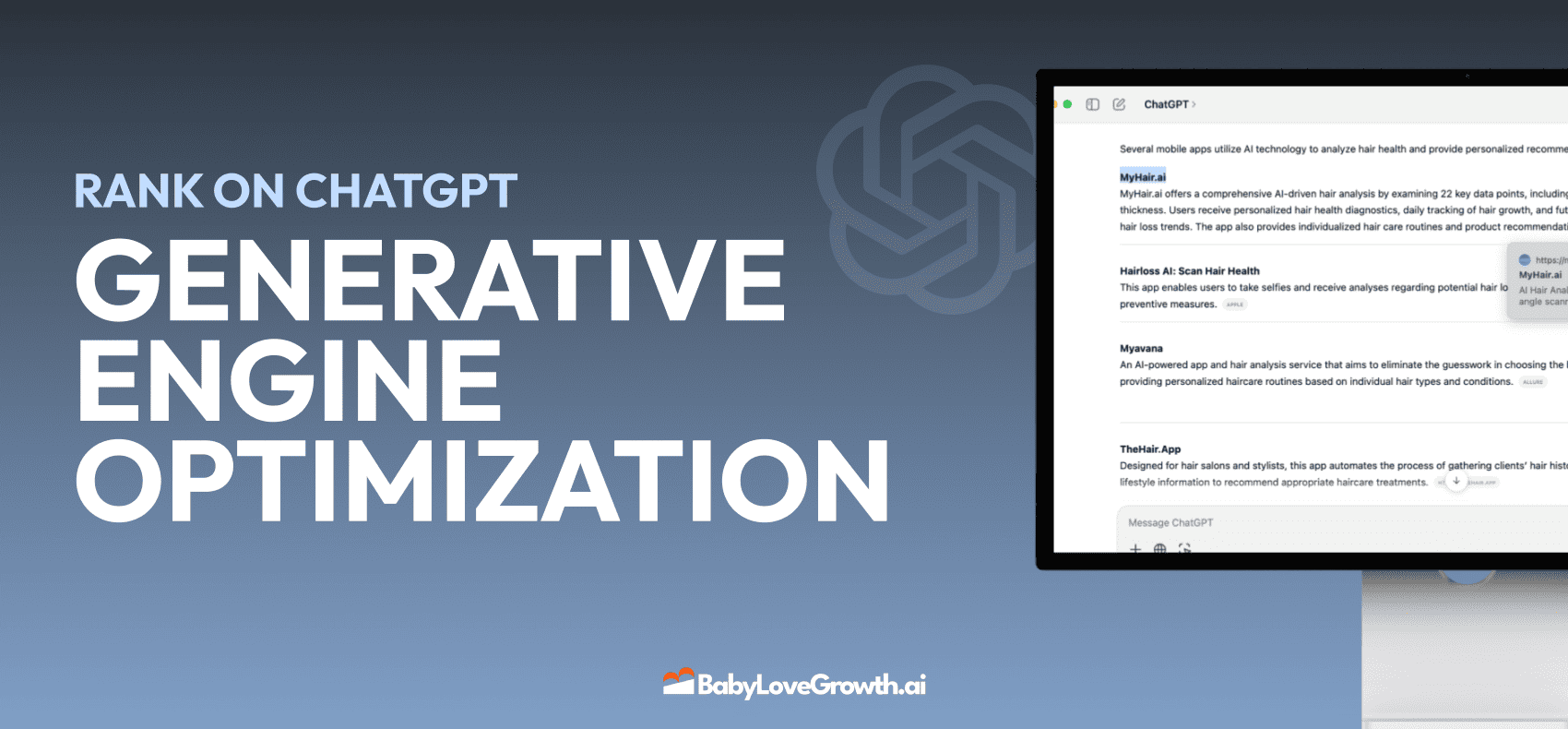
Generative Engine Optimization (GEO)
Learn how Generative Engine Optimization (GEO) helps your content rank in AI search engines like ChatGPT and Google AI. This comprehensive guide explains the differences between SEO and GEO, why it matters for your business, and practical steps to implement GEO strategies for better visibility in AI-generated responses.
DylenJan 18, 2025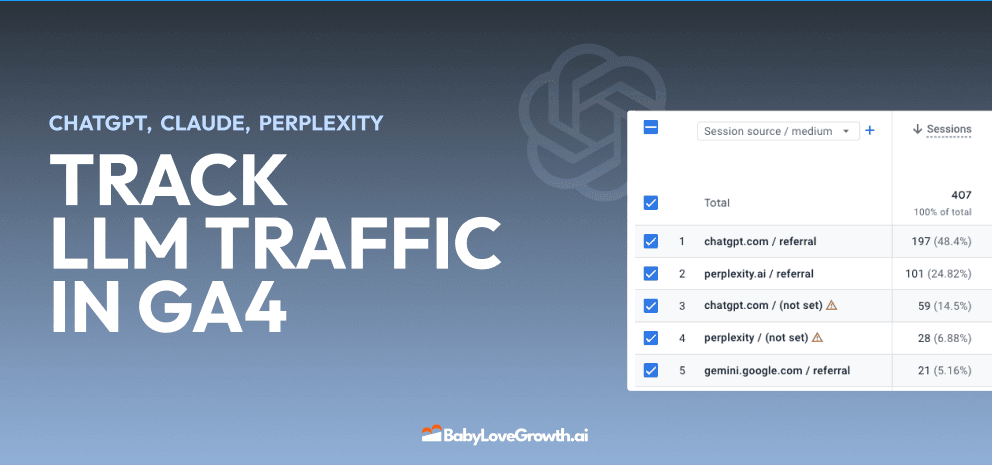
Track LLM Traffic in Google Analytics 4 (GA4)
Learn how to track and analyze traffic from AI sources like ChatGPT, Claude, Perplexity, and Google Gemini in Google Analytics 4. This step-by-step guide shows you how to set up custom filters to monitor AI-driven traffic and make data-driven decisions for your content strategy.
DylenMar 18, 2025
How to Humanize AI Text with Instructions
Learn practical techniques to make AI-generated content sound more natural and human. This guide covers active voice, direct addressing, concise writing, and other proven strategies to transform robotic text into engaging content.
DylenApril 7, 2025
Open AI Revenue and Statistics (2024)
Comprehensive analysis of OpenAI financial performance, user engagement, and market position in 2023. Discover key statistics including $20B valuation, $1B projected revenue, and 100M+ monthly active users.
DylenOctober 03, 2025